
Livraison le jour même ou le lendemain

Qualité garantie

Débloquez vos offres de bienvenue: Livraison GRATUITE | Jusqu'à -80 % | 30 jours d'essai gratuits à JoyPlus
Téléchargez l'application
For parents of a newborn, choosing the right baby toiletries can quickly become a real headache. Cleansing gel, cleansing water, baby cleansing milk, liniment or cleansing foam: each formula has its own purpose. As for claims such as “natural”, “hypoallergenic” or “suitable for sensitive skin”, they are not always enough to help you choose between products.
Here are the criteria to review to avoid unsuitable purchases and create a simple, effective daily baby hygiene routine without accumulating bottles.
A baby cleansing gel is used in the shower or bath and then rinsed off. Baby liniment, on the other hand, is mainly intended for the nappy area: it does not replace a product for the body or hair. Cleansing water can be used on the face, hands or for no-rinse cleansing, provided you follow the manufacturer’s recommendations.
Choosing a single “multi-purpose” product without checking exactly how it should be applied can therefore lead to an unsuitable routine.
Terms such as “natural”, “organic” or “hypoallergenic” should be interpreted in context. Instead, check the INCI list, whether the product contains fragrance, the type of certification obtained and the instructions for use. An organic certification such as COSMOS Organic by Ecocert Greenlife is based on precise specifications; it does not guarantee that every child will tolerate all the ingredients.
A small bottle is handy in a changing bag, but is rarely the most economical choice at home. Conversely, a larger size or refill can reduce the cost per use, provided it is stored hygienically and closed properly. To make the right choice, consider the number of nappy changes, how often you bathe your baby and how much you travel.
This distinction helps prevent you from using a product intended for nappy changes all over the body or leaving cleansing gel on the skin without rinsing it off.
For skin that is still delicate, check whether the product contains fragrance, plant oils, glycerine, cleansing agents and preservatives. Soap-free or sulphate-free formulas may suit families who want to limit certain cleansing agents. A fragranced formula, however, will not necessarily be suitable for every child.
Claims such as “from birth”, “dermatologically tested” or “pH neutral” should be checked on the packaging of the product you buy. If your child has a history of skin reactions, ask a healthcare professional for advice and test the product on a small area whenever recommended.
A pump usually allows you to dispense the product with one hand, which is a real advantage during bath time or nappy changes. A 1-litre refill can also reduce the amount of packaging compared with two bottles, provided you have a clean, compatible bottle. After each use, close the container carefully and follow the stated storage conditions.
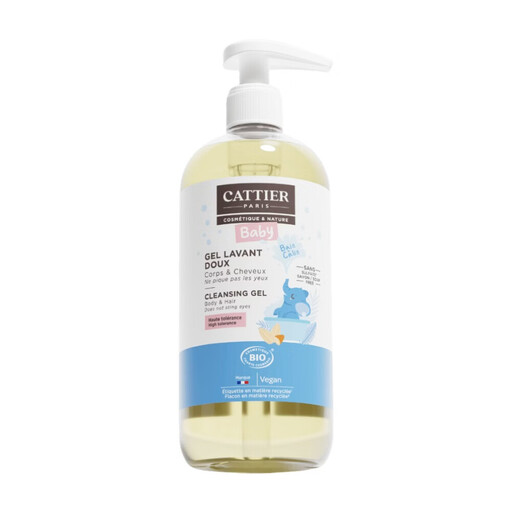
Why this choice suits this profile: With a single 2-in-1 product for the body and hair, new parents can start a simple routine without buying multiple products.
Its 500 ml size means you will not quickly run out of a small bottle. The formula is advertised as soap-free and sulphate-free, and is used with rinsing.
A 500 ml 2-in-1 gel, a formula advertised as vegan by the manufacturer and COSMOS Organic certification mentioned on the product page.
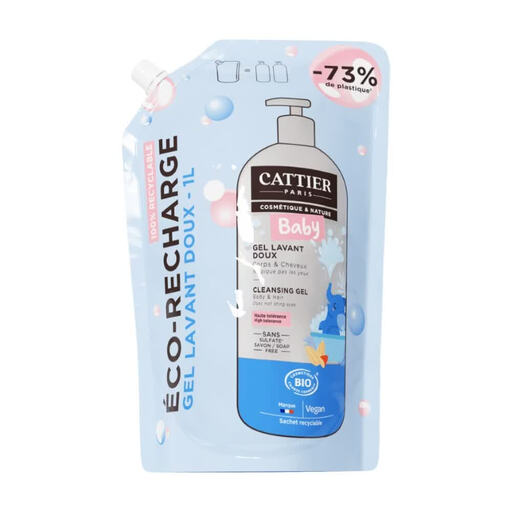
Why this choice suits this profile: This refill is aimed at households looking for a certified formula while reducing packaging waste during everyday baths.
According to the product information, the 1-litre doypack could save 73 % of plastic compared with two 500 ml bottles.
97 % naturally derived ingredients, 11 % from organic farming and COSMOS Organic certification indicated.
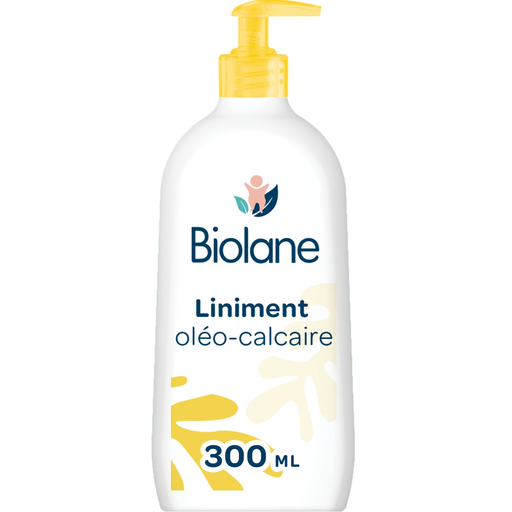
Why this choice suits this profile: Easy to carry thanks to its 300 ml size, this no-rinse liniment is equally suitable for nappy changes at home or on the go.
Its use is clearly limited to the nappy area, so it is virtually impossible to confuse it with a bath-time cleansing gel.
An olive oil formula, 99 % naturally derived ingredients as advertised and no-rinse use, in accordance with the instructions.
We have put together a complete selection, updated in real time, of products that meet these demanding criteria as well as European safety standards.
Yes, if the label states that it is suitable for this use. Apply it with clean cotton wool, without rubbing, and avoid contact with the eyes. For more thorough cleansing or after significant soiling, a bath with a rinse-off product will often be more suitable.
A basic routine can be limited to a 2-in-1 baby cleansing gel, cleansing water or cleansing milk for quick clean-ups, and liniment reserved for nappy changes. Special treatments for sensitive skin can be added only if the need arises.
Close the bottles after each use, keep them away from heat and direct sunlight, and follow the stated storage temperature. Also remember to check the best-before date and INCI list on the packaging: the manufacturer may update it.