
Livraison le jour même ou le lendemain

Qualité garantie

Débloquez vos offres de bienvenue: Livraison GRATUITE | Jusqu'à -80 % | 30 jours d'essai gratuits à JoyPlus
Téléchargez l'application
Taking your baby’s temperature, checking bath water or adding to a baby care kit requires accessories that are easy to use and suitable for your child’s age. However, marketing claims can sometimes make the choice more complicated.
The first pitfall is confusing a non-contact forehead thermometer with a versatile device capable of meeting every need. An infrared model is convenient for taking a quick reading, but the result depends on the distance, positioning and surrounding conditions. Another common mistake is choosing a baby bath thermometer simply because it looks fun, without checking whether the display is easy to read or whether the battery compartment is properly protected. Finally, very comprehensive kits may contain accessories with different recommended ages of use. It is therefore better to check the instructions for each item rather than relying solely on the wording ‘from birth’.
A digital baby thermometer can take several forms:
A product described as ‘medical’ or ‘high precision’ is not a valid guarantee for every type of use. Check for the CE marking, the availability of instructions in French, the safety precautions and the situations covered by the device. If you have any concerns about a temperature or your child’s health, seek advice from a healthcare professional.
With a newborn in your arms, a high-contrast display, a quick reading and a single button can make everyday life much easier. For a non-contact device, look in particular for:
The stated accuracy should be considered with some perspective. A resolution of 0.1 °C simply indicates the display increment; it does not mean that every reading will be accurate to 0.1 °C in all situations.
With a baby bath thermometer, inspect the casing after every use. A crack, water ingress or an inadequately protected battery should mean setting the product aside immediately. Clean it according to the instructions, then dry it before storing it.
If the kit includes a nasal aspirator, an electric nail file or a heated compress, also check:
These precautions also apply to other baby-care accessories, such as a bottle warmer or a bottle steriliser. Versatility can be useful, but it never removes the need to use each accessory in accordance with its own instructions.
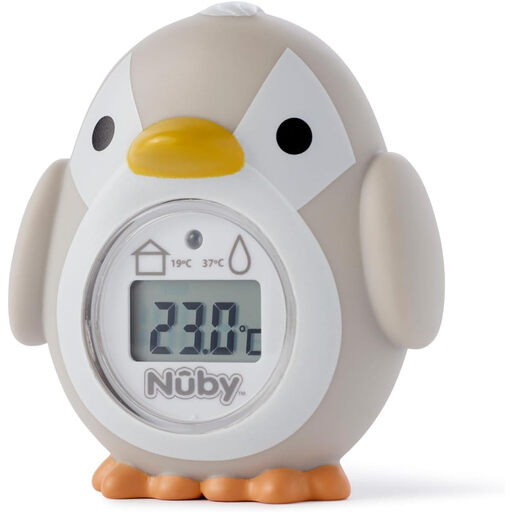
Why this choice suits this profile : It meets one specific need: checking the bath water temperature without buying a kit full of accessories that may not necessarily be used.
It is specifically designed for bath time, and the instructions state that it can be used from 0 months. It does not claim to replace a thermometer designed to measure body temperature.
A floating design, an LCD screen and a red light alert when the water is indicated as being too hot.
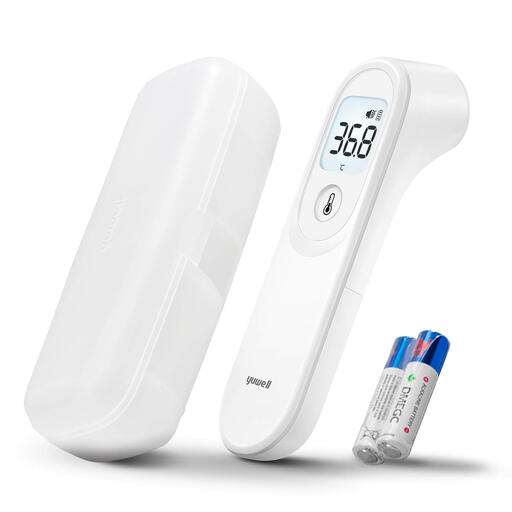
Why this choice suits this profile : This model is designed for households that prefer a non-contact device suitable for use by several family members, with features focused on comfort.
The distance sensor helps you follow the recommended positioning. It remains essential to follow the instructions and check any unusual reading with a suitable device.
A reading in one second, a large backlit display, silent mode, a case and two AAA batteries included according to the product details.
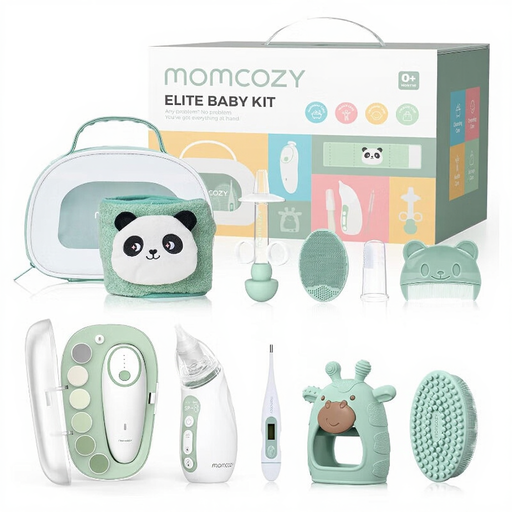
Why this choice suits this profile : It is aimed at parents who want to keep several baby-care and hygiene accessories together in an easy-to-store case.
The product details specify that the kit is recommended for ages 1 to 3 years and must be used under adult supervision. It should therefore not be presented as a universal kit for newborns.
An electric nail file, a three-level nasal aspirator, a thermometer, a heated compress, a dummy and a storage case all included in one kit.
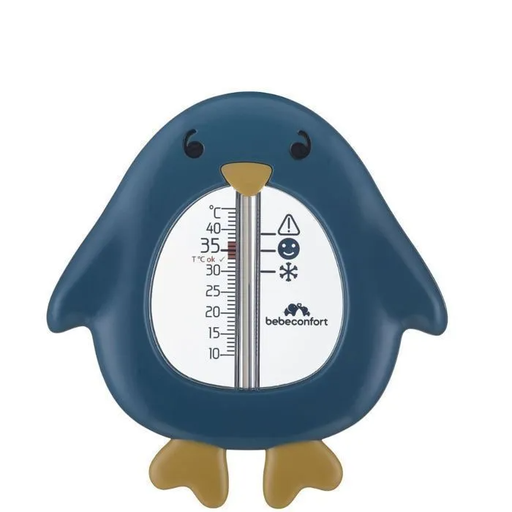
Why this choice suits this profile : Its bath-specific function lets you check the water quickly before bath time. The product details state that it can be used from birth.
The instructions recommend placing the thermometer in the water before putting your baby in, then checking the temperature by hand as well and staying within reach of your child.
An easy-to-read display, a floating penguin shape and a bath temperature close to 37 °C indicated in the instructions.
A thermometer does not meet feeding-related needs. If you prepare bottles, a device presented as a 10-in-1 bottle warmer may combine several functions: temperature control, heating advertised in 2 to 5 minutes, steam sterilisation and automatic shut-off. However, check that it is compatible with your bottles and look at the actual timings given in the instructions: performance may vary depending on the volume and starting temperature.
To avoid buying duplicate items, also compare the dimensions, ease of cleaning and the space available in your kitchen. A versatile appliance is only worthwhile if its functions genuinely fit into your routine.
For bath time, choose a thermometer clearly indicated as suitable from 0 months. To measure body temperature, check the permitted age, the method of taking the temperature and the instructions provided. A non-contact forehead model can be convenient, but the reading must be taken under the conditions specified by the manufacturer.
There is no universal lifespan. Replace the device as soon as it is cracked, a compartment allows water in, the display becomes difficult to read or the readings seem inconsistent. For an electronic model, also monitor the condition of the batteries and store it away from moisture.
A baby care kit can make storage easier and bring several baby-care accessories together. However, you should check the recommended age for each item. If you only need to measure temperature or check bath water, a dedicated device will often be more suitable than a bulky kit.