
Livraison le jour même ou le lendemain

Qualité garantie

Débloquez vos offres de bienvenue: Livraison GRATUITE | Jusqu'à -80 % | 30 jours d'essai gratuits à JoyPlus
Téléchargez l'application
A sudden fever in an infant is always a source of anxiety for parents. It's crucial to be able to check their temperature quickly and accurately. But with the maze of available models, choosing the right baby thermometer can quickly become a headache. Forehead, ear, smart… which one should you choose?
This guide is here to help you make sense of it all. Our mission: to provide practical, objective advice to guide you toward an informed choice, far beyond simple marketing claims. We'll break down the key criteria and present a selection of thermometers suited for every family.
To make the right choice, you first need to understand what sets the different thermometers on the market apart. Here are the essential criteria to consider for a baby temperature reading that is both effective and calm.
The measurement method is arguably the number one criterion. It determines both your child's comfort and the ease of use for you.
When your baby is fussy or sick, every second counts. Fortunately, most modern thermometers display a result in just a few seconds. Certain features can also make your life much easier:
We've selected three models that stand out for their technology, simplicity, and reliability. Each one caters to different needs.
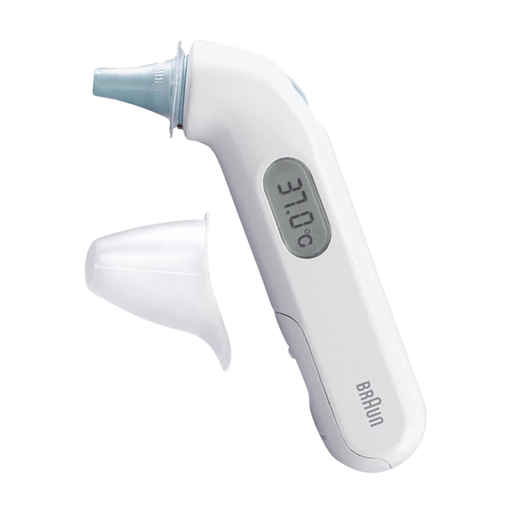
Why it stands out: The Braun ThermoScan 3 is an ear thermometer that combines speed and precision. Its technology, recommended by many healthcare professionals, is a hallmark of trust. Its key strength: a reading in just one second flat, a decisive advantage with a little one who can't stay still. It also includes an audio fever alarm (a series of beeps) that makes interpreting the result easy, even in the middle of the night.
Pros:
Who is it for?: Ideal for families looking for a fast and reliable medical-grade thermometer suitable for everyone, from infants to adults. It's the peace-of-mind choice for those who trust the proven accuracy of ear measurements.
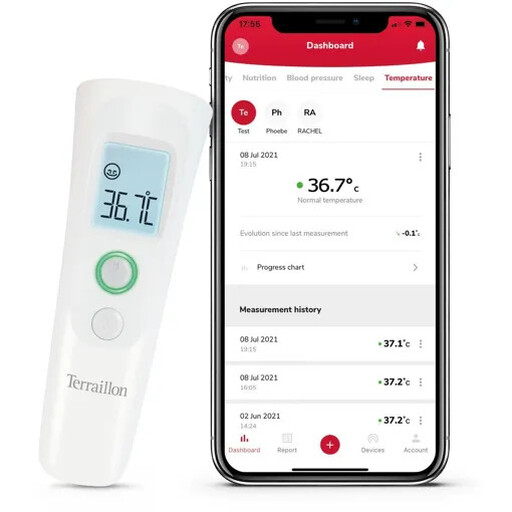
Why it stands out: This forehead thermometer from Terraillon is much more than a simple measuring device. As a smart thermometer, it syncs via Bluetooth to the MyHealth app for precise health tracking for the whole family (up to 8 profiles). Its other major asset is its versatility. It measures body temperature without contact, but also the temperature of a baby bottle, bathwater, or even the room. Its large, backlit screen with a colour code (green/red) allows for an immediate reading.
Pros:
Who is it for?: For tech-savvy parents who want rigorous fever tracking and for anyone who loves all-in-one devices. Its no-contact technology is a must-have for taking a sleeping baby's temperature without waking them.
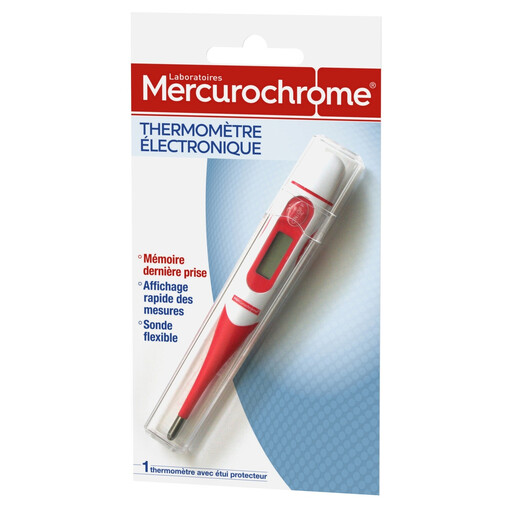
Why it stands out: Sometimes, simplicity is best. The electronic thermometer from Mercurochrome is a perfect example: a simple, effective, and very affordable tool. Its main asset is its flexible tip, which ensures greater comfort, especially for rectal readings. It's a reliable device that gets straight to the point: providing an accurate measurement, with no frills.
Pros:
Who is it for?: For parents looking for a reliable and budget-friendly backup thermometer, or for those who prefer the rectal method, considered the most accurate for young children.
Our selection is just a starting point. The final choice is yours and will depend on your habits, your budget, and your child's age.
To explore more options, from infrared models to the latest smart devices, feel free to browse our complete category of digital thermometers.
For infants (under 3 months), a rectal measurement with a digital thermometer featuring a flexible tip remains the gold standard for accuracy, as confirmed by most paediatricians. For slightly older children, ear and forehead (infrared) thermometers are excellent alternatives that are both practical and reliable, provided you follow the manufacturer's instructions carefully.
A fever is generally defined as a body temperature exceeding 38°C (100.4°F). However, this threshold can vary slightly depending on the measurement site (rectal, oral, etc.). Remember that a fever is just a symptom. If it occurs in a baby under 3 months, or if it is accompanied by other worrying signs (lethargy, difficulty breathing, etc.), never hesitate: consult a doctor or paediatrician immediately.
Hygiene is crucial to avoid spreading germs. The golden rule: clean the probe or tip before and after each use. A simple cotton swab dipped in 70% alcohol is sufficient for most models. Unless otherwise specified by the manufacturer, never fully submerge the thermometer in water. To be sure, it's always best to consult your device's user manual.