
Livraison le jour même ou le lendemain

Qualité garantie

Débloquez vos offres de bienvenue: Livraison GRATUITE | Jusqu'à -80 % | 30 jours d'essai gratuits à JoyPlus
Téléchargez l'application
Choosing a first baby ride-on is an important milestone. It's often one of the first toys that gives a child true freedom of movement. With so many options available, it can be difficult to navigate the market and make a choice that combines fun, safety, and durability. As a Product Recommendation Specialist at Joybuy, my role is to provide you with clear, practical guidance to help you select a suitable toddler toy, without being swayed by sometimes over-the-top marketing claims.
This guide focuses on objective criteria to support your decision, emphasizing safety, ergonomics, and build quality.
Before focusing on colours or themes, a few technical aspects deserve your attention. They not only ensure your child's safety but also the toy's longevity.
The first thing to do is check for the CE mark. This mandatory marking certifies that the product meets the safety requirements set by the European Union. Beyond this compliance, examine the ride-on's design. A wide base and well-spaced wheels provide better stability and reduce the risk of tipping, especially during those first wobbly attempts. Anti-tip stoppers at the front and back are a valuable bonus.
A ride-on for 1-year-olds will not have the same dimensions as a model for a 3-year-old. Make sure that when seated, the child can place their feet flat on the floor. This is essential for them to be able to push off and feel confident. The seat height is therefore a crucial criterion. The handlebars or steering wheel should also be within easy reach, without the child having to lean over too much. Good ergonomics naturally promotes motor skill development.
A ride-on's sturdiness is directly dependent on the quality of its materials. Thick, high-quality plastic will better withstand impacts and outdoor use. More and more parents are conscious of product origins. Choosing a toy that is Made in France is often a guarantee of compliance with strict social and environmental standards, while also supporting local craftsmanship. This criterion goes hand-in-hand with the pursuit of durability.
Keeping these criteria in mind, we have selected two models that stand out for their design, functionality, and origin.
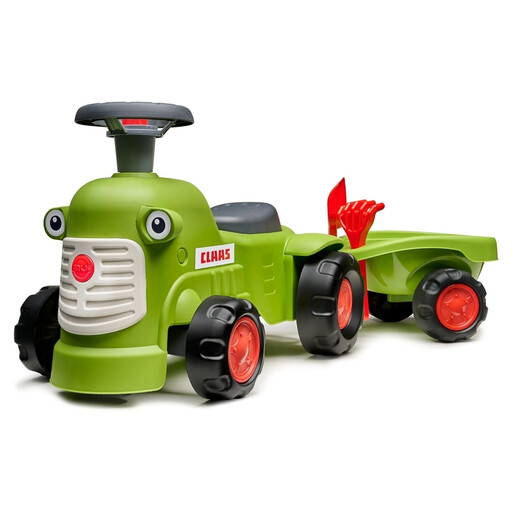
Why We Recommend It
This tractor ride-on from Falk is an excellent example of a well-designed toy. Designed for children from 12 months, it combines several strengths. Its French manufacturing, using 90% recycled plastic, meets a strong demand for eco-responsibility. The small acoustic key to "start" the tractor is a fun detail that stimulates fine motor skills. Finally, its included trailer offers an extra dimension of play, perfect for transporting garden treasures or soft toys.
Pros:
Who is this product for? This model is particularly suited for families who enjoy outdoor activities and want to introduce their child to the joys of gardening. It's a relevant choice for a first ride-on for 1-year-olds, combining imaginative play with ecological awareness.

Why We Recommend It
The fire engine ride-on is a timeless classic that stimulates children's imaginations. This Falk model, also Made in France, stands out for its clever mechanical features that require no batteries. The steering wheel with a horn, the gear stick with a "click" sound, and the storage compartment under the seat make it a complete toy. It is perfect for developing coordination and balance while making up rescue stories.
Pros:
Who is this product for? This ride-on is aimed at children aged 1 to 3 who love vehicles and role-playing games. Its indoor/outdoor versatility and storage compartment make it a practical and fun everyday playmate.
The world of ride-on toys is vast. Beyond tractors and fire engines, there is a multitude of shapes and styles that might match your child's preferences. If these models don't quite meet your expectations, or if you want to explore other types of vehicles, our selection of Ride-On Toys offers a wider range of choices for all tastes.
Generally, a child can start using a ride-on around 12 months of age, when they can sit up securely and their feet touch the ground while on the toy. This is when they have enough leg strength to start pushing themselves along. However, it is crucial to always refer to the manufacturer's recommended age and ensure the model's ergonomics are suited to your child's size.
Yes, a ride-on is an excellent tool for gross motor skill development. By pushing off with their legs, the child strengthens their lower body muscles. By steering the handlebars, they work on their hand-eye coordination and spatial awareness. The ride-on also helps develop a sense of balance, a preparatory step for learning to ride a bike. It can also serve as a push toy during early walking attempts, providing stable support.
Maintenance is generally simple. Regular cleaning with a damp cloth is sufficient for most plastic models. Avoid harsh chemical products. Before each use, it is advisable to quickly check that the wheels are securely attached and that no parts are loose or damaged. To preserve the colours and the quality of the plastic, it is best to store the ride-on away from direct sunlight and bad weather when not in use.