
Livraison le jour même ou le lendemain

Qualité garantie

Débloquez vos offres de bienvenue: Livraison GRATUITE | Jusqu'à -80 % | 30 jours d'essai gratuits à JoyPlus
Téléchargez l'application
Your baby's first steps are an unforgettable moment. To support them on this great adventure, the baby push walker stands out as a trusted ally. But be careful: faced with a sea of models, it's easy to fall into common traps that compromise your child's safety or the toy's very usefulness. Our mission? To help you see clearly and decode the essential criteria for a successful purchase you won't regret.
Before diving into specific models, let's identify the frequent errors that lead to buyer's remorse.
To make the right choice, focus on concrete technical aspects that guarantee safety and development.
A good walking aid must be as solid as a rock to prevent any tipping.
This is THE feature that makes all the difference in tracking your child's progress. A walker with adjustable brakes is equipped with a simple mechanism (usually a screw to tighten on the rear wheels) to modulate the resistance.
A walker with activities is an excellent developmental toy, provided its dashboard is well-designed. Forget the overload of electronic buttons and favour elements that stimulate fine motor skills and logic, in the spirit of a Montessori-inspired walker.
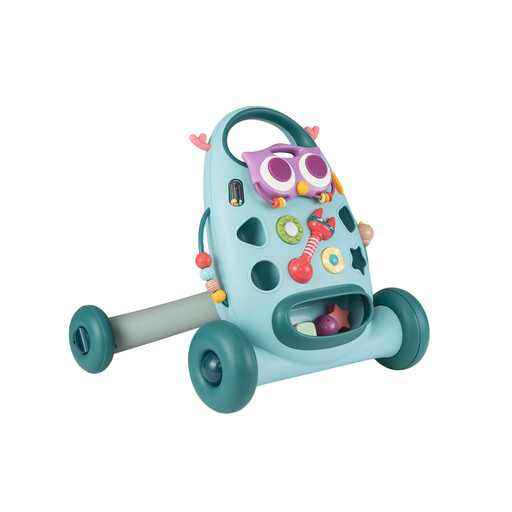
The Concept: This 2-in-1 model ticks all the boxes: a stable push walker for walking and a removable activity centre for development, usable from the very first months.
Its triangular base ensures rock-solid stability. The adjustable speed control on the rear wheels prevents it from shooting off or tipping over.
The removable play panel, with its shape sorter, is inspired by Montessori principles and can also be used on the floor. The wheel speed is fully adjustable, from "turtle" mode to "hare" mode.
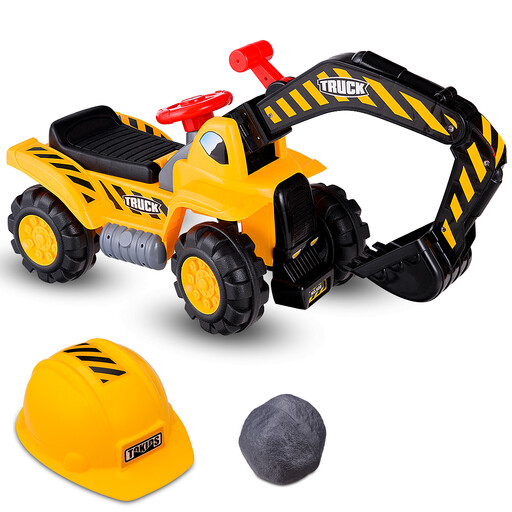
The Concept: Once walking is mastered, this ride-on is perfect for toddlers (from 18-24 months) who want to develop their coordination, balance, and leg strength.
It avoids the trap of the "disposable" first-stage toy. It's a long-term investment that grows with the child and their motor development.
It encourages imaginative play and gross motor skills. The fully functional digger arm is excellent for hand-eye coordination. The included accessories make playtime even more realistic.
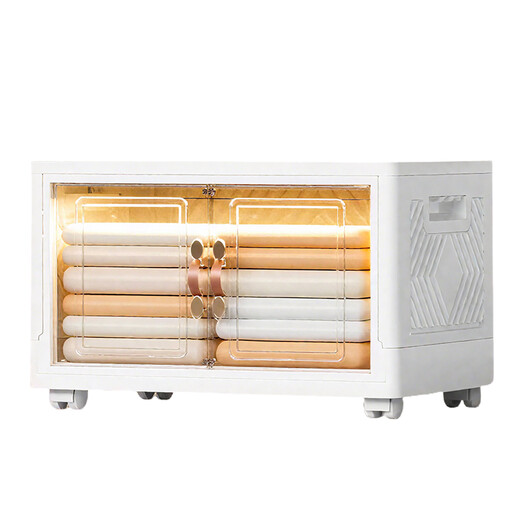
The Concept: A baby walker is great, but it takes up space. This clever storage solution is the answer for parents who want to keep their living room tidy (or at least try).
It tackles a problem often overlooked when buying large toys: the clutter! It's the perfect countermeasure against a living space takeover.
Its XXL capacity of 84 litres, its foldable design for flat storage, and its stackable structure to optimise vertical space.
Explore our full selection of toys that meet our strictest safety and quality standards.
Using a push walker is generally recommended as soon as a child can pull themselves up to a standing position using furniture and shows a desire to move, often between 9 and 12 months. Crucially: the child must already have enough strength to stand up on their own before starting with a push walker.
Above all, do not confuse them! The push walker is placed in front of the child, who pushes it while walking behind it. They support their own weight, mastering their steps and balance. Conversely, the seated walker (the "exersaucer" type), where the baby sits in a harness, is unanimously discouraged by paediatricians and early childhood professionals. Not only can it hinder proper walking development, but it also poses very serious risks of falls, especially near stairs.
On most push walkers with adjustable brakes, the mechanism is located on the rear wheels. It's often a simple knob or screw to turn. By tightening it, you increase the friction on the axle, which slows the wheel. For a beginner, tighten it fully to provide strong resistance and optimal stability. You can then loosen it as your child becomes more confident.