
Livraison le jour même ou le lendemain

Qualité garantie

Débloquez vos offres de bienvenue: Livraison GRATUITE | Jusqu'à -80 % | 30 jours d'essai gratuits à JoyPlus
Téléchargez l'application
A baby's first steps: a magical moment every parent eagerly awaits. To support them during this key milestone, the baby push walker (or walking trolley) is an excellent tool. But beware: with an overwhelming number of options on the market, it's easy to make the wrong choice. A poor choice can quickly turn this purchase into a disappointment. Between unstable models and features that are more gimmicky than useful, you might soon regret the investment.
As a section editor and product expert for Joybuy, I'm here to guide you. Let's break down the common mistakes to avoid and the essential criteria for a smart, safe purchase that's truly suited to your child's development.
To avoid these pitfalls, focus on a few technical details that make all the difference.
A good baby push walker must, above all, have a stable structure. Opt for triangular shapes or models with a wide wheelbase, which ensure perfect balance. In terms of materials, PP and ABS plastics are reliable choices for their durability and safety. Another crucial point is the speed control system. Look for a walker with brakes or, more simply, an adjustment mechanism on the wheels. This feature allows you to slow the wheels for early walkers and then gradually release the tension as they gain confidence.
A well-designed developmental push toy does more than just help with walking. The smartest models are often 2-in-1 walkers that include a removable activity panel. This modularity is a real bonus: your baby can use the walker to get around, but also sit and play with the panel on the floor. This extends the toy's lifespan and stimulates other skills, like fine motor skills and hand-eye coordination.
A good push walker should adapt as your child develops. The adjustable wheel speed is a perfect example of this. Some models go even further with an adjustable-height handle or activities (shape sorters, gears...) that remain engaging over the long term.
Because every child develops at their own pace, here are products suited to different phases of their motor development.
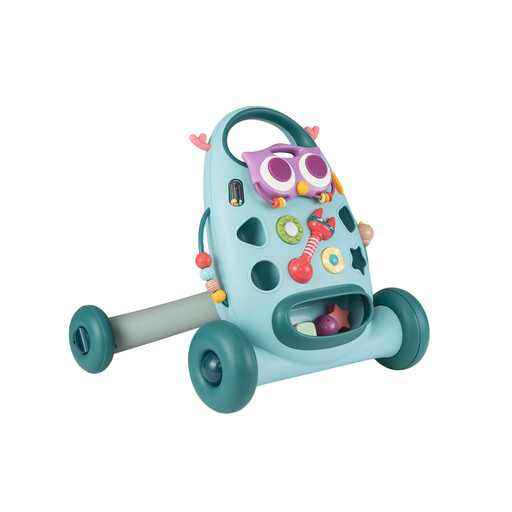
Editor's Verdict: Specifically designed to make those very first steps safer, this model combines a stable structure with an activity centre that stimulates both gross and fine motor skills.
Its wide, triangular base prevents any risk of tipping—a common flaw in narrower models. The adjustable brake on the wheels lets you match the pace to your child's, preventing sudden, uncontrolled starts.
The removable activity panel offers dual functionality: a walking aid and a floor-based developmental toy. The adjustable speed on the rear wheels ensures smooth, gentle progress.
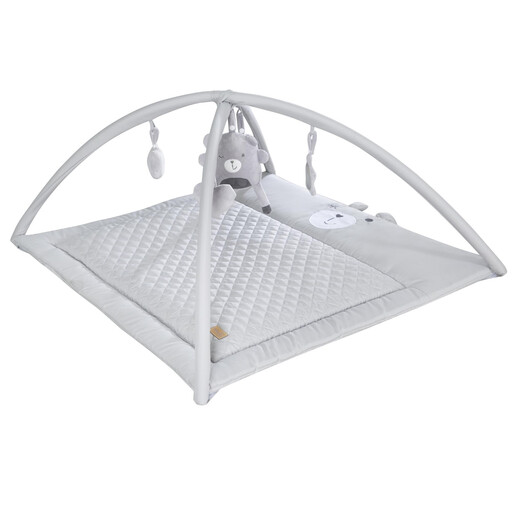
Editor's Verdict: Perfect for babies who aren't yet pulling themselves up. This play mat prepares them by strengthening back, neck, and arm muscles.
Instead of trying to rush the process by pushing a child to walk, this mat focuses on floor-based motor development—a fundamental stage often overlooked by eager parents.
Its surface is comfortable, waterproof, and easy to clean, while the removable arches and toys stimulate hand-eye coordination and your baby's curiosity.
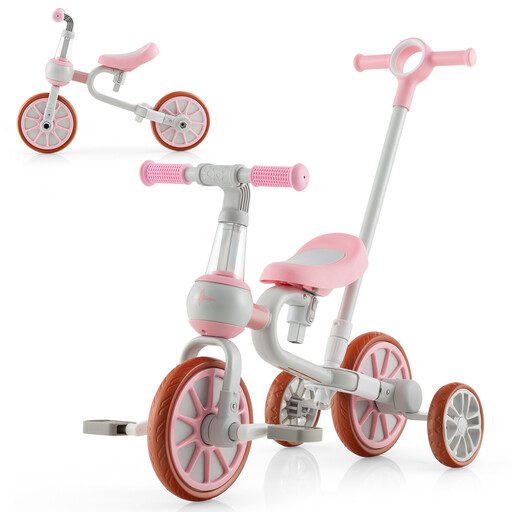
Editor's Verdict: Once walking is mastered, this adaptable tricycle opens the door to new mobility. It gives the child a sense of independence while keeping parents in control with the directional push handle.
It's the logical next step after a push walker, saving you from investing in a toy that will quickly become obsolete. Its 4-in-1 design adapts to your child's growth from ages 2 to 4.
Its adaptable design, which transforms it from a parent-pushed trike to an independent one. The adjustable handle ensures perfect control and maximum safety during those first outings.
Explore our full selection of products that meet our selection criteria and European safety standards.
A push walker is recommended as soon as a baby starts pulling themselves up on furniture, typically between 9 and 12 months. Note that it is a walking aid, not a tool for learning to stand. The child must already have enough muscle tone to hold themselves upright.
On most models, the mechanism is very simple: it's a knob or a tension setting located on the rear wheels. By tightening it, you increase friction to slow down the rotation. This is an essential safety feature for a baby's first steps.
Yes, and it's a major plus! A good removable activity panel turns the walker into a 2-in-1 toy. It stimulates cognitive skills (logic, shape and colour recognition) and fine motor skills. The fact that it's detachable allows the child to play with it on the floor, which extends the toy's appeal long after walking is mastered.