
Livraison le jour même ou le lendemain

Qualité garantie

Débloquez vos offres de bienvenue: Livraison GRATUITE | Jusqu'à -80 % | 30 jours d'essai gratuits à JoyPlus
Téléchargez l'application
Choosing baby pull-ups is not simply a matter of picking the largest pack or the best-known brand. Between weight guidelines, claims of 360° protection, overnight models and potty-training pants, the differences are not always immediately obvious.
For a child weighing 9 to 15 kg, three common mistakes come up time and again:
Size 4 pull-ups generally cover a range close to 8 to 15 kg, but this can vary from one model to another. For example:
The weight shown on the packaging is a useful guide, but it is not the only criterion. Also check that the waistband lies flat, that the elastic around the thighs does not leave marks and that the pull-up does not slip down when your child walks or bends over.
A pull-up that is too large may allow stool or liquid to escape around the back and legs. If it is too tight, it may restrict movement and cause marks. If your child falls between two sizes, it is better to start with a small pack to check the fit before buying a larger quantity.
A leak-proof pull-up nappy generally relies on several features:
Marketing claims should be assessed with a degree of caution. “Day and night protection” describes the use claimed by the manufacturer, but it does not replace regular changing. For overnight use, pay particular attention to whether the model stays securely in place when your child sleeps on their side or moves around a lot.
The Pampers Baby-Dry Pants presented below are advertised with a stretchable 360° waistband, widened leg barriers and a Stop & Protect back pocket. These are features communicated in the product specifications, not a universal guarantee against leaks.
For sensitive skin, look for concrete information rather than relying on a general promise of softness:
Hypoallergenic pull-ups may suit some reactive skin types, but they do not eliminate every risk of irritation. Change the pull-up regularly and stop using it if persistent redness or an unusual reaction occurs. If in doubt, seek advice from a healthcare professional.
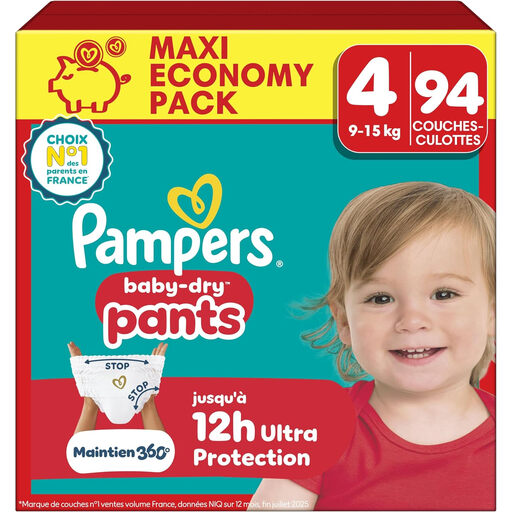
Why this model suits this profile: A larger pack can reduce repeat purchases for families whose child already regularly wears size 4, listed here for 9–15 kg.
Check the size before stocking up on 94 pieces. The larger pack is only worthwhile if your child remains within the 9–15 kg range and the fit suits them.
360° stretch waistband, Stop & Protect back pocket and adhesive tabs for rolling up the pull-up after use, according to the product page.
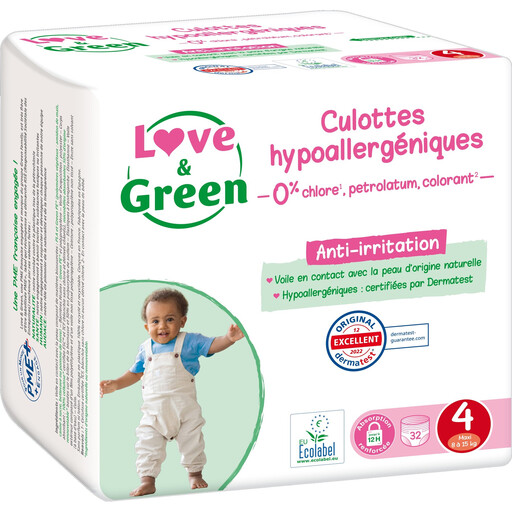
Why this model suits this profile: This option is aimed at parents who pay particular attention to materials, composition and skin tolerance.
The term hypoallergenic does not mean a reaction is impossible. Check the ingredients and monitor your child’s skin during the first few uses.
The manufacturer states that the product uses FSC- and TCF-certified cellulose, water-based inks, and contains no lotions, dyes or chlorine.
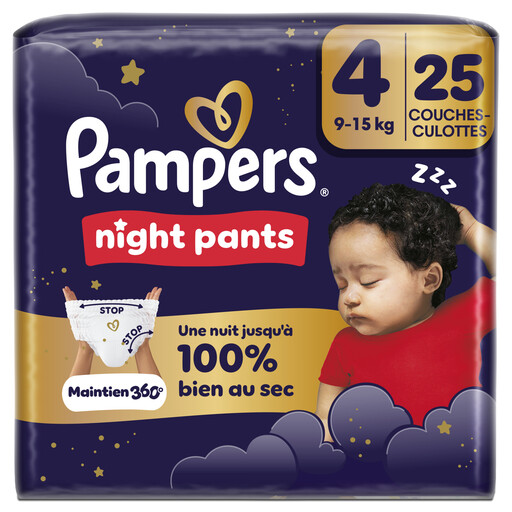
Why this model suits this profile: The product page positions it for overnight use, particularly for parents looking for a fit that can follow their child’s movements during sleep.
An overnight nappy is not designed to remain unchanged beyond your child’s needs. Check the fit, saturation level and condition of the skin.
The model claims to offer leg barriers twice as wide as those on an earlier version, along with a back pocket.
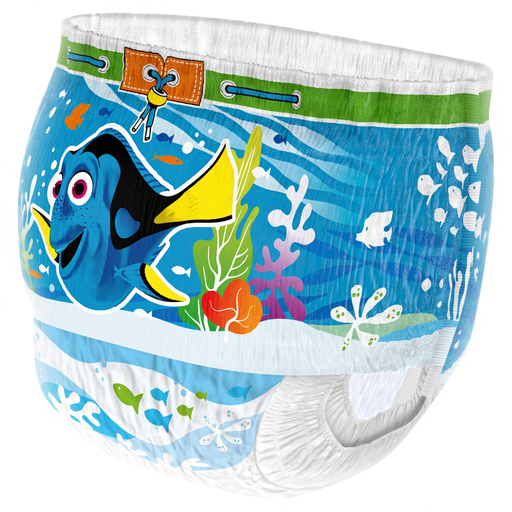
Why this model suits this profile: These swim pants are designed for the pool, baby swimming classes or the beach, with a weight range of 7–15 kg.
Do not replace swim pants with an ordinary nappy: the latter may become waterlogged and very heavy.
The material is described as resisting swelling in water. Stretchable sides and a side-opening design make changing easier.
Potty-training pants can support the stage when your child begins taking off and putting on their clothes independently. Their underwear-like shape makes them easy to pull on while standing, particularly for children who find it difficult to stay still.
They do not necessarily replace a highly absorbent nappy. For naps, long journeys or overnight use, choose a model whose absorbent core and fit match your child’s actual needs. During potty training, select a comfortable size that is not too loose, and show your child how to tear the sides if necessary.
Disposable pull-ups do not all have a clearly defined or comparable expiry date. Store them in a dry, clean place away from direct sunlight, keeping the protective packaging intact. Avoid very damp rooms, such as a poorly ventilated bathroom.
Do not buy several boxes in a size your child is about to outgrow simply to take advantage of a lower unit price. An unsuitable size leads to more frequent changes, leaks and waste.
Explore an updated selection of products matching these size, comfort and protection criteria for young children.
Start with the weight range shown on the pack, then check the fit around the waist and thighs. Not all size 4 models cover exactly the same range: some indicate 8–15 kg, others 9–15 kg or 9–14 kg.
Yes, if its product page indicates day-and-night use and its absorbency level matches your child’s needs. However, no model eliminates the need for regular changing or for checking the skin and fit.
Use only baby swim nappies designed for water. They are made to limit swelling and contain stool, but should not be treated as absorbent nappies intended to remain dry for several hours.