
Livraison le jour même ou le lendemain

Qualité garantie

Débloquez vos offres de bienvenue: Livraison GRATUITE | Jusqu'à -80 % | 30 jours d'essai gratuits à JoyPlus
Téléchargez l'application
The arrival of a child quickly brings a long shopping list: nappies, wipes, skincare, laundry detergent, saline solution and growing-up milk. Yet the most prominently marketed product isn’t necessarily the one that best suits your baby’s weight, age or habits.
To choose with confidence, it’s best to look beyond words like “natural”, “gentle” or “enhanced protection”. The ingredients, format and usage instructions often matter far more than the marketing claims.
Terms like “hypoallergenic”, “dermatologically tested” or “sensitive skin” refer to a formulation or protocol claimed by the brand. They do not guarantee that no individual reaction will occur. A newborn’s skin can react to a fragrance, a preservative, an adhesive or an ingredient that is otherwise well tolerated by most users.
For skincare intended for delicate skin, choose a formula that is easy to understand, with as few unnecessary ingredients as possible. Also introduce each new product gradually.
A larger pack may seem more economical, but the real cost depends on the number of changes, the risk of leaks and how well the nappy fits your child’s weight. A nappy that is too big can let moisture through; one that is too tight may mark the skin and become uncomfortable.
Always check the weight range, the number of nappies and the features that are genuinely useful: wetness indicator, umbilical cut-out, fragrance-free and the proportion of plant-based materials.
Family packs and monthly formats are convenient once a product has proven itself. For products intended for newborns, however, a small pack allows you to check skin reaction and ease of use before stocking up for several weeks.
For nappies, weight is the primary guide. Pampers Premium Protection size 0 is designed for newborns under 3 kg, while LOVE & GREEN size 1 suits babies from 2 to 5 kg. LOVE & GREEN size 5, meanwhile, is intended for children from 11 to 25 kg.
These indications are starting points. Your child’s build and the frequency of changes should also guide your choice. If you experience repeated leaks or persistent marks, try a different size or cut.
For eco-friendly baby nappies, look for verifiable information: proportion of bio-based materials, FSC-certified cellulose, recycled or recyclable packaging, and fragrance-free and lotion-free claims. Certifications such as FSC, Ecolabel, OEKO-TEX or Dermatest are based on different standards; they should not be presented as equivalent.
For fragrance-free baby wipes, also check for the presence of alcohol and fragrance, as well as the full list of ingredients. Pampers Sensitive wipes are claimed to be alcohol-free and fragrance-free. As for the “dermatologically tested” claim, it refers to the protocol or formulation and does not replace reading the label.
A product intended for daily use should remain simple to use and store. LOVE & GREEN organic baby liniment is available in a 500 ml bottle. It is applied to a cotton pad and does not require rinsing. Biolane liniment, sold in a 300 ml format, works on the same principle and contains olive oil among its ingredients.
For baby saline solution, single-dose units are both practical and hygienic. Biolane saline solution comes in 30 single-use doses of 5 ml each. The same dose should not be used for multiple people, nor for both eyes and nose.
Feeding requires particular care. HiPP Combiotic 3 organic growing-up milk is intended for children from 10 months to 3 years. It contains milk and fish; its preparation must follow the instructions on the packaging. For any questions about infant feeding, seek advice from a healthcare professional.
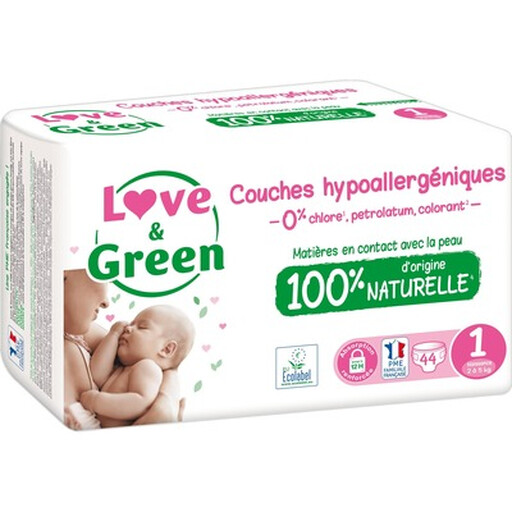
Why this choice suits this profile: With 44 nappies, this pack lets you try them out without filling your cupboards. It is suitable for newborns from 2 to 5 kg and features a cut-out designed for the umbilical cord area.
The size and weight range are clearly stated, reducing the risk of an unsuitable purchase. The nappy is claimed to be fragrance-free and lotion-free.
44 units, claimed 61% bio-based components and FSC-certified absorbent cellulose.
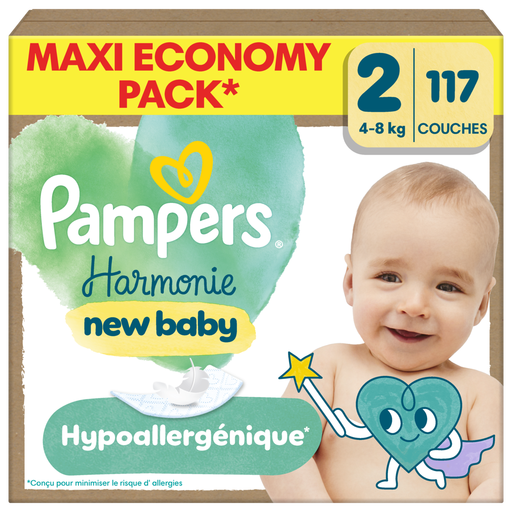
Why this choice suits this profile: This pack of 117 nappies is aimed at families looking for a large format with practical features for everyday changes.
Size 2 corresponds to a weight range of 4 to 8 kg. Check your baby’s weight before being tempted by this large format.
Wetness indicator, cellulose from FSC-certified forests and a top sheet containing 50% plant-based components according to the product sheet.
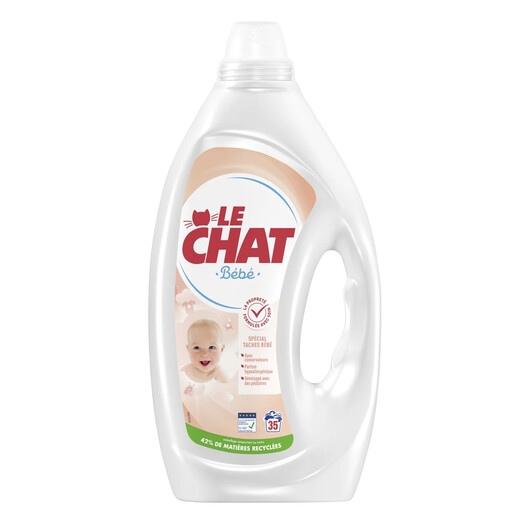
Why this choice suits this profile: With 35 washes claimed, this sensitive-skin laundry detergent is ideal for households running load after load of babygros, sheets and nursery clothes.
Compare the number of washes and dosage against the bottle price. The ECARF certification is stated by the manufacturer, but it does not rule out individual reactions.
1.575 L format, suitable for machine or hand washing, bottle containing at least 42% recycled material according to the product sheet.
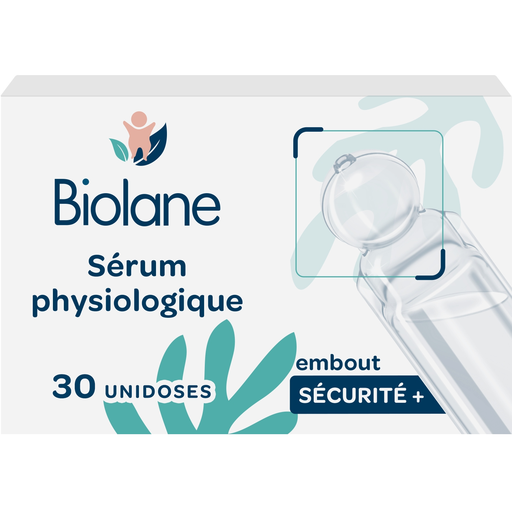
Why this choice suits this profile: The 30 single-dose units of 5 ml each slip easily into the changing bag, can be kept at home and are easy to take on the go.
The single-dose format avoids having to store an opened bottle. Each dose must be discarded after use and must not be injected.
Sterile saline solution at 0.9% sodium chloride, preservative-free, intended for nasal and eye hygiene.
We have put together a comprehensive selection, updated in real time, of products that meet these demanding criteria and comply with European safety regulations.
Start with a reasonable quantity of nappies suited to the estimated weight, cotton wool or fragrance-free baby wipes, liniment, saline solution, a few items of clothing and a suitable laundry detergent. Bulk stocks can wait until the size and tolerance are confirmed.
Check the expiry date and the period after opening indicated on the packaging. Close bottles carefully and store them in a dry place at a stable temperature. Single-dose saline solution units are intended for single use only.
Compare the price per nappy, the number of washes per bottle and the price per kilogram of milk. Reserve large formats for products your child already tolerates. For food products, follow the stated age, preparation conditions and recommendations on the packaging.