
Livraison le jour même ou le lendemain

Qualité garantie

Débloquez vos offres de bienvenue: Livraison GRATUITE | Jusqu'à -80 % | 30 jours d'essai gratuits à JoyPlus
Téléchargez l'application
When a baby arrives, the entire home transforms into a field of exploration. To support their first discoveries, from crawling to taking their first steps, choosing a baby play mat is a crucial decision. But faced with a jungle of available models, it's easy to get lost and fall into common traps. As a product specialist at Joybuy, my mission is to bring you clarity and help you cut through the marketing noise to focus on what truly matters: safety and everyday practicality.
Here are the 3 most common mistakes to avoid when making your purchase:
To ensure you invest in a safe and durable play space, two technical points must be scrutinised.
Your child's comfort and protection depend on the mat's composition. The two star materials on the market are XPE (cross-linked polyethylene) foam and PVC (polyvinyl chloride).
Beyond the material, thickness is a non-negotiable criterion. A minimum thickness of 1 cm is recommended to properly cushion minor falls. For more adventurous babies who are starting to stand, a thickness of 1.5 cm provides enhanced safety. Finally, always insist on compliance with the EN 71 standard, the gold standard that guarantees the product meets European safety standards for toys.
The practicality of a baby floor mat is judged by how well it fits into your family's life.
Because every family is unique, here are a few options that meet different needs while adhering to our criteria for safety and practicality.
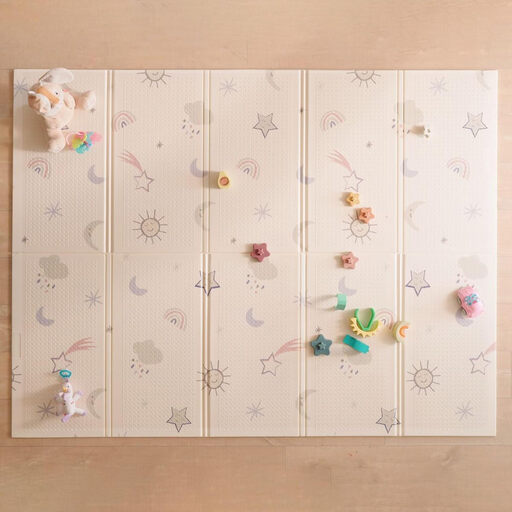
Why this model? The perfect solution for parents who want a large, comfortable mat that can also be easily stored away. Its foldable design is a decisive advantage in apartments or homes where the living room also serves as a playroom.
This single-piece mat sidesteps the trap of hard-to-clean tiles. Its smooth, waterproof surface can be wiped clean with a simple sponge, preventing dirt from accumulating in crevices.
Extra-large size (200 x 150 cm) for a generous play area. Its reversible design and ease of transport make it a versatile ally, both at home and on the go.

Why this model? Perfect for parents who want to dedicate a space to motor skill development. This set transforms a corner of the room into a true Montessori-inspired activity course, inviting children to climb, crawl, and explore in complete safety.
No more sagging mats! Its high-resilience foam is designed for intensive use. Additionally, the removable and machine-washable covers solve the maintenance issue.
Compliant with the European safety standard EN71. Its modular design offers endless play possibilities and stimulates the development of coordination and balance.
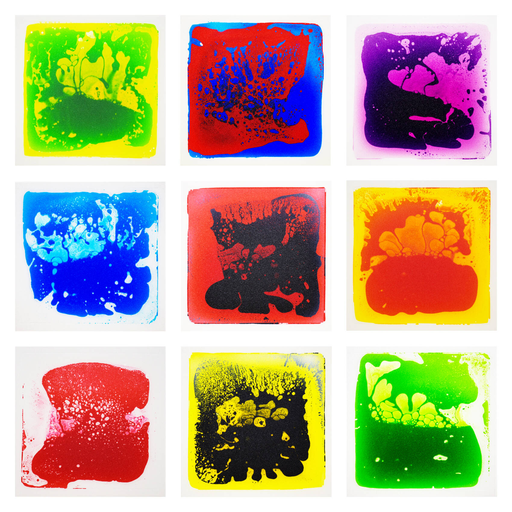
Why this model? For parents seeking a play space that is as stimulating as it is original. More than just a mat, these interactive tiles are a true developmental tool that fascinates children with the dance of colours that comes to life under their feet.
These tiles avoid the vague "non-toxic" trap by using a cosmetic-grade liquid, perfectly sealed within an ultra-durable PVC shell. Safety was the absolute priority during their design.
A unique visual and tactile stimulation that encourages movement and curiosity. Their non-slip base ensures perfect stability on all types of flooring.
We have curated a complete range of products that meet our quality requirements and the strictest safety standards.
A thickness of 1 cm is an excellent starting point for cushioning minor falls and insulating from the cold. For babies who are starting to sit up or stand, a thickness of 1.5 cm to 2 cm will offer superior protection and comfort.
For daily cleaning, a soft, damp cloth with a little neutral soap (like castile soap) is more than enough. Avoid harsh detergents and chemical products that could damage the surface and be harmful to your child. Make sure the activity mat is completely dry before using it again to prevent any mould growth.
Yes, safety primarily depends on the quality of the materials and the thickness, not the format. A well-made foldable play mat has the advantage of a uniform, seamless surface. Foam floor tiles, on the other hand, are modular, but you must ensure the joints fit together perfectly. The choice, therefore, comes down to modularity on one side, and ease of storage and cleaning on the other.