
Livraison le jour même ou le lendemain

Qualité garantie

Débloquez vos offres de bienvenue: Livraison GRATUITE | Jusqu'à -80 % | 30 jours d'essai gratuits à JoyPlus
Téléchargez l'application
Creating a play space that is both safe and stimulating is a challenge for all new parents. The baby play mat stands out as one of the first essential purchases. But be careful: with a huge range of options, it's easy to fall for a model that quickly proves to be unusable or, worse, unsafe for your little one.
To avoid buyer's remorse, let's review the most common pitfalls and the marketing promises to watch out for.
To sort through the options and invest in a model that will last, focus on three essential technical criteria. Once you've mastered them, they will guide you to the perfect choice.
The non-toxicity of the materials is the number one criterion. It's non-negotiable.
This is the first visible indicator of comfort and level of protection.
Don't underestimate the density of the foam, either. High-density foam will deform less quickly and offer better support over the long term.
The choice of format depends on your space and lifestyle.
Our editorial team has scrutinised several models based on these strict criteria. Here are our recommendations, tailored to different needs and budgets.
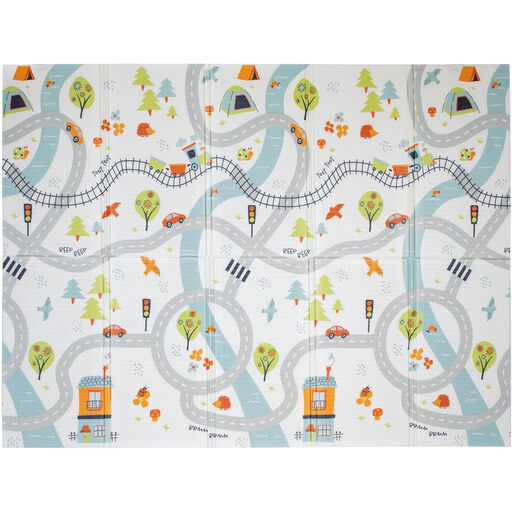
Why we love it: This large play mat (200 x 150 cm) is a true everyday ally. Its foldable design allows you to store it in a flash, freeing up living room space. Perfect for parents juggling between a play area and a living space, both at home and on the go.
Its single, waterproof surface cleans with a simple wipe, saying goodbye to the headache of puzzle mat seams. Its 1 cm thickness provides reliable cushioning for baby's first explorations.
Reversible mat: one fun side with a car track to stimulate the imagination, and a more subtle side that blends in with your decor. Lightweight and easy to transport.
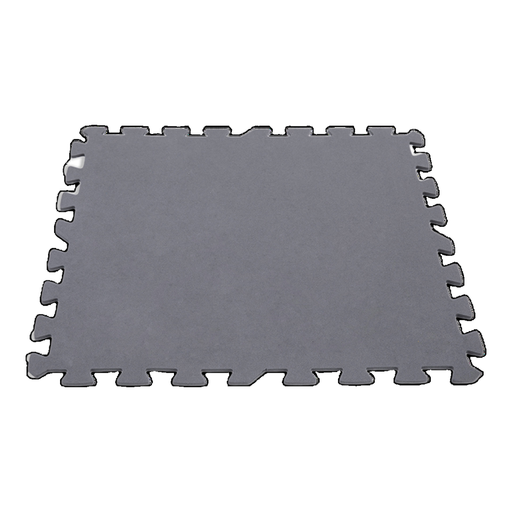
Why we love it: For those who want a flexible solution, this set of 8 tiles creates an adaptable 2 m? surface. Ideal for room corners, hallways, or for expanding an existing play area as the child grows.
This product plays it straight: it's a floor protection mat, not a cushioning mat. Its 0.5 cm thickness is clearly stated, avoiding the false promise of fall cushioning. Perfect for protecting a hardwood floor from toys.
Total modularity for a custom play area. The tiles interlock securely and can be reconfigured at will. Also useful for other purposes (poolside, exercise).
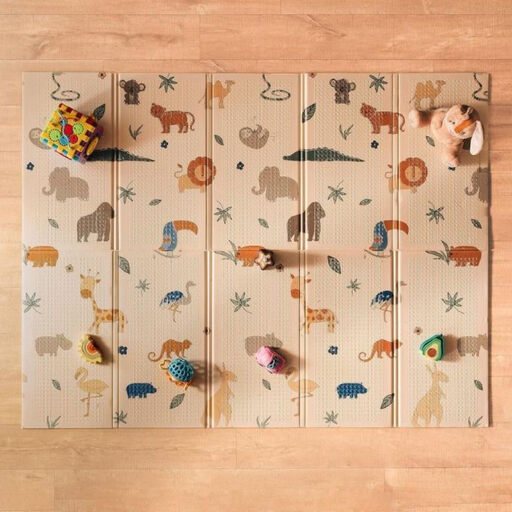
Why we love it: This mat combines functionality with aesthetics. The reversible design lets you switch from a colourful Safari world, perfect for development, to a more neutral pattern that harmonises with a contemporary interior. The perfect choice for parents who refuse to sacrifice their decor at the altar of baby gear.
It proves you can have style without sacrificing safety. Made of plastic foam, it offers a comfortable 1 cm thickness and a hygienic surface, meeting both safety and practicality criteria.
Dual design for a space that evolves with your child. The foldable play mat format makes it just as practical as other models in the range, combining the best of both worlds.
Find our complete selection of products approved by our editors, compliant with safety standards and our selection criteria.
A thickness of 1?cm is the recommended minimum to ensure good cushioning during play and for the first tumbles. For babies learning to sit or crawl, a thickness of 1.5 to 2?cm can offer extra protection. Thinner mats (less than 1?cm) are designed more to insulate from the cold or protect surfaces than to absorb shock.
Most single-piece foam mats (foldable or roll-up) are very easy to maintain. A simple wipe with a damp cloth and mild soap is sufficient. Rinse with another damp cloth and let it air dry. Avoid harsh cleaning products, abrasive sponges, and full immersion in water, which could damage the surface or alter the colours.
A play mat can be used from the very first months. It provides a clean, comfortable surface for tummy time, which is essential for strengthening neck and back muscles. As the child grows, the mat becomes their primary play area for crawling, sitting, and later for playing safely with their toys.