
Livraison le jour même ou le lendemain

Qualité garantie

Débloquez vos offres de bienvenue: Livraison GRATUITE | Jusqu'à -80 % | 30 jours d'essai gratuits à JoyPlus
Téléchargez l'application
A blocked nose can quickly disrupt a baby’s feeds, sleep and comfort. Between saline solution for babies, nasal sprays, seawater and nasal aspirators, it is not always easy to know which option to choose. Packaging often makes very general claims, whereas it is the practical details that really make a difference day to day.
Here are the main pitfalls to avoid and the criteria to consider before buying a baby nasal care product.
A saline solution or seawater spray is primarily used to rinse, moisturise or help clear secretions. That does not make it a medical treatment for every cause of congestion. Formulas containing essential oils or other specific ingredients may also be reserved for certain age groups.
For example, ProRhinel Extra Eucalyptus nasal spray is intended for adults and children over 6 years old. It is therefore not suitable for a baby, even though the word “nasal” clearly appears on the packaging.
A nozzle, spray pressure or formula designed for a young child is not necessarily suitable for a baby. Always check the age recommended by the manufacturer, along with the instructions in the leaflet. For a child who cannot yet blow their nose, nasal washing for babies with saline solution in single-dose vials may be easier to manage.
A reusable nasal aspirator must be cleaned after every use. Disposable tips, meanwhile, must be replaced each time. Buying a device without ensuring that you have enough nasal aspirator tips can quickly lead to unexpected costs and may even encourage poor hygiene practices.
For a baby, choose a product that explicitly states that it is suitable for babies and young children. 5 ml single-dose vials are practical for occasional use and avoid having to store a bottle that has already been opened. Saline solution for babies based on 0.9% sodium chloride is generally supplied as a washing or instillation solution, without preservatives where applicable.
A child’s nasal spray may be more convenient when the whole family uses it, but check for a safety nozzle, the spray pressure and the minimum permitted age.
Take the time to check the list of ingredients, precautions for use and storage conditions. A sterile saline solution intended for single use must not be kept after opening. It must not be used by more than one person, nor used for both the eyes and nose with the same vial.
For seawater intended for nasal use, check whether the solution is isotonic or hypertonic, as well as the recommended age. A formula enriched with aloe vera may be offered for hygiene and moisturisation, but bear in mind any possible allergies to its ingredients.
A 150 ml bottle may be suitable for daily use, while single-dose vials can easily be carried in a changing bag. For a manual nasal aspirator, compare the price of the device and the availability of replacement tips. The PRORHINEL Baby Nasal Aspirators comes with two disposable tips, while the PRORHINEL Disposable Flexible Tips pack adds ten units.
Also check the cleaning instructions: some parts can be washed by hand but must not be sterilised in a microwave.
The products below are suited to different uses. The information provided here reflects the features stated by the manufacturers: always check them on the packaging of the product you receive.
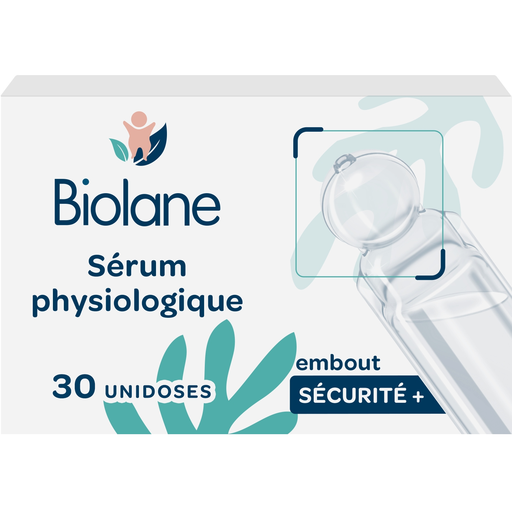
Why this product suits this profile : The 30 single-dose 5 ml vials are ideal for parents who want to start with a simple solution that does not require assembling a device.
Each vial is intended for single use, reducing the risks associated with storing an opened bottle.
Sterile 0.9% sodium chloride solution, preservative-free, with a safety tip.
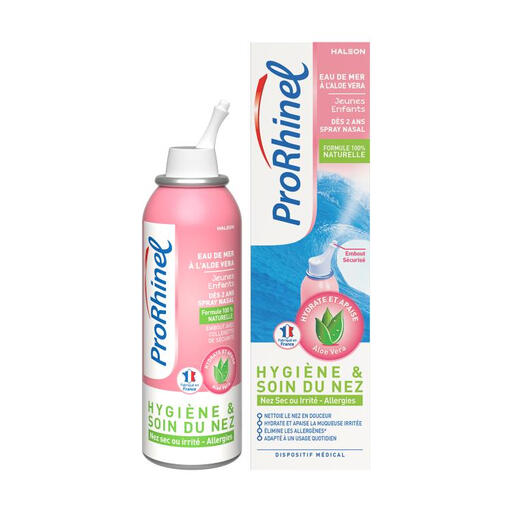
Why this product suits this profile : This spray is designed for families looking for a pressurised format and a fine mist for children aged 2 to 6.
The recommended age is clearly specified: this spray is not suitable for children under 2.
100 ml spray containing isotonic seawater and aloe vera extract, with a fine mist.
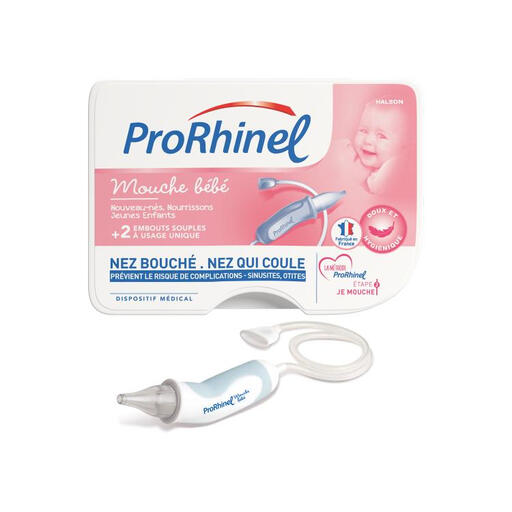
Why this product suits this profile : This manual nasal aspirator is designed for babies and children under 3 who are prone to nasal secretions.
Its manual operation means there is no need to rely on a rechargeable battery, while the absorbent filter helps prevent secretions from reaching the device.
Manual device, two disposable tips included, materials stated to be free from BPA, phthalates, latex and lead.
We have put together a complete, up-to-date selection of products that meet these exacting criteria, in line with European safety regulations.
A single-use vial should be used immediately after opening and then discarded. Do not keep any remaining solution for later.
The frequency depends on the child’s age, the severity of the congestion and the recommendations given in the instructions. Nasal washing should remain gentle, without excessive pressure. If in doubt, seek advice from a healthcare professional.
It all depends on the format you choose. Single-dose vials need to be replaced regularly, while a 100 or 150 ml spray can be used several times, provided you follow the recommended period of use after opening. If you use a nasal aspirator, also remember to budget for the regular purchase of disposable tips.