
Livraison le jour même ou le lendemain

Qualité garantie

Débloquez vos offres de bienvenue: Livraison GRATUITE | Jusqu'à -80 % | 30 jours d'essai gratuits à JoyPlus
Téléchargez l'application
Choosing baby nappies size 3 isn’t just about counting how many nappies come in a pack. With all the promises about absorbency, mentions of “sensitive skin”, value packs and eco-friendly options, it’s easy to end up paying more for a feature that won’t make much difference day to day.
For parents of a baby around 6 to 10 kg, three common pitfalls keep cropping up:
Baby nappies for 6 to 10 kg are usually size 3, but the ranges vary between manufacturers. Some eco-friendly size 3 nappies are designed for babies from 4 to 9 kg, while others cover a range of 6 to 11 kg.
Pay close attention to how the nappy sits on your child:
If leaks happen mainly at the back, the issue might be how the nappy is positioned or that it’s become too small – not necessarily a lack of absorbency.
Leak-proof nappies usually rely on an absorbent core, elastic leg barriers and sometimes a back pocket. These features are especially handy during naps, overnight or on longer trips.
Here are the details worth comparing:
A long-lasting absorbency claim doesn’t mean you should put off changing. Check the instructions on the packaging and change the nappy as soon as it feels damp or soiled.
To choose nappies for sensitive skin, it’s better to look at the ingredients than to rely on the product name alone. Some models are advertised as fragrance-free, lotion-free or with a plant-based surface. Others are described as hypoallergenic nappies or as having been dermatologically tested.
These claims tell you about the product’s design or the checks the manufacturer says it has done; they don’t guarantee it will suit every child. If you notice persistent redness, itching or irritation, stop using the product and ask a healthcare professional for advice.
Labels such as FSC, EU Ecolabel or certain textile certifications can give you useful information about the materials or processes used. On their own, though, they don’t prove better performance.
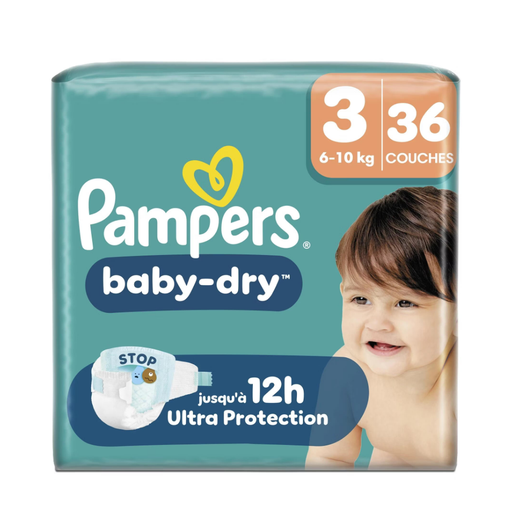
Why this suits this profile: A pack of 36 nappies lets you check the fit and comfort before committing to a larger size.
The weight range is clearly stated and the wetness indicator means you don’t have to open the nappy just to check if it needs changing.
A fast-absorbing core, a Stop & Protect back pocket and a ComfortTouch outer cover.
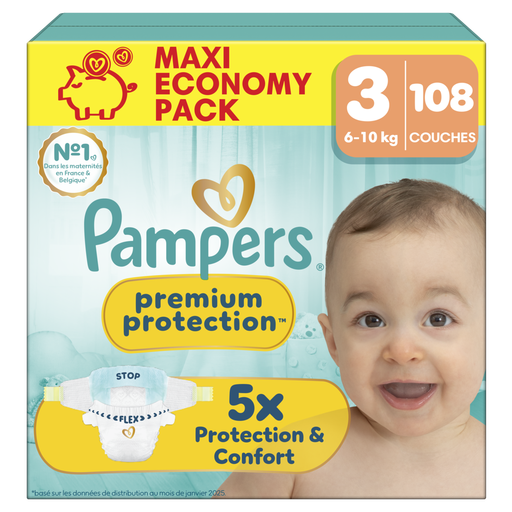
Why this suits this profile: A large pack is ideal for families who already know the fit works and want to buy less often.
The number of nappies is clearly stated, so you can work out the price per nappy rather than just comparing the pack price.
Over 1,000 absorbent cells claimed, a Stop & Protect back pocket and materials described as soft.
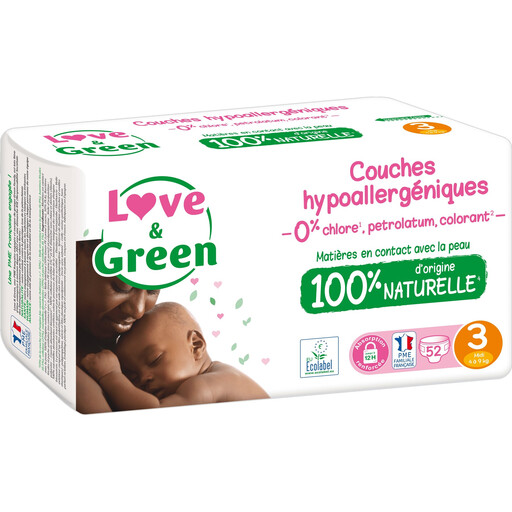
Why this suits this profile: This product is aimed at parents who prioritise plant-based materials and a fragrance-free, lotion-free composition.
The ingredients, the lack of fragrance and the claimed certifications are all detailed, rather than being summed up with a simple eco promise.
68% claimed bio-based ingredients, FSC-certified cellulose and recycled and recyclable packaging.
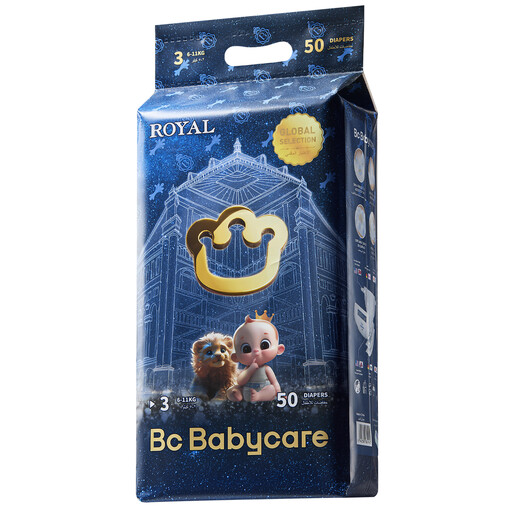
Why this suits this profile: Parents who change their baby often will appreciate the three-stripe indicator and the weight range of 6 to 11 kg.
The three indicators and claimed 360° barriers give you concrete features to check in everyday use.
A claimed 460 g/m² absorbent core, pH 5.5 surface and an adjustable elastic waistband.
We’ve put together a full, real-time selection of products that meet these exacting criteria and European safety regulations.
Size 3 is usually suitable for babies from 6 to 10 kg, but the range depends on the brand. Some models start at 4 kg, while others go up to 11 kg. Check the manufacturer’s sizing chart and make sure the nappy fits well around the tummy and thighs.
A nappy should be changed as soon as it feels damp or soiled. How long it lasts depends on the amount of urine, bowel movements, your child’s activity level and the time of day. A wetness indicator makes it easier to check, but it doesn’t replace regular checks.
No. Divide the pack price by the number of nappies to get the cost per nappy. Then compare the weight range, the fit and the storage conditions. A smaller pack can be a safer choice if your baby is close to moving up a size.