
Livraison le jour même ou le lendemain

Qualité garantie

Débloquez vos offres de bienvenue: Livraison GRATUITE | Jusqu'à -80 % | 30 jours d'essai gratuits à JoyPlus
Téléchargez l'application
Choosing baby nappies isn't just about counting how many are in a pack. A poorly fitted nappy can cause leaks, leave marks on the skin or become uncomfortable as soon as your little one starts wriggling. On the other hand, buying a large stock too early risks tying up part of your budget in a size that quickly becomes too small.
Here are the criteria to consider before placing your order, along with a selection of models suited to different family needs.
The claim protection for up to 12 hours refers to a performance level stated by the manufacturer under specific conditions. It doesn't mean a nappy should stay on for twelve hours. Soiled nappies and moisture require regular changes, especially during the day.
Your child's body shape, sleeping position and the amount of liquid absorbed also affect the risk of leaks. For nighttime, choose a well-fitted nappy, check the leg cuffs and change it as soon as needed.
Two babies of the same age can wear different sizes. Indicators such as baby nappies 3-6 kg, 6-10 kg, 9-15 kg or 13-19 kg are far more useful benchmarks.
A nappy that's too small will compress the tummy and leave red marks. One that's too big can create gaps around the back or legs. The recommended weight is a starting point: also observe how the nappy sits after a few minutes of movement.
Not all eco-friendly nappies are created equal. Check the genuinely documented features: FSC-certified cellulose, TCF chlorine-free bleaching, recycled or recyclable packaging, and the absence of lotions, dyes or fragrance.
The term "natural" alone isn't enough to describe a nappy's composition. Always consult the product page and packaging, especially if your child has sensitive skin.
The main sizes available generally cover the following needs:
The fasteners should close properly without being too tight. The elastic should hug the thighs without leaving gaps. Once the nappy is on, slide a finger between the waistband and the tummy: this will let you check it isn't applying too much pressure.
For day and night leak protection, look for concrete features: an absorbent core, elastic leg cuffs, a stretchy waistband and a back pocket. Some Pampers nappies highlight a "Stop & Protect" system and instant absorption in their product description. These are features stated by the brand, and should be considered alongside size and fit.
Nappy pants are particularly well suited to active babies. Their stretchy waistband moves with them and the side openings make changing easier. However, they still require the right size: too loose, and a nappy pant can also let moisture through.
To choose hypoallergenic nappies or nappies for sensitive skin, check for the following:
These details tell you about the product's design and the checks stated by the manufacturer. They are not a medical guarantee. If irritation persists, stop using the product and seek advice from a healthcare professional.
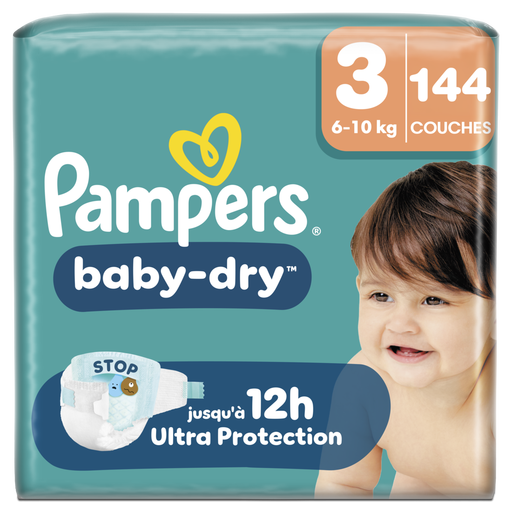
Why this choice suits this profile: With 144 nappies, this pack gives you a handy stock for a baby in size 3, without needing to place multiple orders.
The 6 to 10 kg weight range helps you avoid choosing solely by age. However, keep an eye on how quickly your child is growing before buying a large pack.
Pampers states a fast-absorbing core, a wetness indicator and a Stop & Protect back pocket.
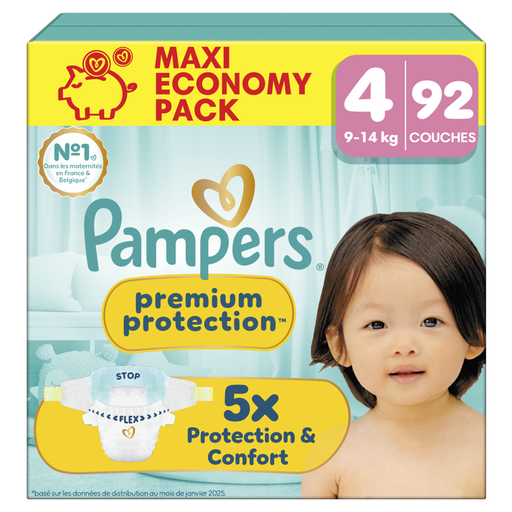
Why this choice suits this profile: This size 4 nappy focuses on a material described as soft, a Flex & Protect waistband and a pack of 92 for everyday changes.
The description details the absorbent cells, back pocket and materials in contact with the skin, rather than relying on a vague promise.
The brand states over 1,000 micro-absorbent cells, dermatological testing and the absence of fragrance allergens listed by the European Union.
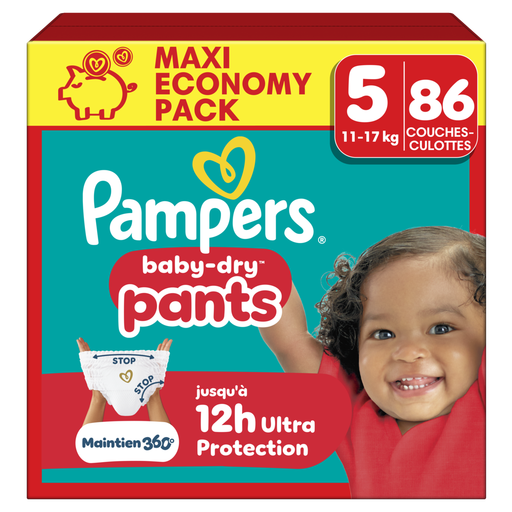
Why this choice suits this profile: The nappy pant format keeps up with active little ones and makes dressing easier before heading out or during potty training.
The 360° stretchy waistband and leg cuffs help reduce the risk of the nappy shifting when your child walks, bends or rolls over.
Side tear-away removal, adhesive tape for rolling up the used nappy and protection stated for up to 12 hours.
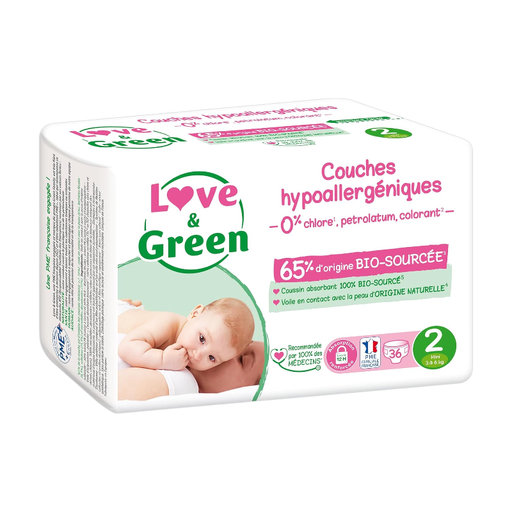
Why this choice suits this profile: This model is designed for the early months, when parents want to closely examine the composition and material certifications.
The product page mentions the absence of lotion, fragrance and dyes, as well as a naturally sourced layer in contact with the skin.
Size 2 for babies 3 to 6 kg, FSC-certified cellulose, TCF process and a cut designed to reduce friction around the umbilical cord.
We've compiled a comprehensive, real-time selection of products that meet these exacting criteria and European safety regulations.
Move up a size when the fasteners are difficult to close, marks remain visible on the tummy or thighs, or leaks appear despite the nappy being correctly positioned. Compare your child's weight with the range stated on the pack.
It's best to change a wet or soiled nappy promptly. Long-lasting protection claims mainly relate to stated performance in certain situations, particularly overnight. They don't replace regular checks or the recommendations on the packaging.
They can encourage independence: your child can help with dressing and the sides tear away for easy removal. However, choose the size based on weight and body shape, then check that the waistband and cuffs stay securely in place during movement.