
Livraison le jour même ou le lendemain

Qualité garantie

Débloquez vos offres de bienvenue: Livraison GRATUITE | Jusqu'à -80 % | 30 jours d'essai gratuits à JoyPlus
Téléchargez l'application
Between 9 and 14 kg, choosing the right baby nappies size 4 can quickly become a headache. Your little one is moving more, sometimes sleeping through the night, and may even be starting to show an interest in potty training. A poorly fitted nappy can lead to leaks, leave marks on the thighs, or restrict your child's movement.
Size 4 doesn't cover exactly the same weight range across different brands. Some products are designed for 7–14 kg, others for 9–14 kg, 8–15 kg or 9–15 kg. The weight stated on the packaging is therefore the first thing to check.
A nappy that's too small will compress the tummy and may leave gaps around the legs. Conversely, a nappy that's too large can also leak if its barriers don't follow your child's movements properly.
Phrases like "day and night protection", "up to 12 hours" or "anti-leak" are product features and manufacturer claims. They don't guarantee the same result for every baby. Your child's body shape, the amount of liquid, how often you change the nappy, and their sleeping position all play a part.
For night-time, make sure to check for an absorbent core, elasticated barriers and reinforced protection at the back.
A mega pack of baby nappies often works out cheaper per nappy. But if the fit isn't right, or if your little one quickly moves up to the next size, you could end up with a stockpile that's hard to use up. When trying a new brand, it's best to start with a pack of 25 to 46 nappies and check the comfort before committing to the family-size format.
Start with your child's actual weight, then look at the fit: the waistband should sit snugly without leaving lasting marks, while the barriers should follow the creases of the groin. A baby nappy for 9–14 kg can suit both a slim child and a sturdier one, but the shape of the waistband varies between models.
For children who are walking or who are happier with standing nappy changes, size 4 nappy pants are especially practical. They pull on like underwear and have tear-away sides for easy removal.
For daytime, look for a wetness indicator, a fast-absorbing core and easy-to-adjust fastenings. At night, day and night absorbent nappies need to stay securely in place when your baby rolls over or wriggles.
Pockets or barriers at the back can help prevent leaks, but the fit is still the most important factor. After putting the nappy on, always remember to pull the elasticated leg cuffs outwards.
For sensitive skin baby nappies, check whether the ingredients list includes perfume, lotion, latex or any other additives your child has reacted to before. Products described as hypoallergenic nappies or dermatologically tested may suit some families, but they don't offer an individual medical guarantee.
Eco-friendly options may contain certified cellulose, plant-based components or recycled packaging. These features don't automatically mean the nappy is fully biodegradable. Eco-friendly size 4 nappies are still generally disposable products that go in the household waste.
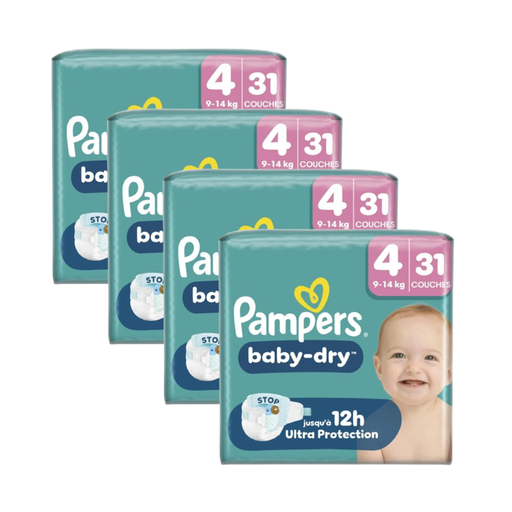
Why this choice suits this profile: With 124 nappies, this pack lets you establish a regular routine while keeping an eye on the cost per nappy.
The product page states a 9–14 kg range, a wetness indicator and a Stop & Protect back pocket – concrete features that are more useful than a vague general promise.
Fast-absorbing core, soft outer cover and adjustable side fastenings.
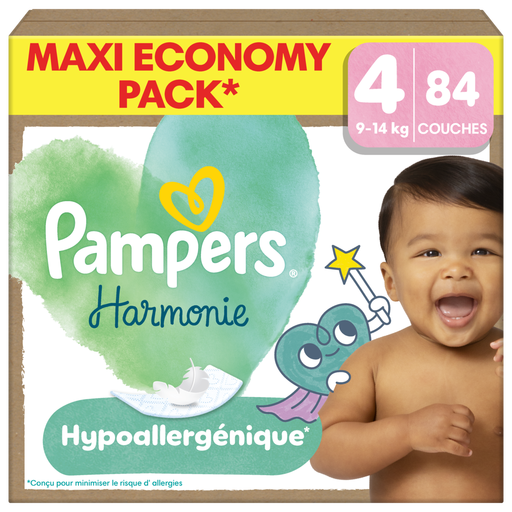
Why this choice suits this profile: This product is aimed at parents who prioritise materials described as gentle and who want detailed information about the ingredients.
The product page mentions a top sheet made from 50% plant-based ingredients, cellulose from FSC-certified forests and an OEKO-TEX Standard 100 certification.
9–14 kg format, wetness indicator and a design described as hypoallergenic and dermatologically tested.
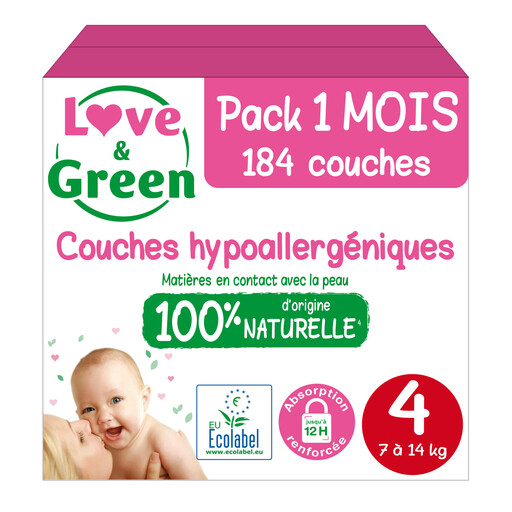
Why this choice suits this profile: This pack of four is ideal for households that go through several nappies a day and want to avoid frequent repeat purchases.
The stated 7–14 kg range is clearly marked. The product page also describes a product with no perfume or lotion, in recycled and recyclable plastic packaging.
70% bio-based ingredients claimed, absorbent core made from FSC cellulose and chlorine-free design according to the product page.
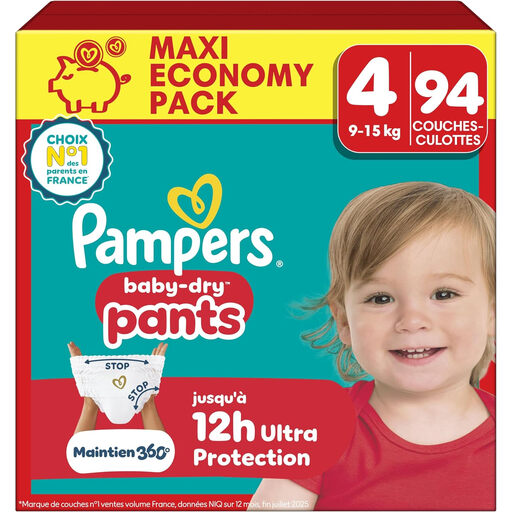
Why this choice suits this profile: The pant-style design goes on quickly, even when standing, and moves with your child during the day and night.
The product page specifies a 9–15 kg range, wider leg barriers and a 360-degree stretchy waistband.
Tear-away sides for removal, adhesive tape for rolling up the nappy pants and no listed EU fragrance allergens, according to the product page.
We've put together a comprehensive, real-time updated list of products that meet these demanding selection criteria and European safety regulations.
The most common range is around 9 to 14 kg, but this varies between models. Some nappies are suitable from 7 or 8 kg, while others go up to 15 kg. Always check the packaging and make sure the fit follows your child's body properly.
It's best to change the nappy as soon as it's wet or soiled, rather than waiting for a set amount of time. At night, a nappy designed for extended use may be suitable, but it doesn't replace checking the fit and your child's skin condition when they wake up.
It depends on the number of nappies, the pack size and the brand. Always compare the price per nappy, rather than just the pack price. Nappy pants can also reduce waste during tricky changes, especially when your child is wriggling a lot.