
Livraison le jour même ou le lendemain

Qualité garantie

Débloquez vos offres de bienvenue: Livraison GRATUITE | Jusqu'à -80 % | 30 jours d'essai gratuits à JoyPlus
Téléchargez l'application
When your little one becomes more mobile, choosing baby nappies size 4 isn't just about comparing the number of nappies per pack. A nappy that's too small can dig into the thighs and cause leaks, while one that's too big may gape at the back. Between Pampers size 4 nappies, pull-up pants and hypoallergenic options, it's worth taking the time to compare the different features before placing your order.
The labels baby nappies 9-14 kg, 9-15 kg or 7-14 kg give you a starting point, but two babies of the same weight can have very different body shapes. Also check for the absence of marks around the thighs, any leaks at the back and how easily the fastenings close.
A mega pack of baby nappies might look like a great deal, but it quickly becomes expensive if the fit isn't right for your child. Before stocking up, compare the price per nappy and, if possible, start with a small pack.
Phrases like "all-night protection" or "anti-leak" describe a design or a brand promise, not a guaranteed result for every child. Careful application, regular changes and the right size are still essential.
Size 4 generally covers a range of around 9 to 14 or 15 kg, depending on the manufacturer. To choose a nappy, check the following points:
If leaks keep happening despite correct application, try a different fit or move up to the next size. Conversely, a nappy that slips or wrinkles may be too big.
The absorbent core usually contains cellulose and superabsorbent materials. Product descriptions may mention rapid absorption, absorbent cells or extended protection. This information helps you compare the design of different models, but it doesn't guarantee results for every baby.
The wetness indicator can be handy at changing time, especially when you're new to size 4. Depending on the model, it changes colour when it comes into contact with moisture. However, it doesn't replace regular checks of the nappy.
For sensitive skin, some parents prefer hypoallergenic nappies, free from perfume, lotion or chlorine. Check the list of ingredients and any precautions mentioned on the packaging. Labels such as OEKO-TEX Standard 100, FSC or the EU Ecolabel refer to specific standards: always verify that they apply to the product you're buying.
Dermatological certifications and reviews highlighted by a brand should be treated as information provided by the manufacturer. If irritation persists, stop using the product and seek advice from a healthcare professional.
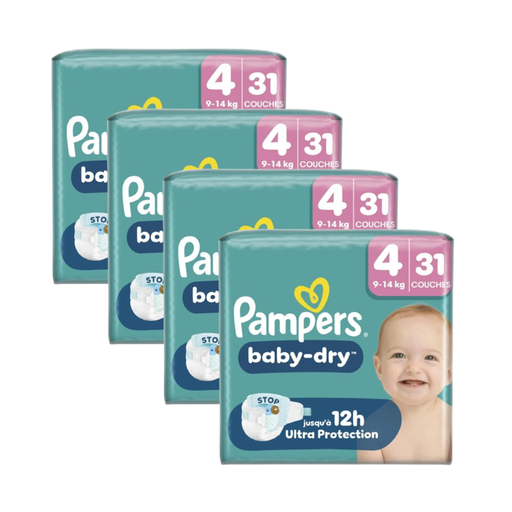
Why this choice suits this profile: With 124 nappies, this pack lets you test the fit over several days and space out your purchases, which can be handy when you're moving up to size 4 for the first time.
The product description mentions a wetness indicator and a Stop & Protect pocket at the back – two useful features for tracking changes and reducing overflow.
A 124-unit pack, a stated range of 9 to 14 kg, a ComfortTouch outer cover and a fast-absorbing core, according to the product description.
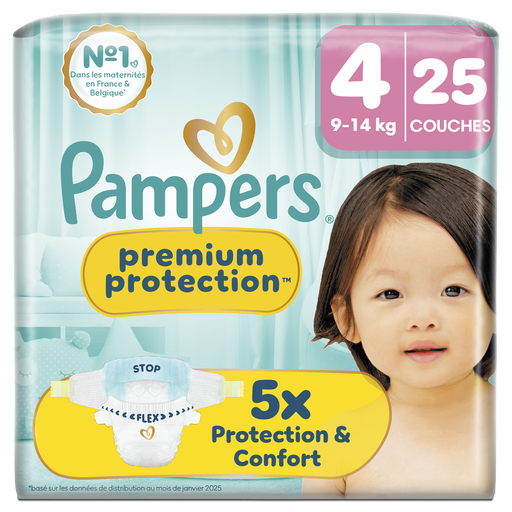
Why this choice suits this profile: This small pack is ideal for parents who want to try a range focused more on comfort and protection before committing to a larger format.
With only 25 nappies, this format stops you from building up a large stock before you've checked that the fit suits your baby's shape.
The product description mentions over 1,000 micro-absorbent cells, a back pocket and a Flex & Protect waistband.
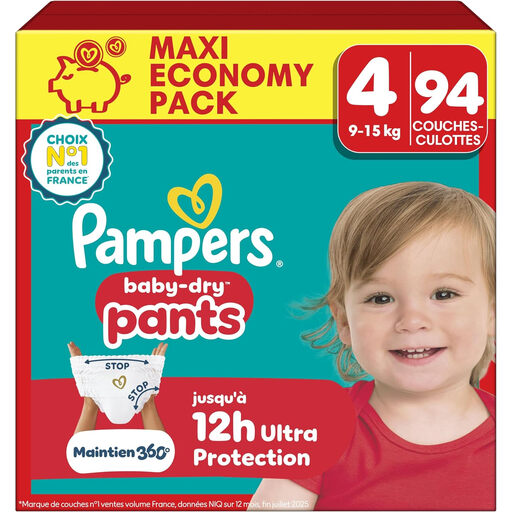
Why this choice suits this profile: Baby pull-up nappies size 4 are ideal for very wriggly children and parents who want to change nappies quickly, especially when out and about or when your little one won't stay still.
The 360° stretchy waistband and leg barriers are designed to move with your child. However, their positioning still needs to be checked carefully.
A pack of 94 pull-ups, suitable for both day and night use, and an adhesive tab for rolling up the pull-up after use.
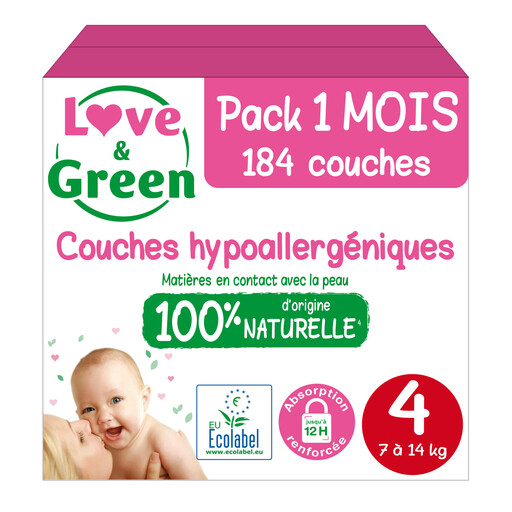
Why this choice suits this profile: This mega pack is aimed at families who prioritise renewable materials and want to order less frequently.
The product description states it is free from perfume and lotion, with a composition claimed to be 70% bio-based. However, always check the information on the packaging.
184 nappies, a stated range of 7 to 14 kg, FSC cellulose and packaging described as made from recycled plastic.
We've selected a complete and up-to-date range of products that meet these demanding criteria, in compliance with European safety regulations.
Night-time baby nappies and ultra-absorbent models can work well for some routines. However, repeated leaks on waking can also mean the size or fit isn't right. When comparing a pack of 31, 92, 124 or 184 nappies, the price per nappy remains the most reliable indicator.
Size 4 is generally recommended for babies weighing between 9 and 14 or 15 kg, depending on the brand. Weight is a good starting point, but the fit, hold and absence of marks should confirm your choice.
Standard nappies fasten with tapes and are practical when your child is lying down. Pull-up nappies go on like underwear, making changes easier for a very active child. However, they need a bit more care to position the leak barriers correctly.
Store unused nappies in a clean, dry place at a moderate temperature, away from sunlight, moisture and heat sources. Check the condition of the pack before use and follow the manufacturer's recommendations.