
Livraison le jour même ou le lendemain

Qualité garantie

Débloquez vos offres de bienvenue: Livraison GRATUITE | Jusqu'à -80 % | 30 jours d'essai gratuits à JoyPlus
Téléchargez l'application
Choosing baby nappies isn't just about counting how many are in a pack. A poorly fitted nappy can leak, restrict movement or mean more frequent changes. On the flip side, a bulk-buy pack is only good value if the size, absorbency and skin tolerance actually match your child's needs.
Labels like "newborn", "active baby" or "night-time" sound appealing, but it's weight that should guide your size choice. Two children of the same age can easily wear different nappies. Too big, and a nappy may let moisture escape around the thighs; too small, and it presses on the tummy and reaches saturation faster.
Claims like "total protection" or "up to 12 hours" are usually based on specific usage conditions and the manufacturer's own tests. They don't guarantee the same result for every baby. Instead, look at the concrete details: anti-leak back pocket, elasticated leg barriers, absorbent core and a waistband that's flexible enough.
A bulk pack of baby nappies can lower the cost per nappy, but little ones can outgrow a size in just a few weeks. Before stocking up, check the weight range, how many nappies you use each day, and how much room there is before you'll need to move up a size.
Weight ranges vary slightly from brand to brand. As a general guide, you'll find:
For a newborn under 3 kg, some products, such as Pampers size 0 nappies, have a cut-out to leave the umbilical cord clear. This opening doesn't mean you can skip checking that the nappy stays properly positioned, though.
For trips, nights or very active babies, choose anti-leak nappies with:
Night-time baby nappies can be useful when wake-ups are further apart. That doesn't mean you should wait to change a soiled nappy. The duration stated on the packaging reflects the manufacturer's guidelines, not a medical recommendation.
If your child has sensitive skin, compare the information manufacturers actually provide: fragrance-free, whether natural latex and lotions are present, dermatological tests and certifications. Even hypoallergenic nappies can't eliminate every risk of an individual reaction.
The STANDARD 100 by OEKO-TEX label means the product has been tested against this certification's criteria for certain undesirable substances. It doesn't make the nappy a skincare product. Eco-friendly nappies may include FSC-certified cellulose, plant-based materials or recyclable packaging. These criteria should be looked at separately: on their own, they don't tell you about absorbency.
A wetness indicator changes colour when the nappy is wet. It lets you check the nappy's condition more easily without opening it every time, which can be handy with a newborn. If redness or irritation persists, stop using the product and seek advice from a healthcare professional.
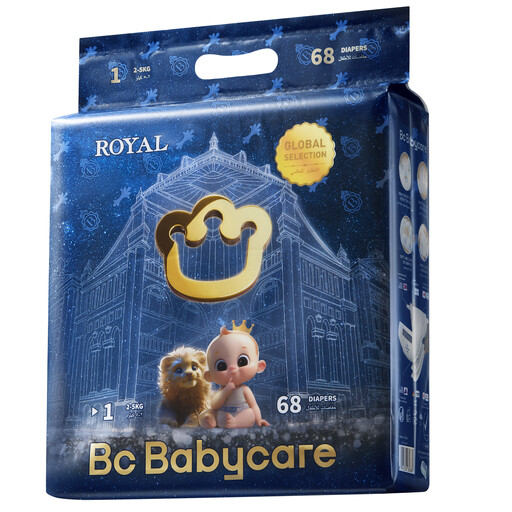
Why this choice suits this profile: a size 1 product for babies weighing 2 to 5 kg, in a pack generous enough to try it out without building up a huge stock.
The weight range is clearly stated, and three wetness indicator lines make it easier to spot when a change is due.
A thin absorbent core, a 3M elastic waistband and 360-degree anti-leak design.
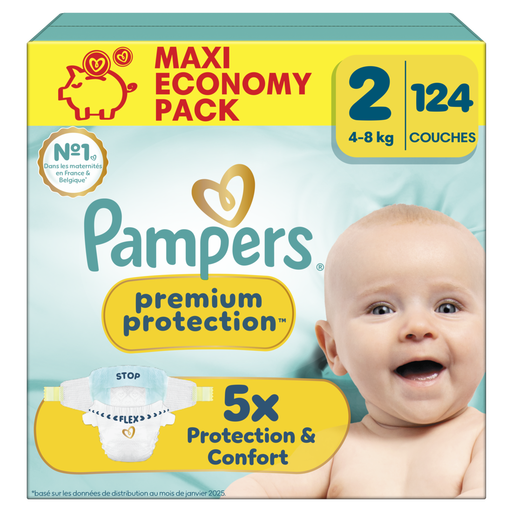
Why this choice suits this profile: this product is aimed at babies weighing 4 to 8 kg, with a soft cover and features designed to support absorbency and fit.
The product page details the weight range, the Stop & Protect back pocket and the Flex & Protect waistband, rather than just making a general promise.
Over 1,000 micro-absorbent cells claimed, dermatologically tested and free from fragrance allergens listed by the European Union.
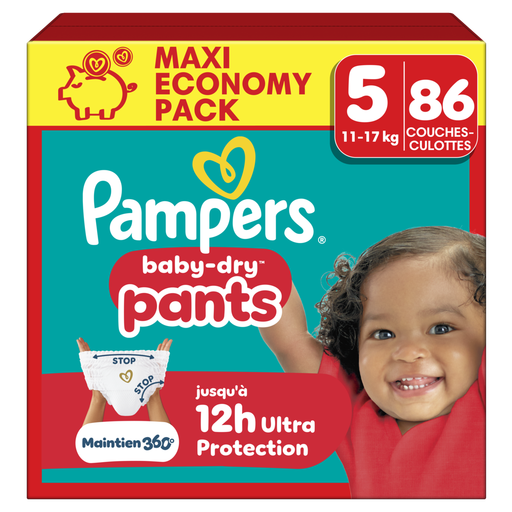
Why this choice suits this profile: the pull-on style is ideal for active children weighing 11 to 17 kg and makes dressing easier during outings or when they're starting to gain independence.
The 360-degree stretchy waistband and leg barriers move with your child, while the tear-away sides make removal simple.
A pack of 86 nappies, a back pocket and absorbency claimed for up to 12 hours, according to the manufacturer's guidelines.
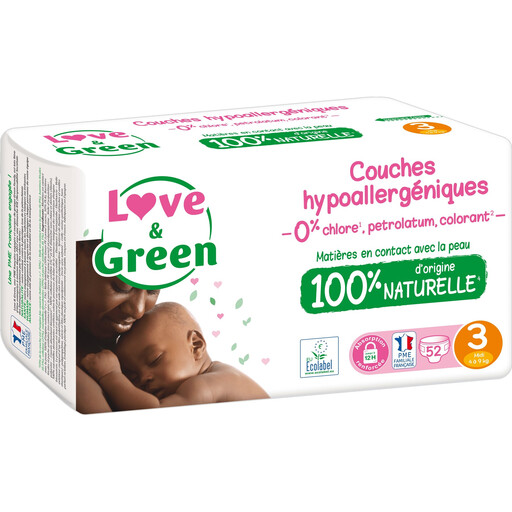
Why this choice suits this profile: this product is aimed at parents looking for nappies for sensitive skin, with plant-based materials and detailed information about the composition.
The product page breaks down the bio-based content, FSC and TCF cellulose, and the absence of fragrance and lotion, rather than reducing the eco argument to just the packaging.
A size 3 suitable for 4 to 9 kg, 68% bio-based ingredients claimed and a cut-out for the cord on relevant sizes.
We've put together a full selection, updated in real time, of products that meet these exacting criteria and European safety regulations.
Usage depends on age, feeding and how often you change them. Newborns often need several changes a day, and this pattern gradually evolves. To estimate your budget, divide the pack price by the number of nappies, then multiply the result by your actual daily use. The price shown isn't enough to compare two different pack sizes.
Move up a size when the tabs are pulling, marks appear on the skin, the nappy doesn't cover the bottom as well, or leaks keep happening despite a correct fit. Before ordering a large pack, always check the new weight range.
They're mainly designed for children who are starting to move around a lot. For a newborn, traditional nappies with tabs usually allow a better fit around the waist and keep the cord area clear. Nappy pants become especially handy when standing changes and potty training begin.