
Livraison le jour même ou le lendemain

Qualité garantie

Débloquez vos offres de bienvenue: Livraison GRATUITE | Jusqu'à -80 % | 30 jours d'essai gratuits à JoyPlus
Téléchargez l'application
Choosing baby nappies isn’t just about comparing how many are in a pack. A nappy that’s too big is likely to leak urine, while one that’s too tight can mark the skin and restrict movement. And claims like “hypoallergenic”, “eco-friendly” or “anti-leak” are worth a closer look.
To avoid unpleasant surprises, start by checking the recommended weight, the features that actually matter, and the materials that come into contact with your baby’s skin. Here are the key criteria to consider before buying Pampers nappies, Love & Green nappies, or any other brand.
Age gives a very general indication, but it’s not enough to determine nappy size. At six months, a baby could be in size 3, size 4, or another size entirely, depending on their weight and build. Weight ranges often overlap, so pay close attention to how the nappy fits around the tummy and thighs.
A claim like “all-night protection” doesn’t guarantee there won’t ever be a leak. The result also depends on the size you choose, how the nappy is positioned, the amount of liquid absorbed, and your baby’s movements. A back pocket, elasticated barriers and an absorbent core are more concrete features to look for.
An economy pack can quickly become a false economy if it causes redness, leaks or a poor fit. For newborn nappies, it’s better to start with a reasonable-sized pack. Test the fit and your baby’s tolerance before building up a big stock, especially when moving from size 1 to size 2.
Weight guidelines are still the best starting point:
Once the nappy is on, the fastenings should feel comfortable, the leg barriers should be properly unfolded, and there shouldn’t be a large gap at the back. Repeated leaks sometimes indicate a poor fit rather than a problem with absorbency.
To choose anti-leak baby nappies, look for an absorbent core, a fast-absorption zone, and well-fitted leg barriers. For night-time, also check that the nappy covers the back properly. Some Pampers products include a “Stop & Protect” back pocket and a wetness indicator. These features can make nappy changes easier, but they don’t replace regular changes.
Night-time baby nappies should not be worn for longer than the manufacturer recommends. Change a soiled nappy promptly and follow the instructions on the packaging.
For nappies for sensitive skin, check the elements that come into direct contact with the skin: fragrance, lotion, dyes, natural latex and the inner liner. Claims like “dermatologically tested”, “hypoallergenic” or Standard 100 by OEKO-TEX refer to specific features or processes, but they don’t guarantee that a skin reaction won’t occur.
Eco-friendly nappies may contain FSC-certified cellulose, bio-based materials or recycled packaging. That doesn’t mean the entire nappy is biodegradable or compostable. Check the full composition and the recycling guidelines for your local area.
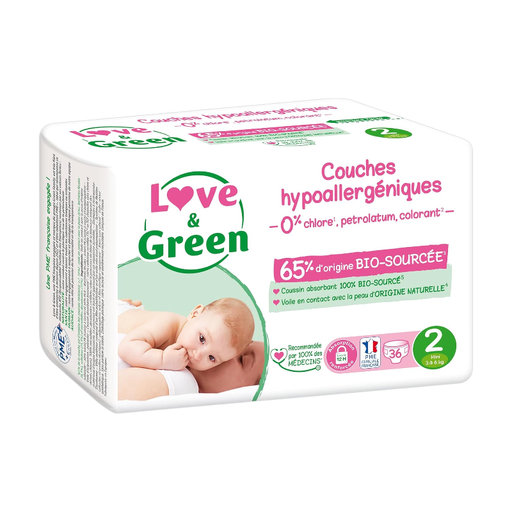
Why this choice suits this profile: This size 2 is suitable for babies from 3 to 6 kg and lets you test a composition that prioritises naturally sourced materials without having to buy a very large pack straight away.
The product page states 0 % lotion, fragrance and dyes, plus an umbilical cut-out for sizes 1 and 2. Still, check your baby’s tolerance.
FSC-certified cellulose, packaging described as recycled and recyclable, wetness indicator not mentioned for this product.
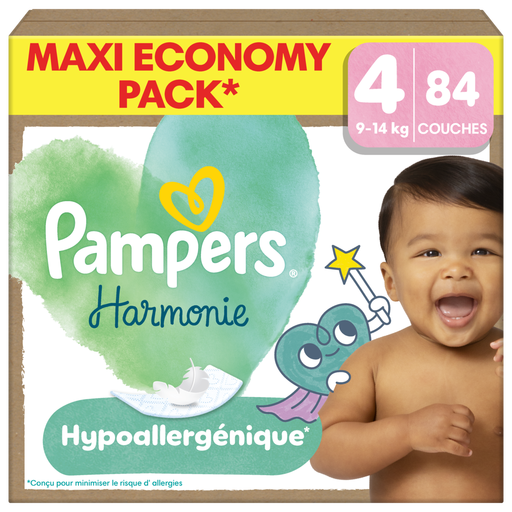
Why this choice suits this profile: This product may appeal to families looking for a Pampers nappy designed for sensitive skin, with a size 4 suitable for babies from 9 to 14 kg.
The product page mentions dermatological testing, a hypoallergenic design and Standard 100 by OEKO-TEX certification. These describe the product, without guaranteeing it will suit every skin type.
Top sheet described as containing 50 % plant-based ingredients, cellulose from FSC-certified forests and a Stop & Protect back pocket.
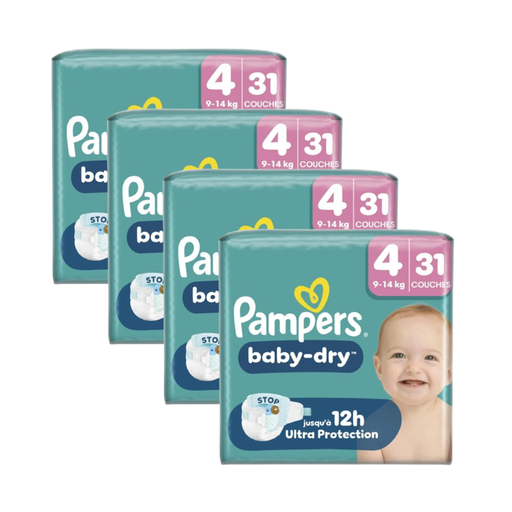
Why this choice suits this profile: This large pack may suit a family that uses size 4 nappies every day and wants to restock less often.
The wetness indicator and back pocket make it easier to track nappy changes and help reduce leaks, provided you stick to the recommended weight and fit the nappy properly.
124 nappies per pack, fast-absorption core, ComfortTouch outer sheet and size 4 for babies from 9 to 14 kg.
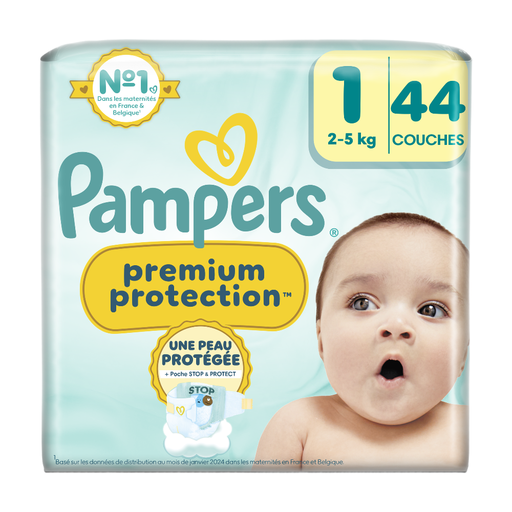
Why this choice suits this profile: Its umbilical cord cut-out and size 1, designed for 2 to 5 kg, meet the practical needs of the first few days, depending on your baby’s actual weight.
The umbilical cut-out reduces friction around the tummy. It’s still essential to choose the right size to avoid gaps and leaks.
Stated pack of 44 nappies, wetness indicator, repositionable fastenings and materials without fragrance or natural latex, according to the product page.
We’ve put together a full selection, updated in real time, of products that meet these demanding criteria and European safety requirements.
Go by your baby’s weight rather than their age. A size 0 nappy may suit a newborn under 3 kg, while a size 1 often covers a range of 2 to 5 kg. The nappy should fit around the legs and tummy without being too tight.
It depends on the nappy’s absorbency, the amount of liquid and the manufacturer’s recommendations. Change a soiled nappy promptly and don’t exceed the time stated on the packaging or instructions. An absorbent nappy-pant can be handy when your baby is more active, but it should also be chosen according to their weight.
The term “hypoallergenic” generally means the product has been designed to reduce the risk of a reaction, based on the information provided by the brand. It is not an absolute guarantee. If irritation persists, stop using the product and seek advice from a healthcare professional.