
Livraison le jour même ou le lendemain

Qualité garantie

Débloquez vos offres de bienvenue: Livraison GRATUITE | Jusqu'à -80 % | 30 jours d'essai gratuits à JoyPlus
Téléchargez l'application
Buying baby nappies and wipes seems simple… until the first pack leaks, feels tight around your baby’s tummy or irritates their skin. With packaging promising « natural », « long-lasting absorption » and « sensitive skin », it is not always easy to compare products at a glance.
Three mistakes are particularly common among new parents :
Here are the key points to review when choosing products that are genuinely suited to everyday life in France.
Newborn nappies are generally available in sizes 0, 1 or 2, depending on the weight range specified by the manufacturer :
These ranges are deliberately designed to overlap. If a size 1 nappy leaves marks or the fastening tabs are almost at the end of their reach, size 2 may be more comfortable, even if your child’s weight is still within the previous range. Conversely, a nappy that is too large may allow leaks around the legs.
During the first few days, an umbilical cut-out can also help prevent the nappy rubbing against the umbilical cord. This feature is available on several of the size 0, 1 and 2 products shown below.
A nappy’s absorbency is not measured by the number of « cells » highlighted on the pack or by a theoretical duration. Instead, look for elasticated barriers around the thighs, an adjustable fastening system and a shape suited to your child’s tummy.
Wetness indicators can be useful for knowing when to check the nappy, particularly during the first few weeks. However, they do not replace regular nappy changes. A nappy should be changed as soon as it is soiled or sufficiently wet, helping to keep your baby’s skin comfortable.
Once your child starts wriggling more, baby pants can be pulled on like underwear. They make standing changes easier and can support the early stages of potty training. However, they cannot make up for choosing the wrong size.
To find hypoallergenic baby nappies, look for specific claims such as « fragrance-free », « lotion-free » or « dermatologically tested ». These statements describe the formula or the procedure followed by the manufacturer : they are not a medical guarantee that applies to every child.
Eco-friendly nappies may contain FSC-certified cellulose, bio-based materials or recycled packaging. Always check the percentages stated. A bio-based material is not necessarily biodegradable, while recyclable packaging does not mean that the entire nappy is recyclable.
For wipes, 99% water formulas, fragrance-free baby wipes and wipes for sensitive skin are often preferred to limit the number of ingredients. Always check the INCI list : some wipes are fragranced, such as the Kandoo melon reference, while others are alcohol-free and fragrance-free. Unless the packaging explicitly states otherwise, no wipes should be flushed down the toilet.
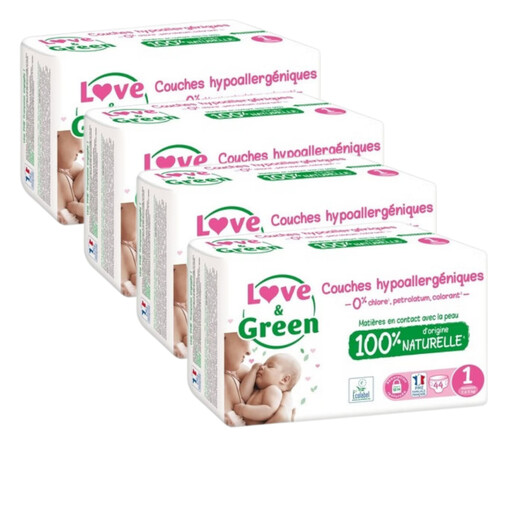
Why this choice suits this profile : With 176 size 1 nappies, this pack lets you build up an initial supply while keeping the weight range clear, without having to place multiple individual orders.
The product details state that the nappies are fragrance-free and lotion-free, with a weight range of 2 to 5 kg. The pack size means you will not need to reorder too often, but make sure you check the size before building up your reserves.
61% bio-based ingredients stated, FSC cellulose, and recycled and recyclable packaging according to the product details.
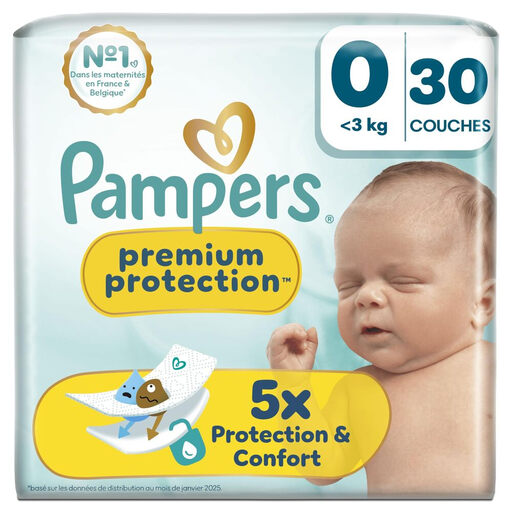
Why this choice suits this profile : This small pack is ideal for a first trial at the maternity unit or at home, when your newborn’s final weight is not yet known.
The size is clearly intended for babies weighing less than 3 kg, and the umbilical cut-out is specified. A pack of 30 prevents you from accumulating a size your baby may quickly outgrow.
Wetness indicator, no fragrance, chlorine bleach or natural latex, with Standard 100 by OEKO-TEX certification stated.
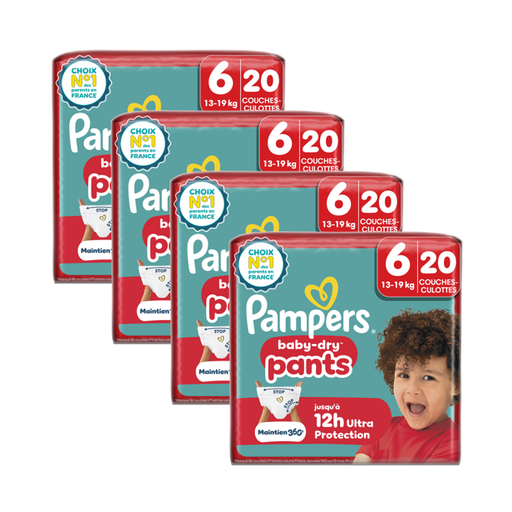
Why this choice suits this profile : Baby pants are particularly practical for children who are always on the move, need changing while standing or are beginning to become more independent.
The 13 to 19 kg range and tear-away sides are clearly indicated. Even so, remember to check your child’s waist measurement and freedom of movement.
360° stretch waistband, absorbent core and 80 pants per pack according to the supplied description.
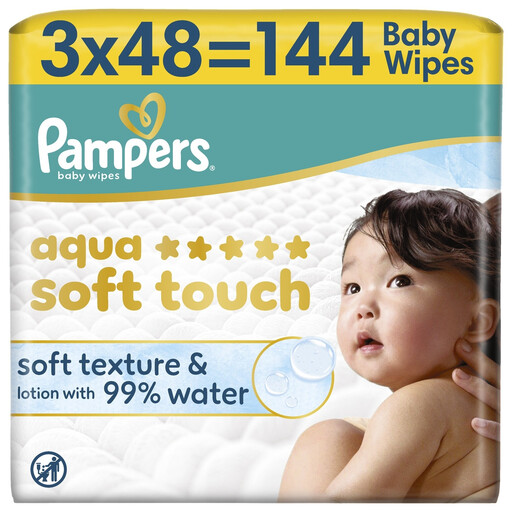
Why this choice suits this profile : The 144-wipe format makes it easy to divide the packs between the house, changing bag and car.
The formula contains 99% water and is alcohol-free and fragrance-free. Close each pack carefully after use to prevent the wipes from drying out.
Soft texture, suitable from birth and dermatologically tested, as stated in the product details.
We have put together a complete, real-time updated list of products that meet these demanding selection criteria and European safety regulations.
Calculate the price per nappy or the price per 100 wipes, rather than relying on the price displayed on the pack. For a newborn, start with a reasonable quantity of size 0 or 1 nappies : within just a few weeks, your baby’s growth may make a particular product unsuitable.
Store packs in a dry place at a stable temperature, away from direct sunlight. For wipes, check that the pack is properly sealed after every use. A dry wipe cleans less effectively and may increase friction against the skin.
Finally, test just one product at a time for a few days. If persistent redness, irritation or an unusual reaction occurs, stop using the product and ask a healthcare professional for advice. Nappies and wipes are intended for external use : they must never be reused or flushed down the toilet.
Consumption depends on your baby’s age, weight and how often they need changing. During the first few weeks, several changes a day are perfectly normal. It is best to start with a small supply of size 0 or 1 nappies, then adjust according to your baby’s weight and the actual fit. This will help you avoid ending up with a pile of nappies that have become too small.
No. They are very convenient when you are out and about, but at home, cotton wool or a clean cloth dampened with water can work perfectly well. For water-based wipes, compare the ingredients list and choose a fragrance-free formula if your child has reactive skin.
The right time depends mainly on your child’s mobility and independence, not on a specific age. Baby pants can be useful once your child can stand, moves around a lot or is beginning to learn to use the potty. Before ordering a large pack, always check the weight range and the fit.