
Livraison le jour même ou le lendemain

Qualité garantie

Débloquez vos offres de bienvenue: Livraison GRATUITE | Jusqu'à -80 % | 30 jours d'essai gratuits à JoyPlus
Téléchargez l'application
Choosing a baby meal is about more than spotting an attractive label or a recipe marked “natural”. From the recommended age and allergens to the texture and storage instructions, several details can make the difference between a genuinely practical purchase and a product that does not fit your family’s routine.
Here are the main pitfalls to avoid, along with a selection of options suited to different needs: baby meals from 6 months, recipes from 8 months and advice for meals from 12 months onwards.
The wording “from 6 months” or “from 8 months” should be understood in the context of your child’s weaning journey. It does not replace advice from your doctor or another healthcare professional. A product for children from 8 months may have a thicker texture or contain small pieces, while a purée for babies from 6 months will generally be smoother and more uniform.
Always check the age shown on the packaging, especially when buying a multipack or viewing a product listing.
An organic product is not necessarily free from milk, gluten or fish. These claims refer to different criteria, so the ingredients list and allergen declaration remain essential.
For example, a jar may be with no added salt while still containing naturally occurring sodium. Similarly, a quinoa-based recipe may be gluten-free depending on its ingredients, whereas a meal containing wheat semolina or bulgur will contain gluten.
A format containing two 200 g bowls may be convenient for your baby’s dinner, but remember to check how long it can be kept after opening. Several products in this selection state that they can be stored in the fridge for 48 hours, while some desserts should be eaten immediately after opening or within 24 hours.
You should also distinguish between an untouched leftover portion and one your child has already eaten from: contact with the spoon can affect hygiene conditions.
For a baby meal from 6 months, choose a smooth texture that is easy to mash. From 8 months, some recipes offer a thicker consistency or small, soft pieces. From 12 months onwards, preparations containing finely chopped bulgur, vegetables or fish can support the development of chewing skills, provided they are suitable for your child’s abilities and safety guidance is followed.
However, texture should not be chosen solely according to the age printed on the jar: every child develops at their own pace.
Read the ingredients in order of quantity and look for highlighted allergens. In the products featured here, the main allergens are:
A milk-free or gluten-free recipe may meet a personal preference or an identified dietary requirement, but it is not medical advice. If your child has an allergy or you have any concerns, ask a healthcare professional for guidance.
The 130–200 g bowls and jars make serving easy at home or on the go. Check whether the product can be heated in a bain-marie or microwave, and whether the container can be placed directly in the appliance. With some glass jars, you are advised to transfer the contents to another container before heating.
“Made in France” or “Cooked in France” indicates where the product was made, but does not mean that all the ingredients come from France. Product listings may, for example, specify vegetables sourced from French regions alongside ingredients from other European countries.
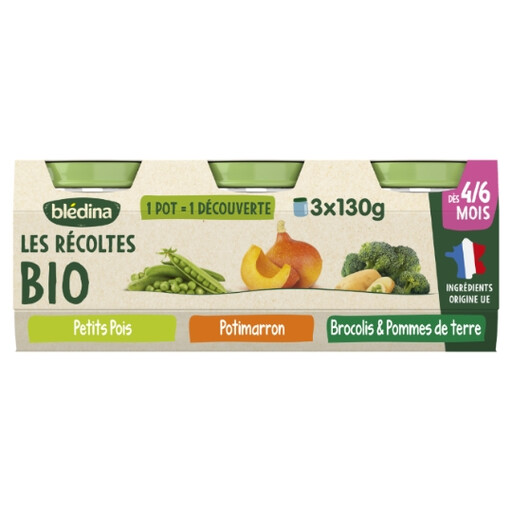
Why it suits this type of shopper : This pack contains three 130 g jars, a format that is well suited to introducing vegetables and serving smaller portions.
The individual portions help reduce waste during those first tastings. The listing mentions organic and gluten-free recipes; always check the label before use.
Three 130 g jars, recipes featuring butternut squash or broccoli and potato, plus a gluten-free indication.
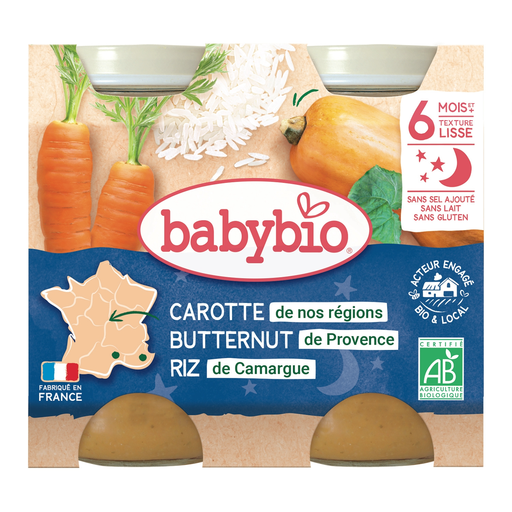
Why it suits this type of shopper : This product combines an organic recipe, French production and a two-portion format, making it practical for planning several dinners.
The detailed ingredients list specifies the percentages of carrot, butternut squash and rice, as well as the absence of milk, gluten and added salt.
Two 200 g bowls, organic ingredients, French production and preparation in a bain-marie or microwave.
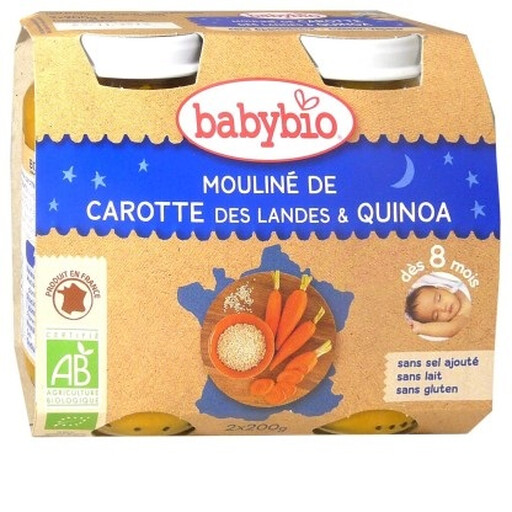
Why it suits this type of shopper : This pack of two 200 g bowls is suitable for families planning several baby meals from 8 months throughout the week.
The listing describes a recipe with no milk, gluten or added salt. The 48-hour period after opening makes meal planning and storage easier.
The product listing states that it contains 73% vegetables and quinoa, provides two 200 g portions and is made in France.
We have put together a complete, real-time updated list of products that meet these demanding selection criteria and European safety regulations.
Start by checking the recommended age, texture and ingredients. A vegetable purée, a rice-based recipe or a jar with no added salt may be suitable, depending on your child’s stage of weaning and the guidance you have received. Introduce new ingredients gradually so that you can monitor how well your child tolerates them.
Yes, if the packaging allows it and the storage instructions are followed. Usually, place any uneaten portion in the fridge and consume it within the stated timeframe, often 24 or 48 hours. However, do not keep a portion that your child has already eaten from.
Baby cereals, a dessert or semolina can complement a meal depending on your child’s age and eating habits, but they are not always essential. Check the ingredients, particularly for added sugars, milk and gluten. For a powdered preparation, follow the recommended quantity of water or milk and temperature, and serve immediately after mixing.