
Livraison le jour même ou le lendemain

Qualité garantie

Débloquez vos offres de bienvenue: Livraison GRATUITE | Jusqu'à -80 % | 30 jours d'essai gratuits à JoyPlus
Téléchargez l'application
Starting your baby on solid foods quickly raises very practical questions: what texture should you offer at 4 months, should you prioritise organic baby jars, how do you spot added salt or allergens, and what quantity should you prepare for a meal? Baby meals from 4 months can make daily organisation easier, as long as you don't rely solely on the picture on the packaging or the marketing promises.
The phrase "from 4 months" corresponds to the age the manufacturer suggests for starting weaning. It does not replace the advice of the healthcare professional looking after your child. Every baby develops at their own pace, especially when it comes to moving on to new textures or introducing certain ingredients.
A product labelled from 6 months, from 12 months or from 15 months should therefore not be chosen simply because its recipe looks appealing. The texture, the presence of lumps and the composition all correspond to a specific stage of development.
An organic baby meal may fit with your shopping habits, but this claim alone tells you nothing about the texture, allergens, proportion of vegetables or whether salt is present. To get a clear picture, check the recipe details, the label shown and the full list of ingredients.
The same logic applies to claims like "gluten-free", "dairy-free" or "no added salt" – these are different criteria. A meal can be gluten-free while containing fish, or dairy-free while containing other allergens.
Baby jars, plates and bowls don't all offer the same volume. A 130 g portion can work well for a first taste, while a 200 to 230 g format will be more suitable for a substantial meal, depending on your child's age and appetite.
Once opened, the shelf life is usually limited. Product details often recommend consuming the meal within 24 or 48 hours in the fridge, without reheating it several times. Always follow the manufacturer's instructions and check the temperature before serving.
To start weaning your baby from 4 months, choose a smooth purée with a simple recipe. Vegetable blends let you gradually introduce new flavours without overwhelming the first few spoonfuls with too many ingredients.
From 6 months, prepared baby meals can combine vegetables, starchy foods and a source of protein. The texture is usually smooth or slightly thick. Later on, recipes with soft, melt-in-the-mouth pieces help your baby learn to chew, such as some baby meals from 12 months or from 15 months.
Always read the label in full, including the capitalised warnings. Common allergens in this selection include milk, gluten, egg, celery and fish. A recipe containing wheat or pasta is not gluten-free, even if it also has a large amount of vegetables.
For a product described as dairy-free, gluten-free or with no added salt, check the details on the specific jar. Recipes can vary within the same range. If there is any difference from an online description, the packaging is the most up-to-date reference.
A 130 g jar of baby purée is handy for a small portion or a first taste. Formats of 2 x 200 g, 2 x 230 g or 250 g will suit an older child better, depending on their appetite and the rest of the meal.
Containers that are suitable for a bain-marie or microwave make mealtimes easier when you're on the go. However, be careful – some jars should not be placed directly in the microwave. In every case, stir the meal and check its temperature before giving it to your child.
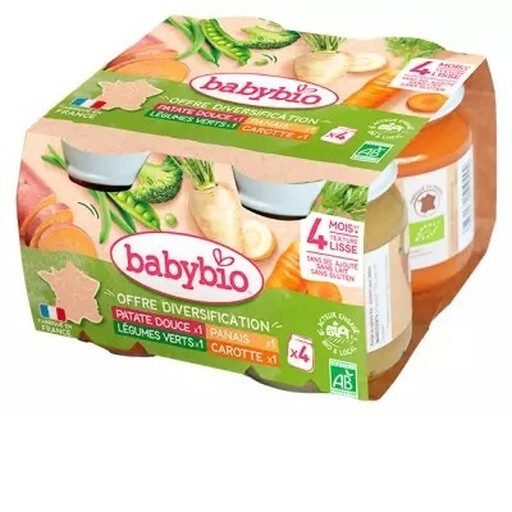
Why this choice suits this profile: this set of four 130 g jars lets you start weaning with several vegetables and pre-portioned servings.
The recipe is stated to have no added salt, no milk and no gluten, making it easy to check the criteria you're looking for at first glance.
An organic selection certified FR-BIO-01, made up of four 130 g jars with a variety of vegetable recipes.
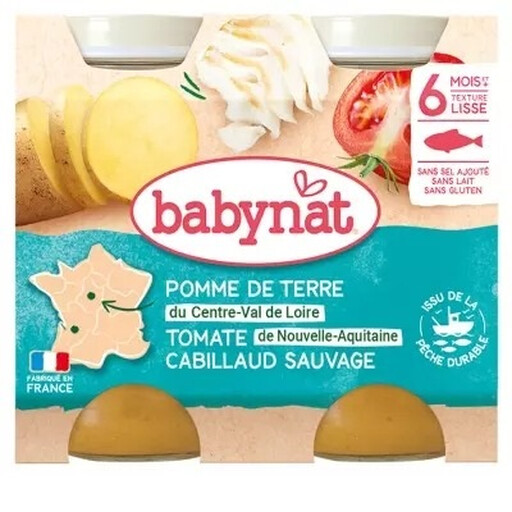
Why this choice suits this profile: this recipe combines potato, tomato and wild cod in an organic baby meal suitable from 6 months.
The product details clearly state no added salt, no milk and no thickener, while the fish is clearly listed as an allergen.
Two 200 g jars, an organic certification and a gluten-free recipe according to the information provided.
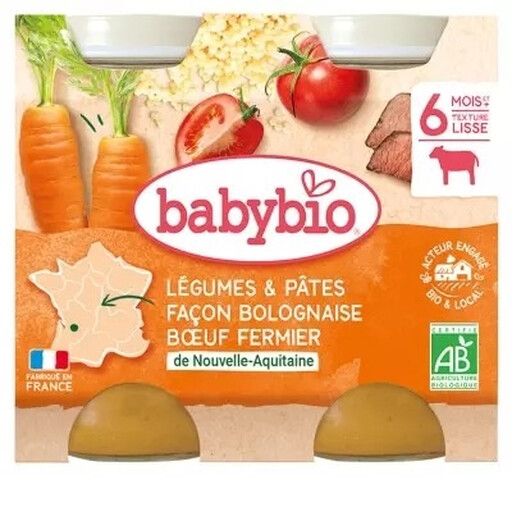
Why this choice suits this profile: the two 200 g jars are handy for parents who want to keep a few complete meals in reserve for those days when time is short.
The recommended age from 6 months, the absence of added salt and the presence of gluten are clearly stated, so you're not choosing at random.
An organic recipe with pasta, vegetables and beef from Nouvelle-Aquitaine, available in a 2 x 200 g format.
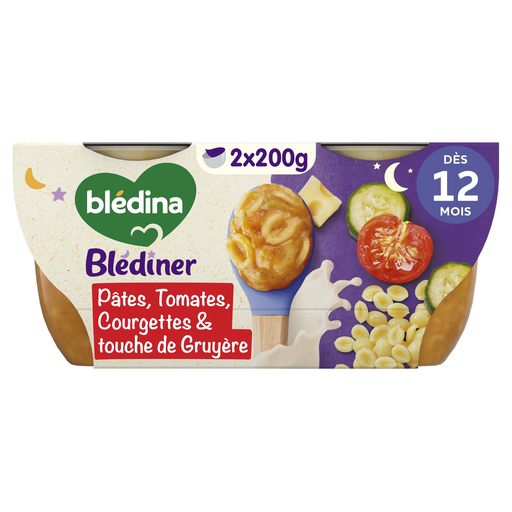
Why this choice suits this profile: this baby dinner from 12 months combines pasta, vegetables and cheese in a texture with soft, melt-in-the-mouth pieces.
The recommended age, the allergens – milk, gluten and egg – and the evolving texture are all specified, rather than letting the picture guide your choice.
Two 200 g bowls, one portion of vegetables per bowl according to the product details, and can be prepared in a bain-marie or microwave.
We've put together a full selection, updated in real time, of products that meet these strict criteria as well as European safety regulations.
No. The stated age should always be considered alongside the texture, ingredients and your child's habits. For a first taste of weaning, a smooth vegetable purée with a short ingredient list is generally easier to offer. If in doubt, ask the healthcare professional looking after your baby for advice.
The time varies depending on the product. The items featured here most often recommend storing in the fridge for 24 or 48 hours after opening. Use a clean utensil, reseal the container and avoid reheating the same portion several times. The instructions on the label always take priority.
A baby fruit purée is more of a dessert or a snack. It doesn't automatically replace a vegetable purée, a meal with starchy foods or a source of protein when these are planned as part of the meal. From 12 months, it can complement a baby dinner, depending on your child's appetite and overall eating routine.