
Livraison le jour même ou le lendemain

Qualité garantie

Débloquez vos offres de bienvenue: Livraison GRATUITE | Jusqu'à -80 % | 30 jours d'essai gratuits à JoyPlus
Téléchargez l'application
For parents of a child aged 4 to 12 months, choosing a baby fruit purée might seem straightforward. Yet between the terms “natural”, “organic”, “no added sugar” and the different formats, the label can quickly cause confusion. A suitable fruit purée should above all match your child’s age, the texture you’re after and your family’s habits.
A fruit purée with no added sugar typically contains the sugars naturally present in the fruit. So it isn’t sugar-free. To know exactly what you’re buying, it’s best to check the ingredients list and the nutritional table rather than relying solely on the front of the pack.
A baby apple and banana purée, for example, can be made exclusively from fruit while still showing a naturally occurring sugar content. The label simply means no sugar has been added to the recipe – not that it contains no carbohydrates at all.
A baby fruit pouch slips easily into a bag when you’re out and about. However, it doesn’t always replace a spoon, especially at the start of weaning. A small jar makes it easier to measure out a portion and gradually get your child used to the texture.
Once opened, the storage time varies depending on the product: 12, 24 or 48 hours in the fridge. A pouch or jar that has been sucked from directly may also need to be eaten more quickly. In every case, follow the instructions on the packaging.
The organic label tells you about how the ingredients were produced, but it isn’t enough to know the recommended age of introduction, the format or the exact composition of the product. An organic baby fruit purée may contain several fruits, lemon juice or other permitted ingredients.
Take the time to read the full ingredients list and check for the certification logo on the packaging.
For a baby fruit purée from 4 months, go for a smooth texture and a simple recipe, especially during those first tastes. Products suited to a baby fruit purée for 6 months generally offer more variety. A baby fruit purée for 8 months, meanwhile, can accompany weaning that is already well underway.
The age indicated by the manufacturer is your first point of reference. It doesn’t replace the advice of the healthcare professional looking after your child, particularly if there are any specific dietary needs.
Where proportions are given, compare them. A recipe made up of 80% apple and 20% banana won’t have the same profile as a blend containing equal amounts of both fruits. Also check for the presence of milk, which distinguishes a simple fruit purée from a dairy dessert.
Even when a recipe is described as gluten-free, always check the information on the label. If you have a confirmed allergy or a suspicion, ask a healthcare professional for advice and don’t rely on a marketing claim alone.
Small baby jars are handy to store at home and serve with a spoon. Pouches are better for on-the-go, provided your child is properly seated and the contents are offered in line with the usage recommendations.
A 55 g portion may suit a small appetite, while 90 to 130 g formats are more common for a dessert or snack. Before serving, always check the best-before date, the condition of the lid and the storage instructions.
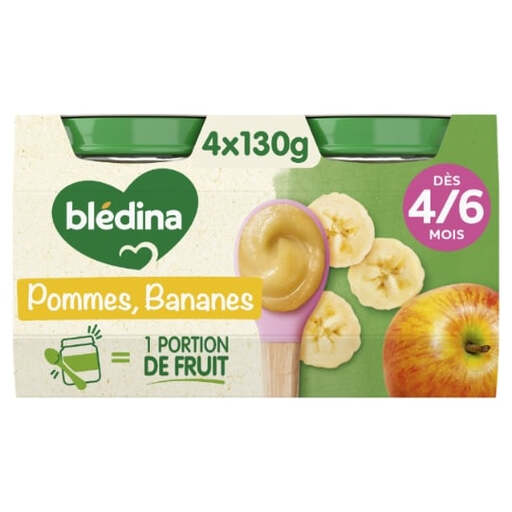
Why this choice suits this profile: This pack of four 130 g jars is ideal for first spoonfuls and makes it easy to build up a small stock at home.
The recipe states 80% apple and 20% banana. It has a smooth texture and is described as gluten-free.
A family-sized pack of 4 x 130 g, suitable from 4 months according to the product sheet. Keep refrigerated after opening and consume within 48 hours.
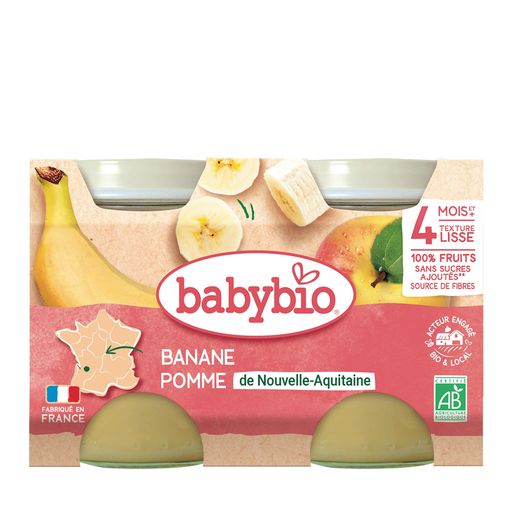
Why this choice suits this profile: This product is aimed at families looking for an organic recipe with a short ingredients list and no dairy ingredients.
The “no added sugar” claim is backed up by a detailed composition: 49.5% bananas and 49.5% organic apples.
A pack of 2 x 130 g jars, free from milk and gluten according to the product sheet, designed for babies from 4 months.
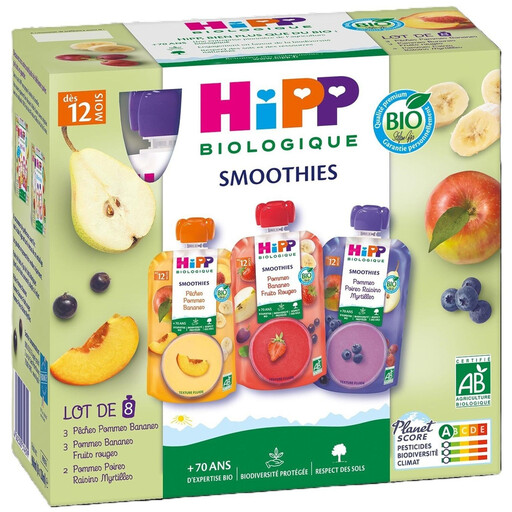
Why this choice suits this profile: This pack of eight pouches is ideal for families who want to vary the fruits and prepare several outings in advance.
The recommended age is clearly stated: from 12 months. This prevents offering a recipe that is too advanced for a younger infant.
Eight 120 g pouches, three organic fruit combinations and a 24-hour fridge life after opening.
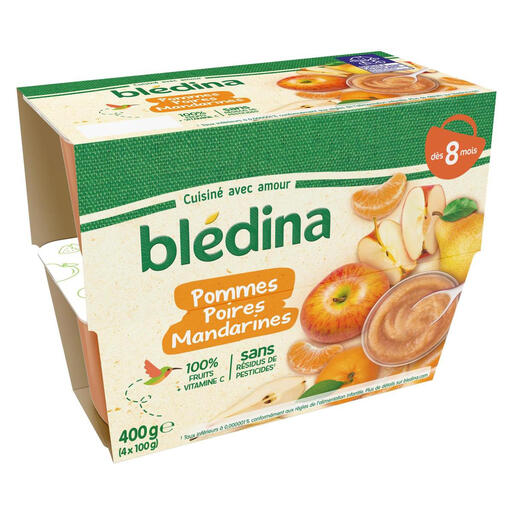
Why this choice suits this profile: From 8 months, this format lets you introduce a new fruit combination, whether for dessert or a snack.
The product sheet specifies the age of use, the absence of added sugar and the proportions of apple, pear and mandarin juice.
Four 100 g jars, a recipe made in France according to the description and a 12-hour fridge life after opening.
We’ve put together a comprehensive, real-time updated selection of products that meet these exacting criteria and European safety standards.
For a fruit purée intended for a baby from 4 months, look for a smooth texture, a short ingredients list and a clearly stated age of introduction. Recipes based on apple, pear or banana are common, but weaning should follow the recommendations given for your child.
It depends on the product and how it has been eaten. Some products state 12 hours, others 24 or 48 hours in the fridge. Close the container carefully, don’t freeze it if the packaging advises against it, and always check the label.
A small jar is suitable for spoon-feeding and gives you better control over the amount served. A pouch is easier to carry, but it’s best to squeeze the contents into a spoon or bowl when that fits with your child’s routine. In every case, your child should be properly seated and supervised while eating.