
Livraison le jour même ou le lendemain

Qualité garantie

Débloquez vos offres de bienvenue: Livraison GRATUITE | Jusqu'à -80 % | 30 jours d'essai gratuits à JoyPlus
Téléchargez l'application
For new parents, the baby formula aisle can be overwhelming. Faced with countless brands, age stages, and marketing claims, it's easy to feel lost. Yet the goal is simple: find the formula that meets your child's needs, without falling into common pitfalls that are often costly and sometimes unsuitable.
As the head of product selection at Joybuy, my mission is to help you gain some clarity. Let's break down the essential criteria together to make an informed choice, far from the marketing hype.
Before you even start comparing tins, it's crucial to know the most common traps so you can sidestep them.
To see clearly, focus on these three objective criteria.
European regulations are very strict and govern the composition of baby formula according to three main categories?:
Beyond the age stage, a few ingredients and notes on the label deserve your attention?:
Powdered baby formula is the most common and cost-effective format. Once opened, the tin has a longer shelf life (usually 3 to 4 weeks). Ready-to-feed liquid milk is certainly more convenient for travel, but its shelf life is much shorter after opening (48 hours in the refrigerator) and it comes at a higher cost.
Rather than an exhaustive list, here are some standout products that cater to specific parent and baby profiles, based on the criteria we've just discussed.
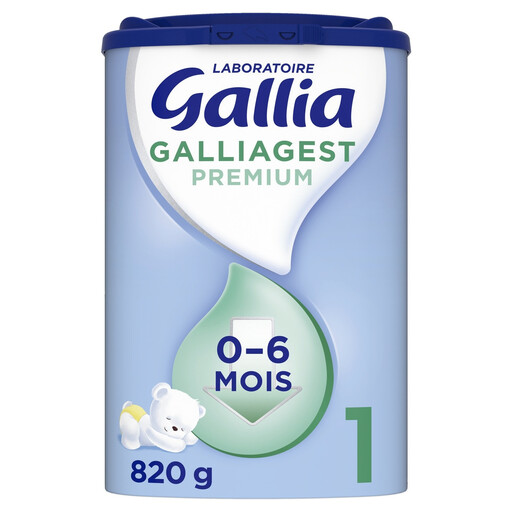
Why we chose it : This thickened formula is specifically designed for infants from 0 to 6 months who are prone to regurgitation. It addresses a common issue while ensuring complete nutrition during the first six months.
This isn't about randomly picking a 'special' formula. It's an anti-regurgitation milk option to consider with a healthcare professional for a diagnosed issue, not as a default choice.
Its starch-thickened formula is designed to reduce minor spit-up, while still guaranteeing the essential nutritional benefits of a Stage 1 milk.
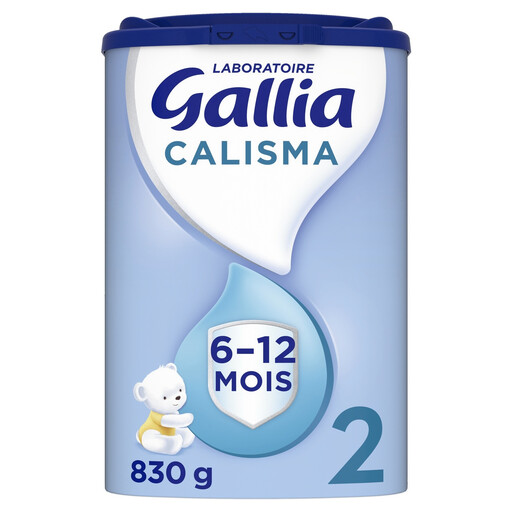
Why we chose it : This is a classic, palm oil-free follow-on formula, perfect for complementing the introduction of solid foods. It provides the key nutrients adapted for a baby's rapid growth between 6 and 12 months.
It strictly respects the age transition. As a clearly identified Stage 2 milk, it prevents the risk of continuing with Stage 1 for too long or switching to growing-up milk prematurely.
Its formula contains vitamins A, C, and D, which contribute to the normal function of the immune system, as well as FOS/GOS fibres and omega-3s (DHA).
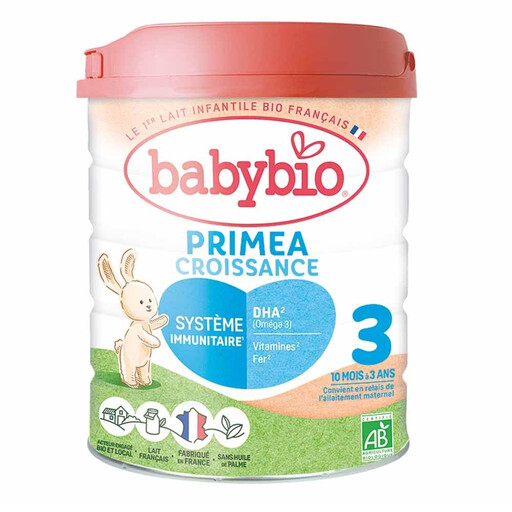
Why we chose it : For parents seeking an organic option, this growing-up milk is made in France from French cow's milk. It is formulated for children from 10 months to 3 years old.
Here, choosing organic doesn't mean compromising on age suitability. This Stage 3 milk is specifically designed for the needs of toddlers, with more iron and less protein than standard cow's milk.
It provides vitamin D, necessary for normal growth and bone development, and a balanced blend of essential fatty acids. All in a certified Organic Agriculture formula.
Discover our complete, up-to-date selection of products that meet our selection criteria and French regulations.
Yes, as long as you do it gradually. It's advisable to introduce the new milk slowly, for example, by alternating every other bottle with the old formula for a few days. This gives your baby's digestive system time to adapt. If you have any doubts, or if your child has a particular sensitivity, consulting your paediatrician is essential.
The choice primarily depends on your lifestyle and budget. Powdered baby formula is more economical and has a longer shelf life after opening. Ready-to-feed liquid milk is unbeatable for convenience on the go or for night feeds, but it is more expensive and must be consumed very quickly once opened.
Spitting up (regurgitation) is very common and usually harmless in infants. Before switching to an anti-regurgitation milk (a thickened formula), it is imperative to consult a healthcare professional. Only they can assess the situation, rule out other conditions, and guide you toward the most suitable solution for your child's comfort.