
Livraison le jour même ou le lendemain

Qualité garantie

Débloquez vos offres de bienvenue: Livraison GRATUITE | Jusqu'à -80 % | 30 jours d'essai gratuits à JoyPlus
Téléchargez l'application
Between baby food jars, fruit purées, baby cereals and organic ready-to-serve meals, finding your way around is not always easy. Packaging is filled with promises of “natural” ingredients, “complete” recipes and organic farming. Yet nothing replaces a careful review of the label.
When buying suitable baby food in France, three mistakes come up time and again: choosing a product without checking the recommended age, confusing “no added sugars” with “sugar-free”, and overlooking an allergen or storage instruction. Here are the key points to check before stocking the family cupboard.
A product labelled “from 4 months” does not meet the same needs as a baby meal from 6 months or a dinner from 12 months. Texture, ingredients and the possible inclusion of cereals, milk, fish or pieces evolve throughout the weaning process.
The age shown on the packaging should be considered alongside your child’s individual situation and your healthcare professional’s recommendations. Food from 4 months remains complementary and should not replace the usual milk without appropriate medical advice.
A baby fruit purée with no added sugars still contains the sugars naturally present in fruit. A recipe made with apple, pear, banana or mango is therefore naturally sweet, even without added sugar.
Take the time to check the ingredients list and nutrition table. A recipe made exclusively from fruit, as with some organic baby food products, makes it clear exactly what the product contains.
Milk, gluten, egg, fish, celery, soya and mustard may be included in recipes intended for older children. Claims such as “gluten-free”, “milk-free” or “no added salt” should be checked on the label of the product you purchase, as the recipe and packaging may change.
Format also matters: pouches are convenient when you are out and about, while jars and bowls make portioning easier at home. A 130 g portion does not necessarily suit the same appetite or occasion as a 200 or 230 g bowl.
For a first fruit or vegetable purée, a smooth texture generally makes it easier for a baby to discover spoon-feeding. From 6 months, recipes can include more vegetables, starchy foods or a source of protein, depending on the child’s needs. After 12 months, textures containing small, tender pieces gradually support the development of chewing skills.
Always check:
A short ingredients list makes it easier to understand the recipe. For organic baby food, look for the European organic logo and, where necessary, the code of the certifying organisation. The claims “no added salt” and “no added sugars” do not mean that the product is completely free from sodium or naturally occurring sugars.
For baby cereals, also check the ingredients and any possible traces. Babybio Quinoa Vanilla Cereal from 6 months contains, among other ingredients, 88.9% rice flour and 9.8% quinoa flour. However, the product may contain traces of gluten, milk, soya, lupin or mustard: the label remains the only reliable reference.
Some products can be served at room temperature, while others may be gently warmed in a bain-marie or microwave after being transferred to a suitable container. A jar or bowl should never be heated directly if the packaging prohibits it.
After opening, storage time varies by product: it is often 24 or 48 hours in the refrigerator, but may be limited to immediate consumption if the child has eaten directly from the container. Follow the manufacturer’s instructions, never refreeze a defrosted product and always check the temperature before serving.
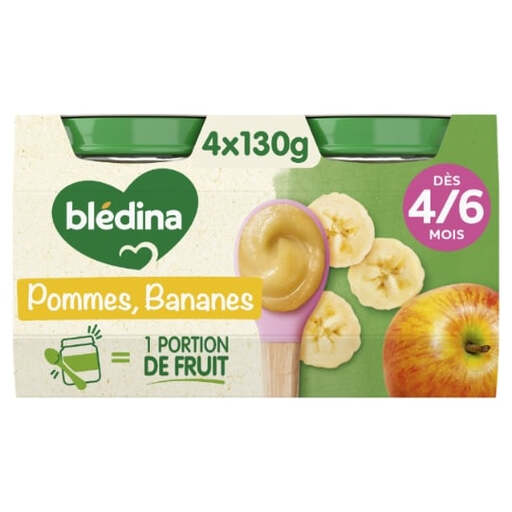
Why this choice suits this profile: This pack of four jars is ideal for families looking for a simple start, with a fruit recipe served in individual portions.
This product is suitable from 4 months, with a smooth texture and a recipe made with apple and banana. It is not suitable for younger babies.
Pack of 4 × 130 g, with a recipe made from 80% apple and 20% banana, and gluten-free according to the information provided.
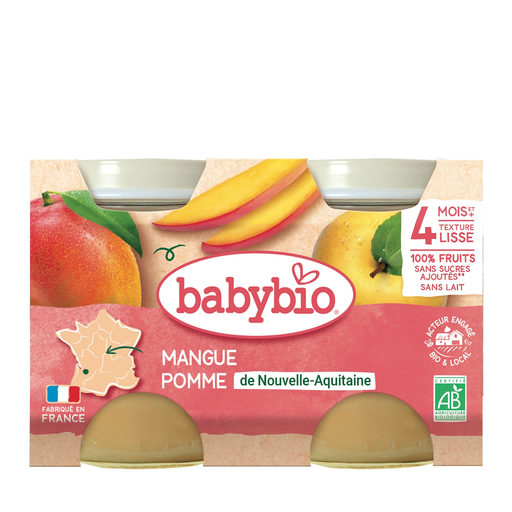
Why this choice suits this profile: This baby fruit purée is designed for parents who prioritise a short, organic recipe that is easy to serve at snack time or as a dessert.
The claim “no added sugars” does not remove the sugars naturally present in fruit. This recipe contains 50% mango and 50% apple.
Organic product, milk-free and gluten-free according to the product information, packaged in two 130 g jars.
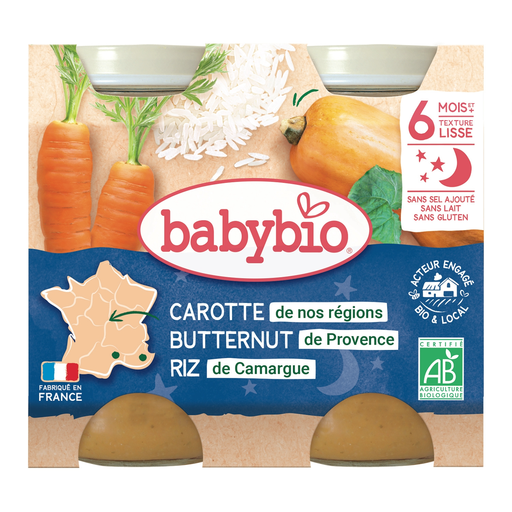
Why this choice suits this profile: With its 200 g portions, this baby dinner saves time on days when you need a savoury meal ready to heat and serve.
This recipe is intended for children from 6 months. It contains no added salt, milk or gluten. Nevertheless, check the label and do not add salt when serving.
The recipe contains 38% carrots, 17% butternut squash and 7.6% Camargue IGP rice.
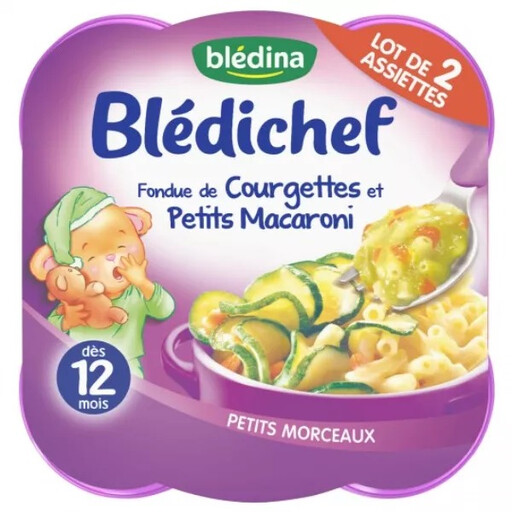
Why this choice suits this profile: The 230 g trays and progressive texture are well suited to toddlers who are beginning to eat more and more like the rest of the family.
This product contains gluten, egg, milk and celery, as well as salt. It is therefore not suitable for every dietary requirement.
Two 230 g portions containing courgette, pasta, peas, carrots, potatoes and spinach.
We have brought together an updated selection of baby food portions to help you compare formats, age recommendations and ingredients.
Smooth fruit and vegetable purées labelled “from 4 months” can support the start of weaning when appropriate for the child. Introduce them gradually and ask a healthcare professional for advice, taking your baby’s development and any potential allergies into account.
Place it in the refrigerator and follow the temperature stated on the packaging. Storage time is often 24 to 48 hours, but depends on the individual product. If the child has eaten directly from the jar, it is generally best not to keep the leftovers. Always refer to the manufacturer’s instructions.
No. An organic product may contain milk, gluten, egg, fish or other allergens. The organic label relates to how the ingredients are produced, not to the absence of allergens. Read the complete ingredients list before every purchase, particularly for a baby meal from 12 months or baby cereals.