
Livraison le jour même ou le lendemain

Qualité garantie

Débloquez vos offres de bienvenue: Livraison GRATUITE | Jusqu'à -80 % | 30 jours d'essai gratuits à JoyPlus
Téléchargez l'application
Between baby food jars, vegetable purées, organic recipes and ready meals, it is not always easy to know what to choose. The recommended age, texture, allergens and presence of added salt are all practical criteria to check before placing your order.
The selection below, put together by the Joybuy Product Recommendation Officer, helps you separate genuinely useful information from marketing claims, so you can choose food suited to your child’s age and your family’s routines.
An organic product may meet your expectations regarding the origin of its ingredients, but this does not guarantee that it is suitable for your child’s age or specific needs. Take the time to check the texture, allergens, and any presence of milk, egg or gluten, as well as the storage instructions.
The no added salt claim means that no salt has been added to the recipe. It does not mean that the product contains no traces of salt naturally present in certain ingredients. To be sure, check the nutritional table and the full ingredients list.
A baby meal suitable from 4 months does not have the same texture as a dish intended for children from 8 or 12 months. A smooth purée is generally suitable for the first spoonfuls, while recipes containing small pieces gradually support the development of chewing skills. The age stated by the manufacturer should therefore remain your first selection criterion.
At the start of weaning, choose a completely smooth texture and a simple recipe. The Baby Bio Vegetable Pot 4M 4x130g box, for example, contains several organic vegetable purées that are free from milk, gluten and added salt. This type of assortment lets your baby discover different flavours while providing convenient individual 130 g portions.
From 6 months, recipes can gradually include more vegetables, cereals or pulses, in line with the manufacturer’s instructions and your child’s eating habits. The texture should change little by little, alongside the recommendations of the healthcare professional who looks after your baby.
Check allergens every time you buy, even when it is a recipe your child has eaten before. On the packaging, the relevant ingredients are generally shown in capital letters, including milk, gluten, egg, fish, celery and soya.
The BABYBIO Organic Carrot Butternut Squash Rice Baby Dinner Meal From 6 Months is presented as a milk- and gluten-free recipe made with carrots, butternut squash, rice and onions. The product is also advertised as having no added salt. By contrast, the BLEDINA Blédiner Carrot Sweet Potato Semolina Milk Baby Dinner Meal From 8 Months contains milk and gluten from durum wheat semolina.
Individual portions are convenient at home, at the childminder’s or when travelling. However, check how long the product can be kept after opening: depending on the product, it must be consumed within 24 to 48 hours and stored in the fridge.
Most dishes can be reheated in a bain-marie or microwave, using a suitable container. If the instructions prohibit it, never place the jar or tray directly in the microwave. Stir the contents thoroughly and always check the temperature before serving.
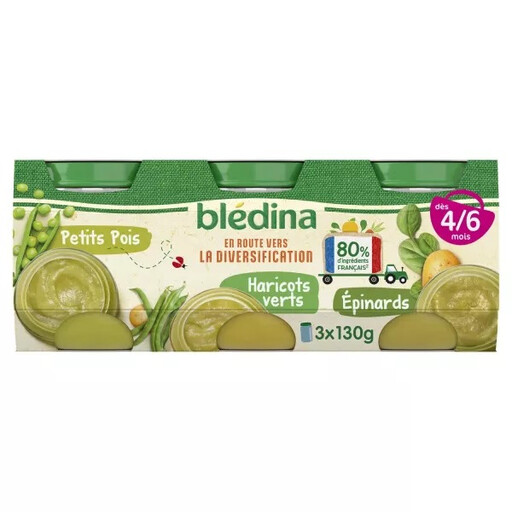
Why this choice suits this profile : This box of three 130 g jars is ideal for families starting weaning who want to introduce their baby to several vegetables without buying larger formats.
The recommended age of 4 to 6 months and the smooth texture are clearly stated. The recipes are made with vegetables and cooking water, with no palm oil.
Three varieties, convenient individual 130 g portions, a vegetable-based recipe and 48-hour storage after opening according to the product information.
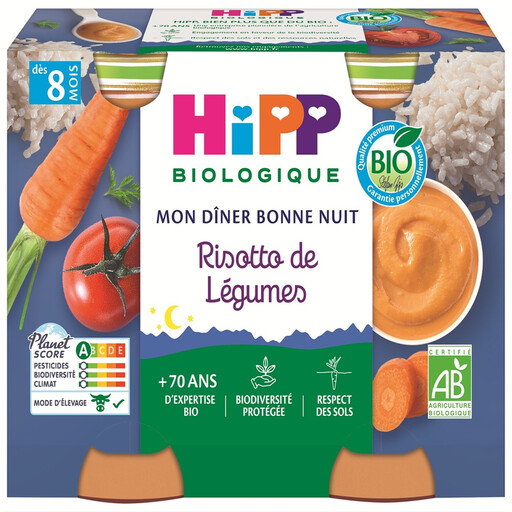
Why this choice suits this profile : This organic recipe comes in two 190 g portions and is aimed at parents who care about ingredient origins and organising meals from 8 months onwards.
The product information specifies the recommended age, the presence of milk and the absence of gluten. It is also advertised as having no added salt – nevertheless, check the label before every purchase.
Organic ingredients, rice, vegetables and rapeseed oil, all provided in two convenient portions.
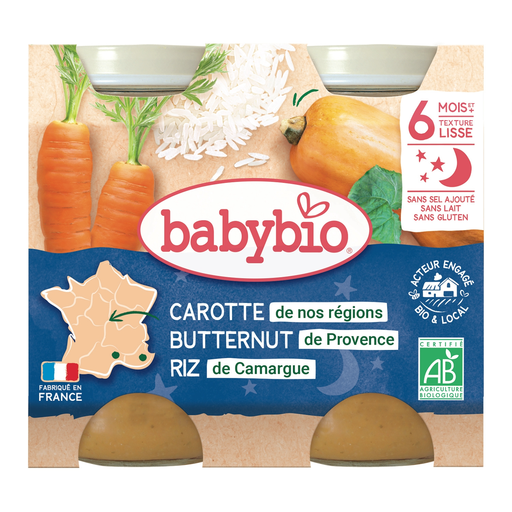
Why this choice suits this profile : Families looking for an organic recipe free from milk and gluten get two 200 g portions, ideal for planning several meals.
The stated exclusions are easy to spot : free from milk, gluten and added salt. They make the initial selection easier, but you should still check the information on the packaging.
38 % carrots, 17 % butternut squash, Camargue rice and two 200 g pots.
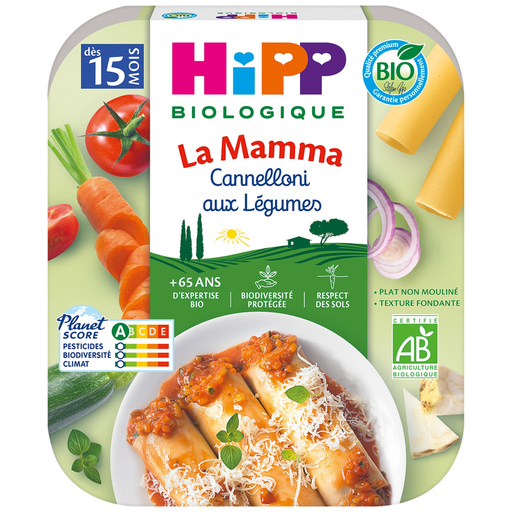
Why this choice suits this profile : From 15 months, children can start exploring a more substantial texture and soft pieces, while still enjoying a suitable individual portion.
The recommended age, from 15 months, and the presence of small pieces are clearly stated. However, the recipe contains gluten, egg, milk and celery.
An organic recipe made with tomatoes, cannelloni, carrots and courgettes, packed in a 250 g dish.
We have put together a comprehensive, regularly updated selection of products that meet these demanding criteria and European food safety standards.
Choose a smooth vegetable purée with a short ingredients list and no added salt. Boxes containing several varieties in small jars let your baby discover more flavours while helping to reduce waste. The age at which weaning begins should be determined with the healthcare professional who looks after your child.
Place the remaining portion in the fridge, following the storage conditions specified by the manufacturer. Depending on the product, it should be consumed within 24 or 48 hours. Do not keep leftovers that have come into contact with your child’s spoon, and never refreeze a defrosted product.
Cereals can be included in some preparations, but they are not essential in every case. Check the recommended age, whether the product contains gluten, milk or sugar, and the preparation method. Weaning is a gradual process, with textures and food groups suited to your child’s age.