
Livraison le jour même ou le lendemain

Qualité garantie

Débloquez vos offres de bienvenue: Livraison GRATUITE | Jusqu'à -80 % | 30 jours d'essai gratuits à JoyPlus
Téléchargez l'application
Between baby food jars, purées, fruit purées and ready-to-heat meals, it is not always easy to navigate the range of baby food available. Recommended age, texture, allergens, ingredients… the information on packaging does not always meet the same needs. To shop with greater peace of mind, it is better to rely on practical criteria rather than marketing claims alone.
A product labelled « from 4 months », « from 6 months » or « from 12 months » corresponds to a particular stage of weaning and a specific texture. This does not mean that every baby should start at exactly that age. Eating habits, your child’s development and advice from a healthcare professional may vary.
A baby meal from 4 months generally has a perfectly smooth texture and comes in a small portion. From 6 or 8 months, recipes may become thicker and include more ingredients. Meals containing small, soft pieces are more suitable for children who have already made progress with learning to chew.
An organic baby purée or an organic baby food recipe complies with standards relating to organic farming. However, this does not mean you can skip reading the ingredients list. An organic product may contain milk, gluten, eggs or celery. The « organic » label does not automatically mean « no added salt », « milk-free » or « gluten-free ».
Individual portions are convenient, but their shelf life after opening is limited. For the products featured here, an opened portion should generally be kept in the fridge and eaten within 24 to 48 hours. Also check whether the jar can be heated directly or whether its contents need to be transferred to another container.
Start by checking the recommended age, which is clearly shown on the label. For first meals, choose a smooth, even texture. Recipes intended for children aged 8 to 12 months can be thicker, while meals from 15 or 18 months often contain small, tender pieces.
For example, Blédina vegetable purées in 130 g jars are designed for those first spoonfuls. By contrast, recipes such as HiPP lasagne from 15 months or vegetable lasagne from 18 months offer a texture containing small, soft pieces.
Check the allergen information before every purchase, particularly when avoiding a specific ingredient has been recommended. Milk, gluten, egg, fish, soya, mustard and celery may appear in the recipe or in the list of possible traces.
Some of the Babybio products featured here are advertised as milk-free, gluten-free and with no added salt. This information should nevertheless be checked on the packaging you receive, as ingredients and instructions may change.
Compare the net weight and number of portions: a pack of 2 × 200 g is not intended for the same use as an assortment of 3 × 130 g. Also look at the proportion of vegetables, whether oil is included, the salt content and any added ingredients.
To heat the product, follow the instructions on the lid or in the leaflet. Some jars should not be placed directly in the microwave. After heating, stir the contents and check the temperature before serving. Never reheat the same portion more than once.
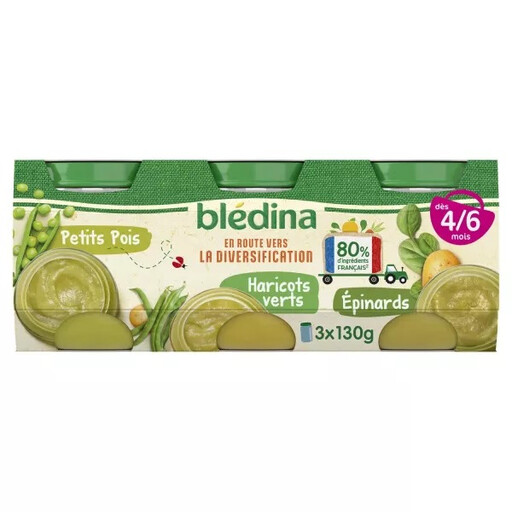
Why this choice suits this profile : This pack of three baby food jars helps introduce several vegetables from those first spoonfuls, with 130 g portions suited to the start of weaning.
The recommended age and smooth texture are clearly indicated. The assortment lets you try several recipes without buying multiple products separately.
Three vegetable recipes in a 3 × 130 g format, with no palm oil and advertised as vegan.
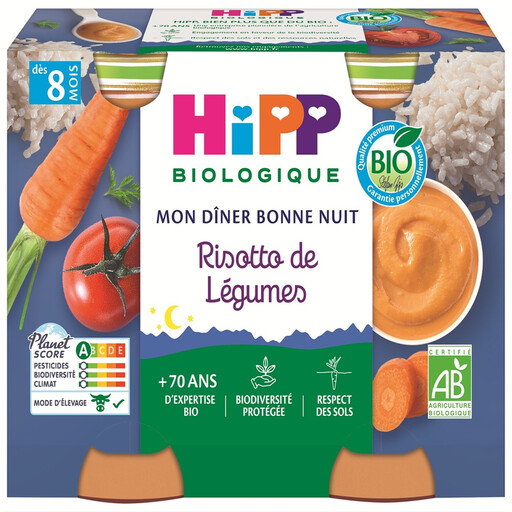
Why this choice suits this profile : This organic recipe for babies from 8 months is ideal for families looking for a more substantial dinner made with vegetables and rice, with a thicker texture.
The product details specify the recommended age, allergens and storage conditions. The recipe is advertised as containing no added salt and being gluten-free, but the product label remains the definitive source.
Ingredients from organic farming, a pack of 2 × 190 g, rapeseed oil and a smooth texture.
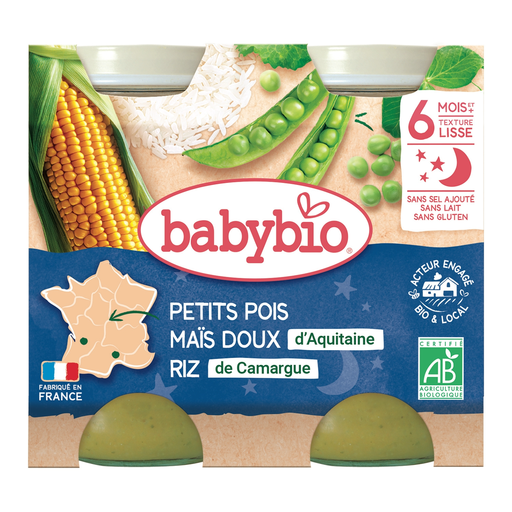
Why this choice suits this profile : With two 200 g portions, this format is ideal for parents who like to plan several meals ahead and are looking for a vegetable recipe containing no milk or gluten.
The stated exclusions are clearly specified in the product details : no milk, no gluten and no added salt. If your child has a diagnosed allergy, still check the product label.
An organic recipe containing 24 % peas, Camargue PGI rice and a 200 g portion suitable for dinner from 6 months.
For a baby dinner, make sure the meal matches the quantity and texture your child is already eating. From 8 months, a recipe such as Blédina Carrot, Sweet Potato and Semolina retains a smooth texture. From 12 months, Blédina meals made with pasta, tomatoes and courgettes, or bulgur and salmon, introduce small, soft pieces.
Fruit purées can complement a meal or be served at snack time. Blédina apple and banana purée from 4 to 6 months contains 80 % apple and 20 % banana. The Babybio pear product from 4 months is made with 99.9 % organic French pears, along with organic lemon juice concentrate. In both cases, follow the portion recommended on the packaging and respect your child’s appetite.
We have brought together a complete, real-time updated selection of products that meet these demanding criteria and European safety standards.
Choose a smooth texture and a short ingredients list, then gradually introduce new flavours in line with recommendations suited to your child. Vegetables, fruit and allergens should be introduced carefully. The age shown on the product does not replace personalised advice from a healthcare professional.
It depends on the product. The products featured generally state that they can be kept in the fridge for 24 or 48 hours after opening. If your child’s spoon has come into direct contact with the contents, follow the manufacturer’s instructions and avoid keeping a portion that has already been eaten from.
Consider how your child’s texture preferences are developing, whether the meal contains soft pieces, the allergens and the salt content. Vegetable pasta meals, fish-based recipes and lasagne may be suitable at this stage when they clearly carry the relevant age label. Always check the label and the temperature of the meal before serving.