
Livraison le jour même ou le lendemain

Qualité garantie

Débloquez vos offres de bienvenue: Livraison GRATUITE | Jusqu'à -80 % | 30 jours d'essai gratuits à JoyPlus
Téléchargez l'application
Between the "organic", "gluten-free", "complete meal" claims and the textures advertised as suitable for each age, choosing baby food jars can quickly become a headache. For parents just starting weaning or looking for practical solutions between 6 and 18 months, the label remains the best place to start.
The idea is not to choose a product based on a marketing promise, but to check its recommended age, ingredients, any allergens present, its texture and storage instructions.
A jar marked "from 6 months" does not meet the same needs as a meal recommended from 12 or 18 months. The texture, the presence of lumps and the ingredients all evolve as your baby's eating skills develop.
A baby meal from 6 months is generally smoother, whereas a dinner from 12 months may contain soft lumps to help with learning to chew. It's best to follow the age stated on the packaging while also taking your child's own pace into account.
Organic baby food can be an important criterion, but it doesn't mean you can skip reading the ingredients list. An organic product may still contain milk, gluten, fish or eggs. Certification is no substitute for checking allergens or texture.
Similarly, a "no added salt" claim doesn't mean all products have exactly the same salt content. When nutritional information is available, take the time to compare.
130 g jars can work well for a first purée, while a 190 or 200 g container will be better suited to a more substantial meal. Once opened, storage conditions vary between products: 24 or 48 hours in the fridge, in a sealed container.
A bulk pack is only worthwhile if the portions can be eaten within the stated time.
Start by distinguishing the different categories:
For meals containing meat or fish, check the relevant allergen and the recommended age stated on the product. A cod or salmon dish is not the same choice as a simple vegetable purée.
Read the full ingredients list, not just the claims on the front of the packaging. Things to look out for include:
For a gluten-free baby meal or one without milk, choose a product where the absence is clearly stated and always check the label on the product you receive. Information published online can change: the packaging is what counts.
2 × 200 g packs are handy for organising several meals. 130 g portions can accompany those first spoonfuls or top up a home-cooked meal. Some containers can be heated in a bain-marie or microwave, after removing the lid and following the instructions. However, a glass jar should never be heated directly in the microwave.
Stir the contents after heating and always check the temperature before serving. Do not refreeze a defrosted product and stick to the storage time after opening.
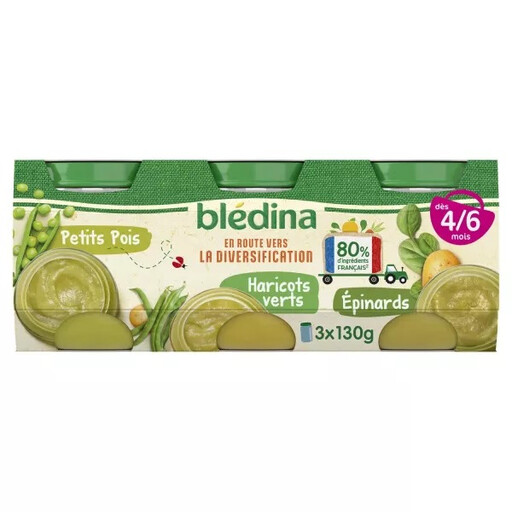
Why this choice suits this profile: This pack contains three 130 g jars, with vegetable recipes in a smooth texture to vary those first discoveries.
The small size limits waste when your baby is still eating small amounts. The detailed ingredients list makes it easy to distinguish each recipe.
3 jars of 130 g, vegetable recipes, smooth texture, no palm oil.
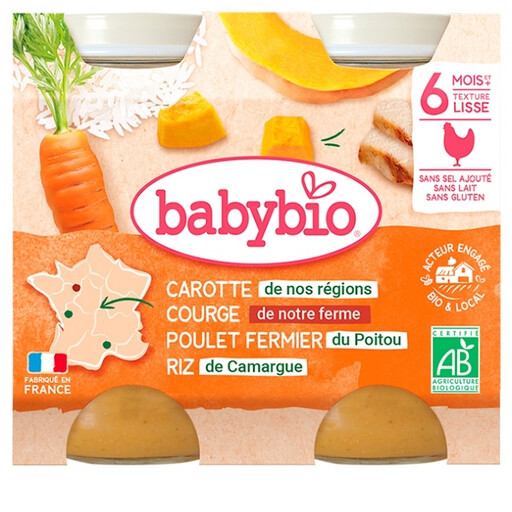
Why this choice suits this profile: This recipe focuses on organic ingredients and states the regional origin for several components.
The age, size and exclusions are clearly stated: no added salt, no milk and gluten-free according to the product page.
FR-BIO-01 organic certification, made in France, 2 jars of 200 g.
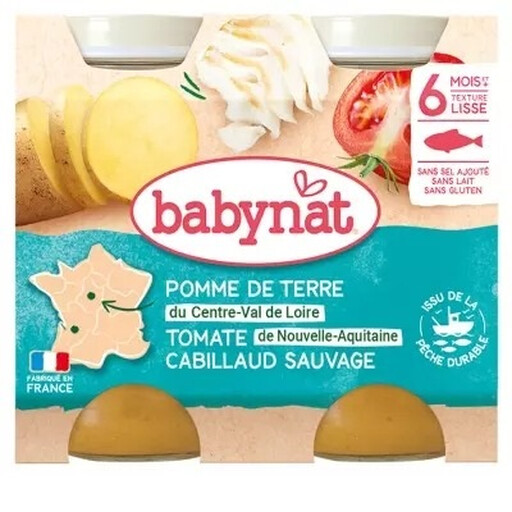
Why this choice suits this profile: This meal allows you to introduce fish in a portioned format, with a texture designed for meals from 6 months.
The presence of fish is clearly flagged. The product is also stated as milk-free, gluten-free and with no added salt: however, always check the label before serving.
2 jars of 200 g, wild cod, recipe with no thickener and stated sustainable fishing certification.
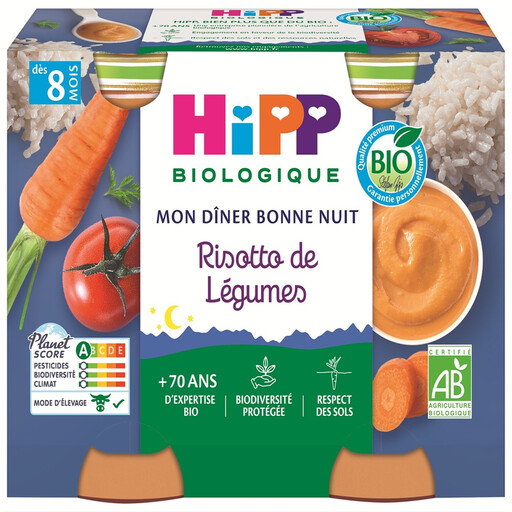
Why this choice suits this profile: The two 190 g portions are ideal for families who alternate between home-cooked meals and a ready-to-serve option.
The product page states the presence of milk, which avoids confusing "organic" with "allergen-free". Once opened, the portion must be refrigerated and consumed within 24 hours.
Organic recipe, smooth texture, gluten-free and no added salt according to the product page, 2 portions of 190 g.
We've put together a complete, real-time updated list of products that fully meet these strict selection criteria and European safety regulations.
Some products are labelled from 4 to 6 months, particularly vegetable purées. Always follow the age stated on each pack. If you're unsure about when to start weaning, ask a healthcare professional for advice.
The time depends on the product. Many items state they can be stored in the fridge for 24 or 48 hours after opening. Serve the portion in a clean bowl, reseal the rest and follow the manufacturer's instructions. Never put a partly eaten portion back into the jar.
No. A product can be gluten-free while still containing milk, cream or butter, as some risotto recipes or baby meals do. Check each allergen separately and don't rely on a single claim on the front of the pack.