
Livraison le jour même ou le lendemain

Qualité garantie

Débloquez vos offres de bienvenue: Livraison GRATUITE | Jusqu'à -80 % | 30 jours d'essai gratuits à JoyPlus
Téléchargez l'application
Between fruit compotes, purées and complete meals, choosing the right baby food jars can quickly become a headache. The recommended age on the packaging, the texture, the allergens and the storage method all have a direct impact on everyday use. A product that is convenient isn't necessarily suitable for every meal or every stage of weaning.
Here are the criteria to consider when choosing baby meals from 6 months, without being guided solely by pretty packaging or marketing promises.
A baby food jar may be recommended "from 6 months" while still offering a thick texture or small pieces. At the start of weaning, a very smooth purée will often be easier for your baby to accept. As your child progresses with chewing, slightly lumpy textures or soft pieces can support this development.
The recommended age is a useful regulatory and commercial guide, but you also need to consider your child's habits and the specific details on the packaging.
Sweet baby food jars with no added sugar still contain the naturally occurring sugars found in fruit. Similarly, an organic recipe doesn't automatically guarantee it will be suitable for a particular allergy or your family's eating habits.
Take the time to read the ingredient list and check for the possible presence of milk, gluten, egg or fish, as well as the certification shown. Organic baby meals can be an excellent option, but the ingredients should remain your primary criterion.
A large jar may seem more economical, but it can prove impractical if your baby only eats a small amount. Once opened, the product must be stored according to the manufacturer's instructions — usually in the fridge — and consumed within the stated time.
For outings, individual portions or pouches make organisation easier. At home, 190 g to 200 g formats are better suited to complete meals for older children.
Start by distinguishing between the different categories:
For a first taste, a smooth vegetable purée can help introduce new flavours. For recipes containing meat, fish or pulses, carefully check the ingredients and the recommended age.
Allergens must be clearly labelled on the packaging. In the selection offered, some recipes contain milk, gluten, egg, celery or fish. This information is particularly important when a food is being introduced for the first time.
Also compare the position of different ingredients in the list. A recipe made with 38% carrots, for example, is not directly comparable to one where milk is the main ingredient. The nutritional values per 100 g also allow you to compare salt, sugar and fat content.
Most baby food jars can be served at room temperature or warmed in a bain-marie. Some containers should not be placed directly in the microwave. In all cases, stir the contents and check the temperature before giving it to your child.
After opening, the storage time varies depending on the product: 12, 24 or 48 hours are stated in the relevant product details. Always follow the instructions on the jar, the best-before date and the manufacturer's guidelines. Do not freeze a product if this is not recommended.
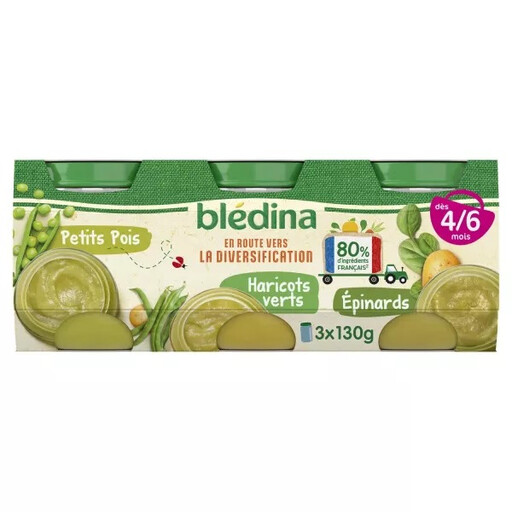
Why this choice suits this profile: This pack of three 130 g jars focuses on smooth textures that are easy to offer from the very first spoonfuls and practical for minimising waste.
The separate portions allow you to try several vegetables without opening a large container that's hard to finish.
Three vegetable recipes, no palm oil, for a total weight of 390 g.
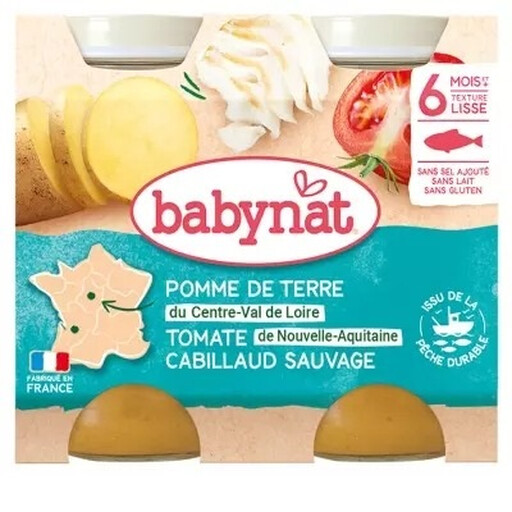
Why this choice suits this profile: This organic recipe combines potato, tomato and wild cod in a 200 g meal, ideal for introducing new flavours from 6 months.
The product details state the presence of fish, the absence of milk and gluten, and no added salt.
FR-BIO-01 organic certification, made in France and two 200 g jars.
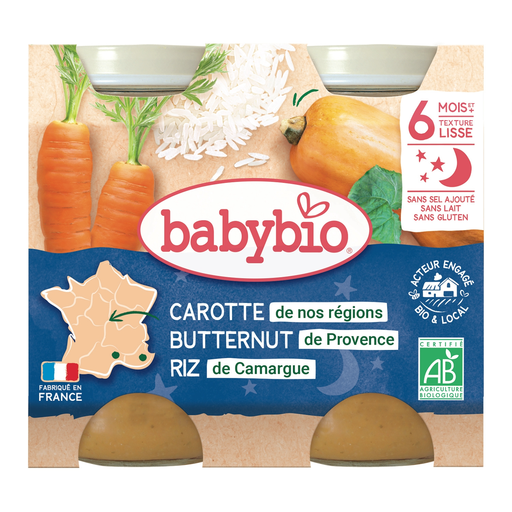
Why this choice suits this profile: With two 200 g portions, this product is ideal for families who want complete, ready-to-serve meals on hand, especially on evenings when time is short.
The recipe details the main ingredient percentages and states the absence of milk, gluten and added salt.
Ingredients from organic farming, 38% carrots, 17% butternut squash and storage possible for up to 48 hours after opening, according to the product details.
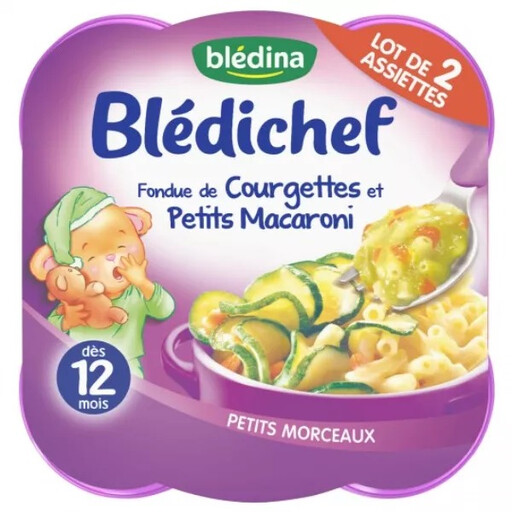
Why this choice suits this profile: From 12 months, the texture combining courgette and macaroni gradually supports your child's transition towards meals that require more chewing.
The recommended age and the presence of soft pieces are clearly stated. This makes it impossible to confuse this product with a smooth purée intended for an earlier stage.
Two 230 g trays, with 20% courgette and 15% cooked pasta, prepared in France.
We have compiled a complete, real-time updated list of products that fully meet these strict selection criteria and European safety regulations.
Some products are recommended from 4 months, while others are intended for children from 6 or 8 months. Check the age stated on the product and ask a healthcare professional for advice if you have any questions about starting weaning. Your child should always be supervised during mealtimes.
It all depends on the recipe and the manufacturer. The time can be 12, 24 or 48 hours in the fridge. Any leftovers that have been served directly from the spoon or brought to the mouth should not be put back in the jar. Check the packaging for the exact time and recommended storage temperature.
Baby fruit compotes are convenient, smooth and easy to transport. They don't systematically replace fresh fruit, but they can complement meals when time or storage conditions are limited. To make your choice, check the fruit content, the possible presence of added sugar and the format offered.