
Livraison le jour même ou le lendemain

Qualité garantie

Débloquez vos offres de bienvenue: Livraison GRATUITE | Jusqu'à -80 % | 30 jours d'essai gratuits à JoyPlus
Téléchargez l'application
Choosing baby food can quickly become a headache with all the “organic”, “no added sugar” claims, the recommended age on the packaging and the on-the-go formats. A fruit purée suitable from 4 months doesn’t meet the same needs as a biscuit intended for a 12-month-old child.
The most common mistakes come down to three habits: relying only on the front of the packet, overlooking allergens, and confusing convenience with age-appropriateness. Here are the points to check before buying baby food jars, baby purées, baby fruit pouches or baby snacks.
A fruit purée with no added sugar still contains the sugars naturally present in the fruit. A recipe made solely from banana and apple will therefore have a sugar content linked to those ingredients.
Take the time to read the ingredients list and the nutritional information panel. In particular, check for the presence of sugar, glucose syrup, honey or sweetening concentrates. Honey is also not recommended before 12 months due to the risk of infant botulism.
Claims like “from 4 months”, “from 6 months” or “from 12 months” correspond to the manufacturer’s usage guidelines. They should remain consistent with your child’s weaning stage and the recommendations of the healthcare professional looking after them.
A biscuit may be designed to melt in the mouth, but your child still needs to be sitting up, supervised and able to manage a firmer texture. Products containing pieces, cereals or nuts require particular vigilance.
A baby fruit pouch slips easily into a bag, but it isn’t intended to be consistently sucked straight from the spout. Pouring the purée into a spoon or a bowl helps your child gradually discover textures and learn to eat from a spoon.
Once opened, the storage time varies depending on the product: some purées keep for 24 or 48 hours in the fridge, while other portions must be eaten immediately. The label is your best guide.
For baby food from 4 months, generally choose smooth textures and simple recipes, such as a fruit purée or a vegetable purée. Indications like “4 to 6 months” or “6 to 36 months” should be considered alongside your child’s habits and abilities.
For baby snacks from 6 months, read the preparation and supervision instructions carefully. A biscuit should be offered to a child who is sitting up, under constant adult supervision. Products intended for older children may contain several allergens and have a less melt-in-the-mouth texture.
Ingredients are listed in descending order of their proportion. A short recipe makes it easier to know exactly what your child is eating. Also check the highlighted allergens: gluten, milk, eggs, soya, peanuts, nuts or mustard.
The organic label tells you about how the ingredients are produced, but it doesn’t guarantee the absence of sugar, gluten or allergens. An organic baby fruit purée may be gluten-free, while an organic baby biscuit may contain wheat, milk or eggs.
130 g jars are suitable for meals at home and make portion control easy. Individual 90 g or 120 g sachets are particularly handy when you’re out and about. For baby cereals, check the amount of water or milk to add, the recommended temperature and the storage time after opening.
Don’t keep a cereal preparation that has already been mixed if the packaging says it should be consumed immediately. For jars and pouches, check the lid is intact and follow the refrigeration instructions.
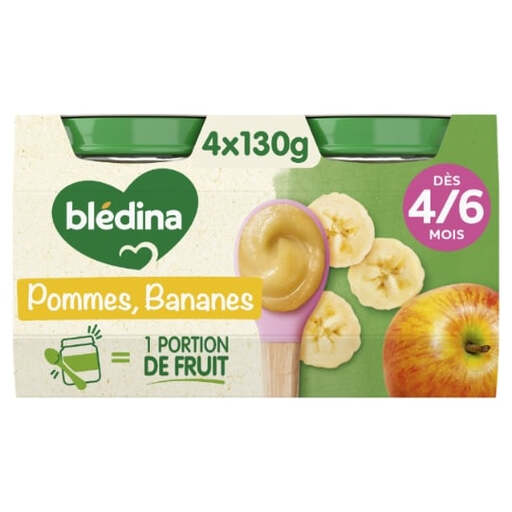
Why this choice suits this profile: This pack of four 130 g jars lets you start weaning with a classic format that’s easy to store and serve at home.
The recipe states 80 % apple and 20 % banana, without multiplying hard-to-identify ingredients. The label also confirms it’s gluten-free.
A smooth texture, four individual portions and 48 hours refrigeration after opening, according to the product sheet.
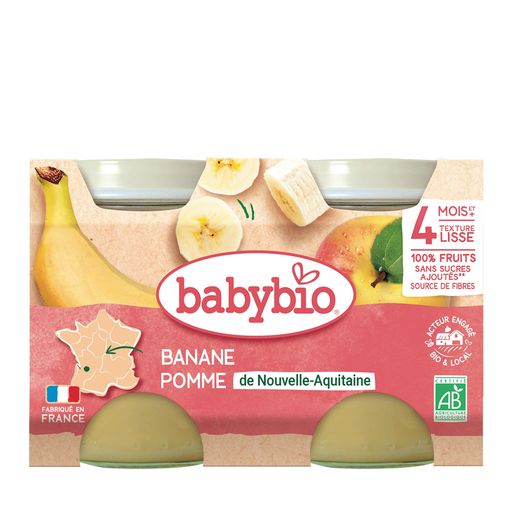
Why this choice suits this profile: This organic baby fruit purée is aimed at families looking for a short ingredients list, a no-added-sugar recipe and separate portions.
The “no added sugar” claim is backed up by a detailed composition: 49.5 % bananas, 49.5 % apples and concentrated lemon juice. The sugars present are those from the fruit.
Ingredients from organic farming, stated absence of milk and gluten, plus two 130 g jars.
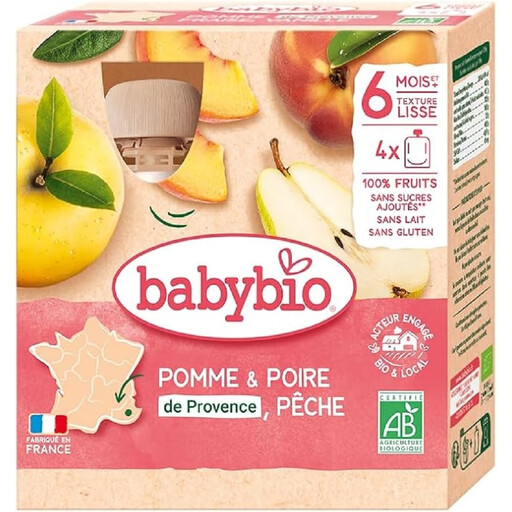
Why this choice suits this profile: The packaging in four 90 g pouches is ideal for days out, journeys and meals on the go.
The individual format limits leftovers. However, you should check the lid, supervise your child and place the opened pouch in the fridge to consume within 24 hours, according to the product sheet.
A blend of apple, pear and peach, with no added sugar and no declared allergens on the sheet, in 90 g portions.
We’ve put together a complete, real-time updated selection of products that meet these demanding criteria and comply with European safety regulations.
Baby cereals can be added to your child’s usual milk or water, following the manufacturer’s instructions. The Babybio Quinoa Vanilla product, for example, is recommended from 6 months and contains no added sugar. Its recipe is made from rice flour and quinoa. However, it may contain traces of gluten, milk, soya, lupin or mustard: check the label before buying.
For an organic baby biscuit, the recommended age and allergens are key. HiPP biscuits from 6 months contain wheat, milk and gluten. Babybio hazelnut biscuits also contain hazelnut and milk. They should only be offered when your child can manage solid textures, while sitting up and under adult supervision.
Products intended for adults, such as chocolate wafers or sweets, should not be considered baby snacks. Their sugar content, texture and allergens set them apart from foods designed for weaning.
Start with smooth textures and simple recipes, respecting the age stated on the packaging and the advice of the healthcare professional looking after your child. Depending on your baby’s individual situation, a fruit purée, a vegetable purée or a small jar with few ingredients can be suitable at this stage.
It depends entirely on the product. Many jars and pouches state they can be stored in the fridge for 24 to 48 hours after opening, while some portions must be eaten immediately. Always check the label and don’t keep leftovers that have been in direct contact with your child’s mouth.
A fruit purée, a fruit prepared according to your child’s abilities, or a biscuit specifically recommended for their age can all have a place in a varied diet. For any solid food, your child should be sitting up and supervised to minimise the risk of choking.