
Livraison le jour même ou le lendemain

Qualité garantie

Débloquez vos offres de bienvenue: Livraison GRATUITE | Jusqu'à -80 % | 30 jours d'essai gratuits à JoyPlus
Téléchargez l'application
Choosing your baby's food can quickly feel overwhelming. Faced with shelves overflowing with promises and colourful packaging, how do you know what's truly good for your child? As a Product Expert at Joybuy, my mission is to help you see clearly and make informed choices, far from the siren call of marketing.
The world of baby meals is full of pitfalls. Here are the two most common traps to avoid:
To avoid these traps, you have one weapon: the label. Here are the essential points to check.
The golden rule is simple: ingredients are listed by weight, from the most present to the least. The first on the list is therefore the main ingredient.
For a vegetable purée, the star vegetable must appear first, not water or potato (a cheap filler). For a complete meal, the meat or fish should be in the top three. A good prepared baby meal doesn't hide its premium ingredients at the end of the list.
Texture is fundamental for developing chewing and oral motor skills.
A baby's kidneys are still immature and cannot filter excess salt. It is therefore imperative to choose only products with the "no added salt" label. This is also the best way to introduce them to the true taste of food, a foundational step in introducing solid foods.
To illustrate these criteria in action, here are a few products that tick all the right boxes.
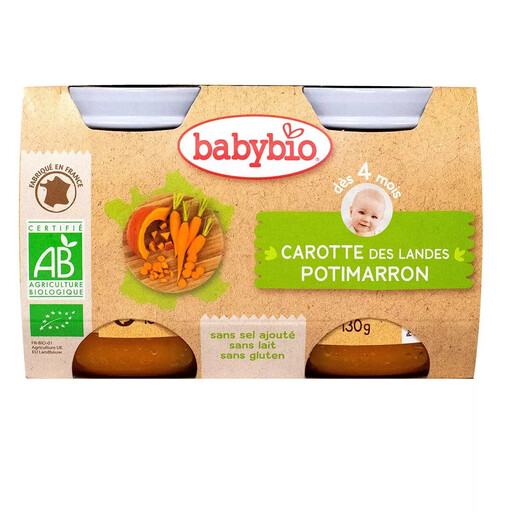
Why we recommend it: Perfect for starting solid foods, this jar features an ultra-simple recipe with two very gentle vegetables. Its perfectly smooth texture is ideal for first spoonfuls and beginner palates.
It avoids the trap of unbalanced "organic" food. The ingredient list is crystal clear: 50% carrots from Landes, 50% butternut squash, and a little cooking water. That's it. No salt, no sugar, no milk, no thickeners.
100% organic and French ingredients, and a minimalist recipe to introduce the true taste of vegetables.
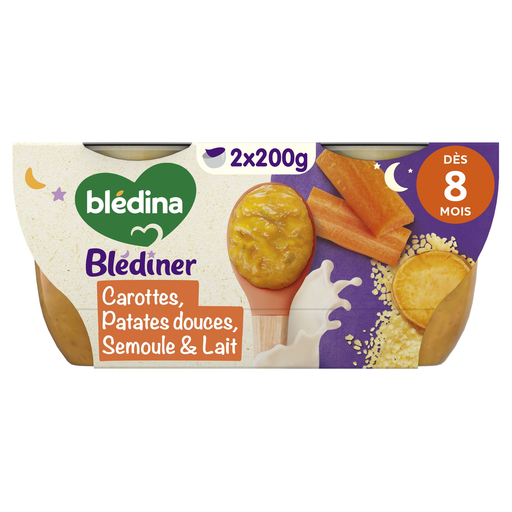
Why we recommend it: The ideal solution for a complete and quick dinner. This meal combines vegetables, carbohydrates (durum wheat semolina), and a balanced dairy component. Its mashed texture with small pieces is perfectly suited for babies from 8 months.
It offers a truly balanced all-in-one meal. No need to juggle multiple preparations. The ingredient list is transparent about proportions: a good balance between reconstituted milk (33.8%), carrots (32.9%), and carbohydrates for a satisfying meal.
A convenient bowl format, with no added salt and a source of omega-3 (ALA) thanks to rapeseed oil.
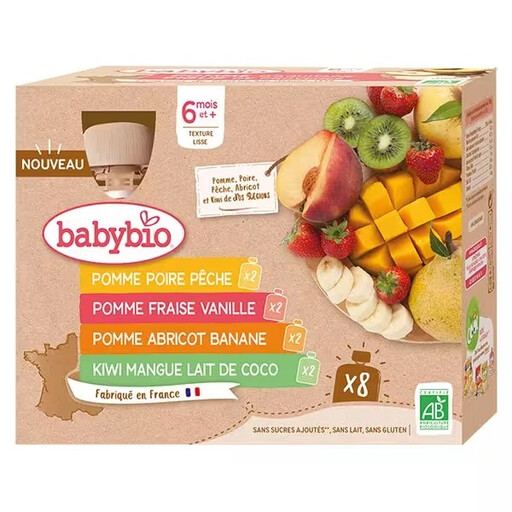
Why we recommend it: The **baby food pouch** is the ultimate partner for on-the-go snacks. This pack mixes up the recipes to vary the flavours and awaken taste buds with organic fruits and well-designed combinations.
It avoids the "fake no-sugar" trap. These pouches contain only the sugars naturally present in the fruit. Zero added sugar, zero concentrated juice used as a loophole to sweeten the recipe. The ingredient list is 100% fruit (and a little water).
An ultra-practical pouch format and 100% organic fruit recipes, with clear ingredient traceability (apples from France, kiwis from Nouvelle-Aquitaine, etc.).
Discover our complete selection of baby products, all approved by our experts according to these strict criteria and compliant with regulations.
Official guidelines recommend starting to introduce solids between 4 and 6 full months of age. In short: not before 4 months, and not after 6 months. Since every baby develops at their own pace, the ideal time should be confirmed with your paediatrician or doctor. They are the only ones who can assess your child's specific development and needs.
Beyond the age indicated on the packaging, make it a habit to check these three points:
No, you should never refreeze a defrosted product. For commercial baby food jars, freezing leftovers is therefore not recommended. If you don't use the whole jar, keep it tightly sealed in the refrigerator and consume it within 48 hours. The anti-waste tip: portion out the right amount into a clean bowl and immediately put the rest of the jar back in the fridge. Most importantly, never feed your baby directly from the jar if you plan to save the rest: your baby's saliva contains bacteria that can contaminate the preparation.