
Livraison le jour même ou le lendemain

Qualité garantie

Débloquez vos offres de bienvenue: Livraison GRATUITE | Jusqu'à -80 % | 30 jours d'essai gratuits à JoyPlus
Téléchargez l'application
Your child has started on solid foods, and now you find yourself perplexed in the baby food aisle. It's a real headache! Between marketing promises and endless ingredient lists, making an informed choice is difficult. As a product expert for this publication, my mission is to help you see clearly and choose products that are genuinely suitable, without being fooled by the siren song of advertising.
Before we unveil our top picks, let's review the most common traps to avoid.
To sort through the options, focus on a few objective points. They will allow you to assess the quality of a baby food jar or a prepared meal at a glance.
The golden rule? Simplicity. A short, understandable ingredient list is almost always a hallmark of quality. Here are the points to scrutinise:
The texture of the meals must evolve with your child to support their oral and motor skill development.
To help you make a clear choice, here are a few products that tick all the boxes, in line with the criteria we've just defined.
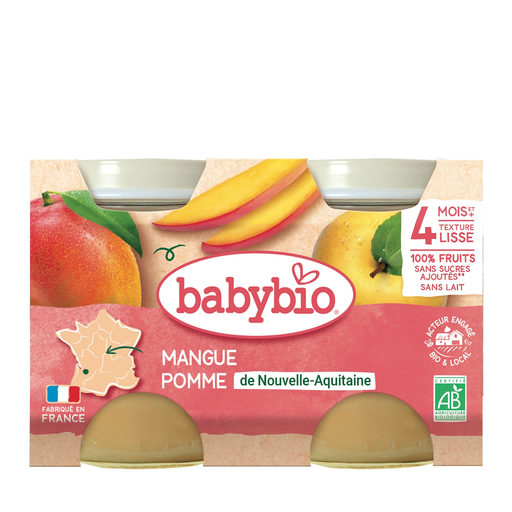
Why we recommend it: Ideal for the very first spoonfuls, this fruit purée offers an ultra-simple recipe with just two fruits. Its perfectly smooth texture is designed for little ones' palates, ensuring a successful first taste experience.
It avoids the "no added sugar" trap by relying on a 100% fruit recipe, with no concentrated juice or tricks. The ingredient list is crystal clear: 50% mangoes, 50% apples.
Organic ingredients, dairy-free, gluten-free, and no added sugar. We appreciate the clear traceability, with apples from Nouvelle-Aquitaine, France.
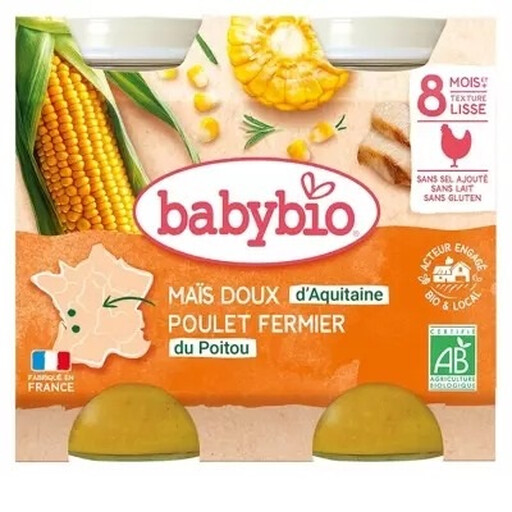
Why we recommend it: Perfect for parents seeking a complete, balanced, and organic meal. This recipe combines vegetables, starches, and protein with a smooth texture, perfectly calibrated for an 8-month-old discovering more complex meals.
It goes beyond a simple "organic" label by declaring the French origin of its ingredients (Aquitaine sweetcorn, Poitou free-range chicken). The recipe is formulated with no added salt, no milk, and no gluten.
A complete and well-thought-out recipe. The transparency on ingredient origin is a real plus for reassuring parents.
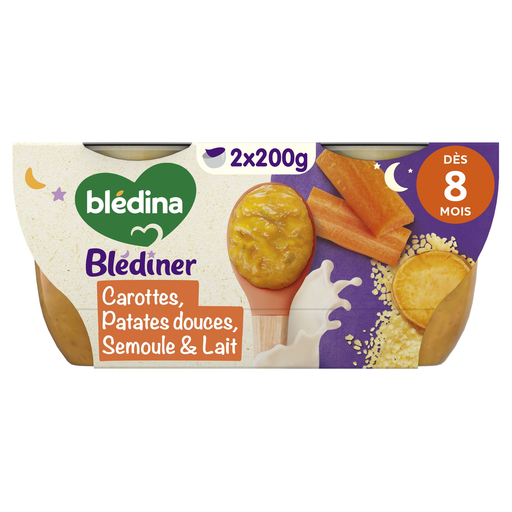
Why we recommend it: Specially designed for dinner, this complete and digestible meal combines vegetables, grains (semolina), and a touch of milk. Its smooth and nutritious texture is ideal for an 8-month-old's evening meal.
It avoids the "one-size-fits-all" meal trap by specialising in the evening meal. Its composition is designed to be satisfying without being heavy on digestion, and its texture is perfectly suited to the indicated age.
A source of omega-3 (ALA), no added salt, and cooked in France. The bowl format is also very practical.
Discover our complete selection of products approved by our experts, compliant with regulations and the criteria in this guide.
To conclude, here are the answers to the questions parents ask us most often.
The "no added salt" claim must be on the packaging. To be absolutely sure, take a look at the nutritional table. The "Salt" line (or "Sodium" x 2.5) tells you the amount of salt naturally present in the ingredients. For a baby, this value should be as low as possible, ideally well below 0.3 g per 100 g.
As a general rule, it is not advisable to freeze an industrial baby food jar, especially if it's glass (risk of breaking). Once opened, a prepared baby meal should be stored in the refrigerator and consumed within 24 to 48 hours, as indicated by the manufacturer. However, your homemade purées can, of course, be frozen in suitable containers.
The introduction of lumps is done very gradually, usually starting from 8 months. You begin with milled textures (mashed with a fork) or very soft foods like semolina or mini-pasta. Around 10-12 months, if your child is receptive, you can offer small, soft chunks of cooked vegetables, fruit, or meat. Every child develops at their own pace: the key is to observe their reactions without ever forcing them. If you have any doubts, your paediatrician's advice remains your best ally.