
Livraison le jour même ou le lendemain

Qualité garantie

Débloquez vos offres de bienvenue: Livraison GRATUITE | Jusqu'à -80 % | 30 jours d'essai gratuits à JoyPlus
Téléchargez l'application
Introducing solid foods is a big step for your baby and a real challenge for parents. Faced with shelves full of promises, choosing the right baby food can quickly become overwhelming. Between marketing claims and complex labels, it's easy to feel lost. Our mission: to help you see clearly and make informed choices, far from the advertising hype.
Before we present our top picks, let's break down the 3 traps you should absolutely avoid.
To avoid falling into these traps, focus on a few objective indicators. They will help you assess a product's true quality, far beyond the promises on the packaging.
The golden rule is simple: the shorter and more understandable the list, the better. Pay close attention to:
Introducing solid foods is a step-by-step process. The product must therefore be adapted to each stage of your child's development.
Beyond the ingredients, a few points of vigilance are necessary:
Because every family is unique, here is a selection of products that meet specific needs, all vetted against our strict criteria.
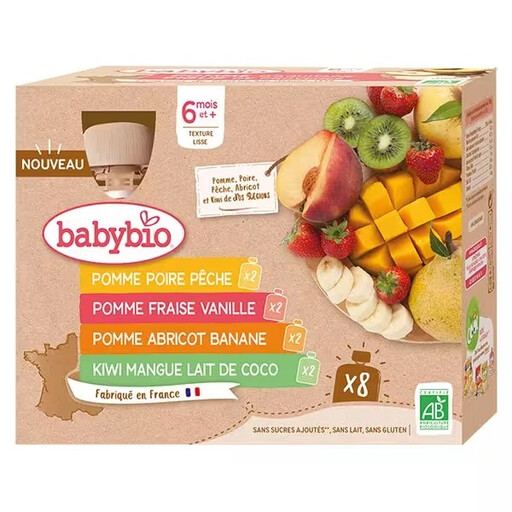
Why we recommend it: Perfect for introducing your baby to a range of flavours. The pouch format is a great ally for outings, and its smooth texture is ideal for the first spoonfuls.
Here, the "no added sugar" claim is honest: the recipe is 100% fruit (with a hint of lemon juice for preservation). The percentages of each fruit are displayed with full transparency.
The French origin of many fruits (apples, pears, peaches) is a mark of quality. The variety pack is a smart way to mix up flavours without buying multiple boxes.
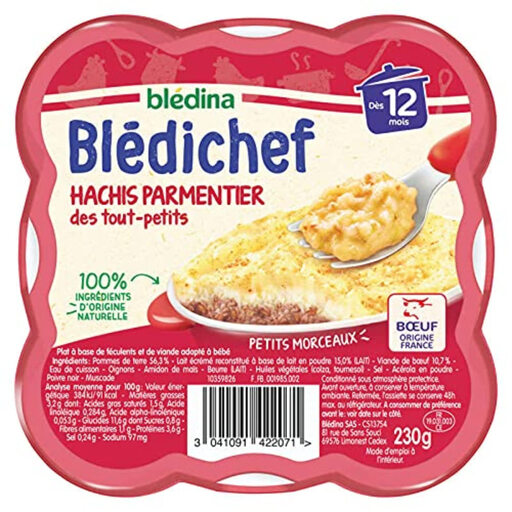
Why we recommend it: This complete meal offers a more advanced texture, with its purée and soft minced meat, perfect for children learning to chew. A balanced meal that's ready in a flash.
The composition is transparent and well-designed, with 56.3% potatoes and 10.7% beef. It doesn't need an organic label to hide a recipe low in quality ingredients.
Made in France, this dish is inspired by a traditional recipe that children love. The microwave-safe bowl is a game-changing detail for busy parents.
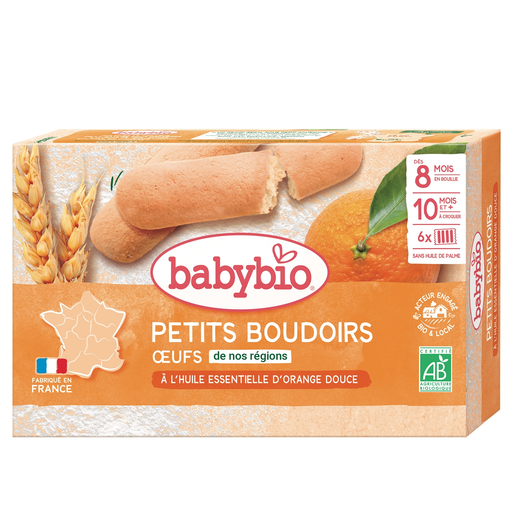
Why we recommend it: This biscuit is perfectly shaped for little hands, encouraging independence and fine motor skills. Its melt-in-the-mouth texture is ideal and safe for first snacking adventures.
Even though it's a biscuit, the recipe relies on high-quality organic ingredients (flour and eggs from France) and is enriched with vitamin B1. It's not just an empty calorie.
Transparency is key: 30% wheat flour and 18% whole eggs, both of French origin. A clear commitment to local supply chains.
We have curated a complete range of products that meet our selection criteria and current regulations.
For a baby over 8-10 months, a balanced meal should combine a source of protein (meat, fish, egg, legumes), vegetables, and starches (potatoes, pasta, rice, semolina). Take a look at the percentages on the label: vegetables and protein shouldn't just make a token appearance. As for salt, its presence should be almost zero.
Yes, but not indefinitely. Once opened, a jar or pouch should be stored in the refrigerator and consumed within 24 to 48 hours. The safest bet is to follow the instructions on the packaging, as the duration can vary. And a golden rule: never reheat a meal more than once.
The introduction of biscuits depends on several factors: your child should be able to sit up on their own, be starting to chew, and be comfortable with solid foods. Most baby biscuits are recommended from 8 or 10 months. Always choose biscuits specifically designed for toddlers: their melt-in-the-mouth texture is designed to limit the risk of choking. Of course, adult supervision is essential during snack time.