
Livraison le jour même ou le lendemain

Qualité garantie

Débloquez vos offres de bienvenue: Livraison GRATUITE | Jusqu'à -80 % | 30 jours d'essai gratuits à JoyPlus
Téléchargez l'application
Starting weaning soon brings plenty of practical questions: what texture should you offer? Should you prioritise organic baby products? How can you identify an allergen or avoid an impractical format? Between marketing claims, recommended ages and storage guidelines, what seems like a simple purchase can quickly become a real headache.
To choose suitable baby food from 6 months, three common pitfalls are worth avoiding:
The age shown on the packaging is an essential guide. From 6 months, smooth baby purées and vegetable blends are ideal for those first spoonfuls. As the months go by, the texture gradually changes: preparations become thicker and then include small, soft pieces.
For an older child, check that the product offers a texture suited to learning to chew. A recipe intended for children aged 12 or 15 months and over should not be chosen based on its ingredients alone: its consistency and your child’s ability to eat safely are just as important.
Read the full ingredients list, even if the front of the pack mainly highlights one vegetable or fruit. Recipes may contain milk, fish, eggs, gluten, celery, soya or mustard. Online information should be checked against the packaging you receive, particularly in the event of a known allergy or the recent introduction of an ingredient.
The organic label means that certain ingredients meet specific requirements relating to how they are produced. It does not guarantee that the product is suitable for every child, nor does it replace a varied diet. Also check the sugar content, whether salt is present and the net weight.
The 130 g jars are often well suited to first portions. The 230 to 250 g trays are more suitable for a heartier meal for an older child. Pouches and individual packs are convenient to take with you, but children should always be supervised while eating.
After opening, carefully follow the stated storage period. Several products in this selection need to be kept in the fridge and eaten within 24 to 48 hours. Do not reheat the same preparation more than once, stir it before serving and check its temperature.
The products below cover several stages of infant feeding: vegetables, fruit purées, snacks and complete meals. The characteristics reflect the information provided for each product; the packaging label remains the reference to check before consumption.
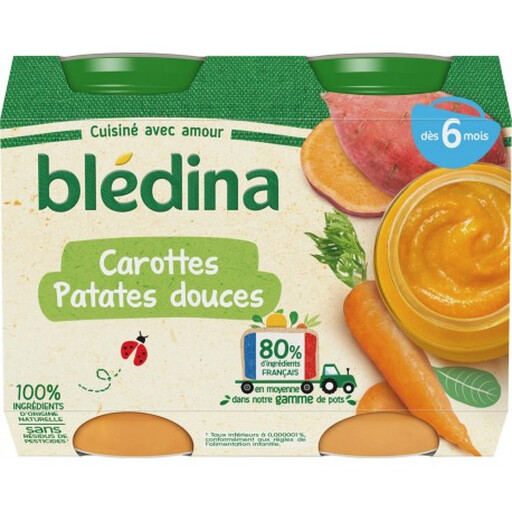
Why this is an appealing choice : This pack of two 200 g jars is a simple way to start with a smooth vegetable recipe, without having to buy lots of different products during the first few weeks.
The recommended age, from 6 months, is clearly stated. The preparation can be served at room temperature or gently warmed: the jar must not be placed directly in the microwave.
Two 200 g portions, with a recipe made using carrots, sweet potatoes and potatoes, among other ingredients.
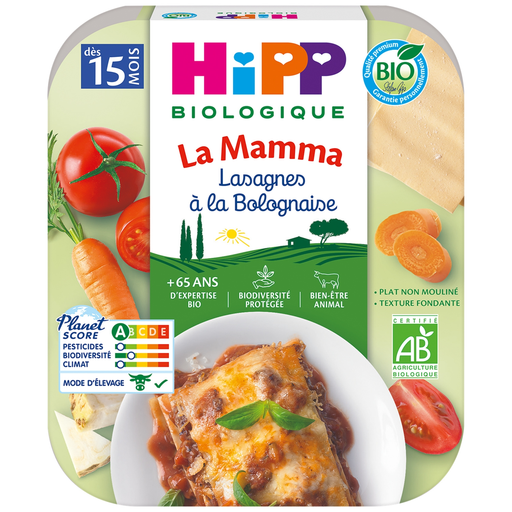
Why this is an appealing choice : Its organic recipe and texture with small pieces are ideal for families looking to add variety to the meals of a child already familiar with gradually changing textures.
Pay close attention to the recommended age and allergens: the recipe contains wheat, egg, celery and milk, among other ingredients, and may contain fish and mustard.
Ingredients from organic farming according to the product information, an unblended texture and a 250 g pack.
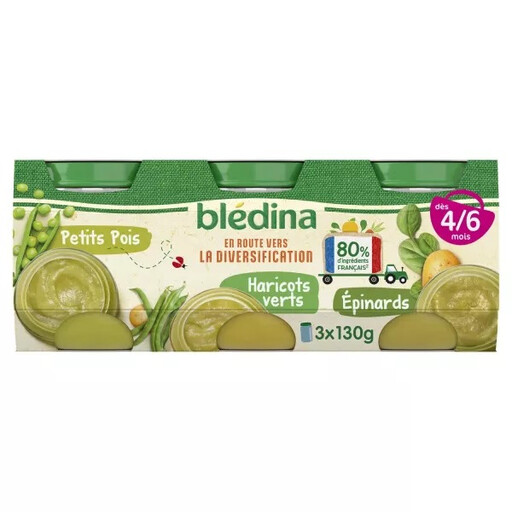
Why this is an appealing choice : This selection of three small jars introduces your baby to several vegetables while keeping the portions to 130 g, which is convenient when their appetite is still very changeable.
The three recipes are clearly listed: green beans and potatoes, peas, then spinach and potatoes. The jar must not be placed directly in the microwave.
Three 130 g jars, vegetable recipes and no palm oil according to the product information, with storage in the fridge for up to 48 hours after opening.
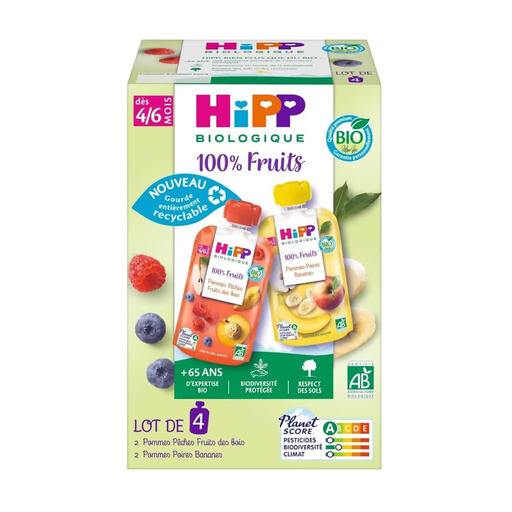
Why this is an appealing choice : The individual format slips easily into a bag for an outing, nursery or last-minute snack. The pack includes two fruit combinations.
The product information states that it contains 100 % organically farmed fruit and no added sugar. However, the sugars naturally present in fruit should still be taken into account.
Two fruit blends, gluten-free according to the product information, in 90 g pouches, with storage in the fridge for up to 24 hours after opening.
For a baby meal from 12 months, Blédina recipes such as Beef Parmentier, spinach with salmon and courgettes with macaroni are available in 230 g formats, with textures better suited to children who are well advanced in the weaning process. Always check the allergens: the spinach dish contains fish and milk, among other ingredients, while the macaroni recipe contains gluten, egg, celery and milk.
For a snack, HiPP biscuits for babies from 6 months or Babybio biscuits from 8 months should only be offered under supervision, when your child is sitting down. They contain gluten and, depending on the product, milk or egg. A baby fruit purée or fruit pouch is another practical option, but it should not be eaten directly from the pouch without supervision.
We have brought together a complete, real-time updated list of products that meet these demanding selection criteria and European safety regulations.
The 130 g formats are often practical at the beginning, as they help minimise leftovers. Needs vary from one child to another and also depend on the place of other foods in the meal. Follow the information on the packaging and the recommendations of the professional supporting your child.
Yes, but only if the instructions allow it. If necessary, transfer it to a sealed container, place it in the fridge and follow the stated time limit, usually 24 or 48 hours, depending on the product. A portion that has already been served on a plate must never be returned to the jar.
The organic label provides information about how certain ingredients are produced. However, it is not enough to determine whether a food is suitable for your child’s age, the right texture or any potential allergies. Compare the ingredients, recommended age, format and storage instructions.