
Livraison le jour même ou le lendemain

Qualité garantie

Débloquez vos offres de bienvenue: Livraison GRATUITE | Jusqu'à -80 % | 30 jours d'essai gratuits à JoyPlus
Téléchargez l'application
Weaning raises plenty of practical questions: what texture should you offer, should you opt for organic baby cereals, how do you spot added sugars, and what quantities work best to avoid waste? With colourful packaging and claims like “natural flavour”, it’s not always easy to compare products that serve very different purposes.
When choosing baby food from 6 months, three common mistakes crop up time and again:
A product labelled from 6 months, from 8 months or from 12 months corresponds to a specific stage of weaning. Instant cereals are usually mixed with warm water or your baby’s usual milk. Baby meals from 8 months often have a thicker texture, while recipes from 12 months may contain soft, melt-in-the-mouth pieces to help with learning to chew.
Before you add a product to your basket, check:
Advice on introducing new foods can vary from one child to another. If you have any questions about gluten, fish, milk or another allergen, it’s best to ask a healthcare professional.
The phrase no added sugars doesn’t mean the product contains no naturally occurring sugars. To get a true picture, read the full ingredients list and check the nutritional table.
In particular, look out for:
Organic infant cereals can appeal to families who prefer organic farming. However, an organic label doesn’t mean you can skip reading the ingredients: an organic recipe may still contain gluten, milk or sugars, depending on its formulation.
A cereal-based preparation should generally be eaten straight away. Any leftover in the bowl is best thrown away rather than put in the fridge. For ready-to-eat meals and desserts, the precautions are different:
The contents of your delivery may vary from batch to batch. When it arrives, always check the best-before date, batch number, ingredients list and any warnings on the packaging.
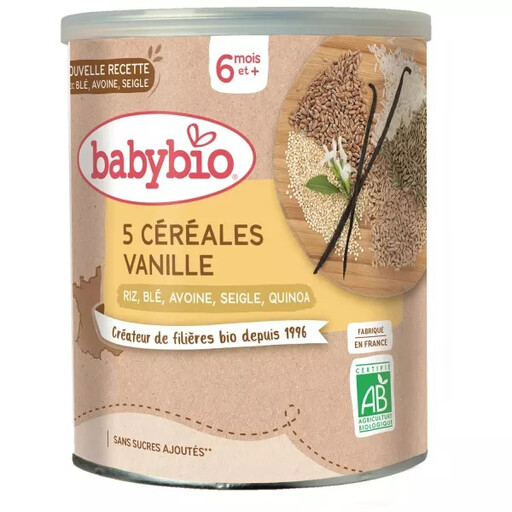
Why this suits this profile: At 220 g, this pack lets you try it out without stockpiling. Simply mix with around 200 ml of warm water or your baby’s usual milk.
The ingredients list shows 88.9 % rice flour and 9.8 % quinoa flour, with no added sugars. Still, check the packaging for any possible traces of allergens.
Organic ingredients, vitamin B1, Bourbon vanilla flavouring and a smooth texture once mixed.
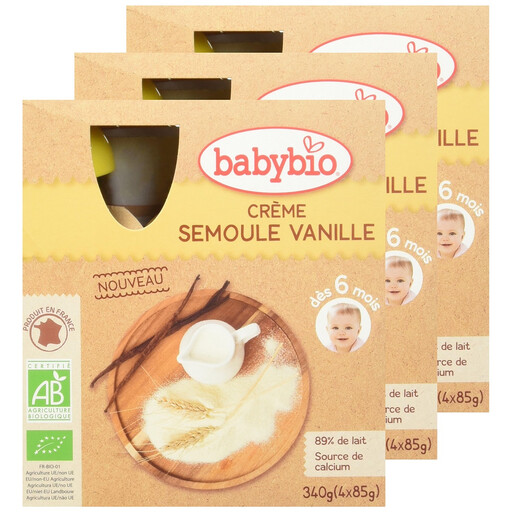
Why this suits this profile: The four individual 85 g portions are easy to serve, at home or on the go, giving you a baby dessert without opening a large pot.
Individual packaging means you don’t have to open a large container for just a few spoonfuls. However, the recipe contains milk, gluten and sugar – check that it meets your criteria.
80 % whole milk, 4 % durum wheat semolina, and can be served at room temperature or chilled.
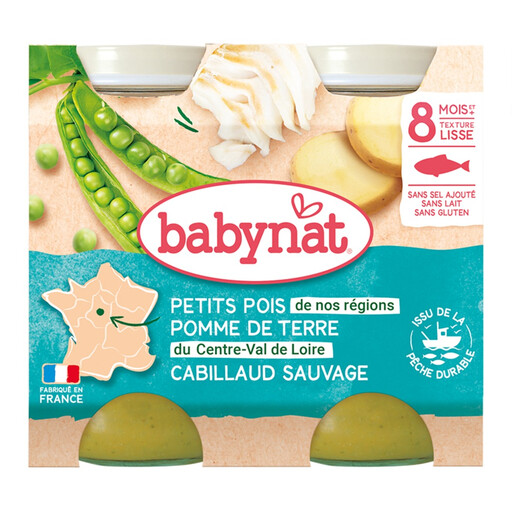
Why this suits this profile: This meal from 8 months is ideal for families who want a ready-to-heat savoury recipe with vegetables and fish, in two portions.
The product page states 67 % vegetables, 8 % cod, and no milk, gluten or added salt. Fish is of course an allergen to bear in mind.
An organic recipe made in France, with peas, potatoes, carrots and wild cod.
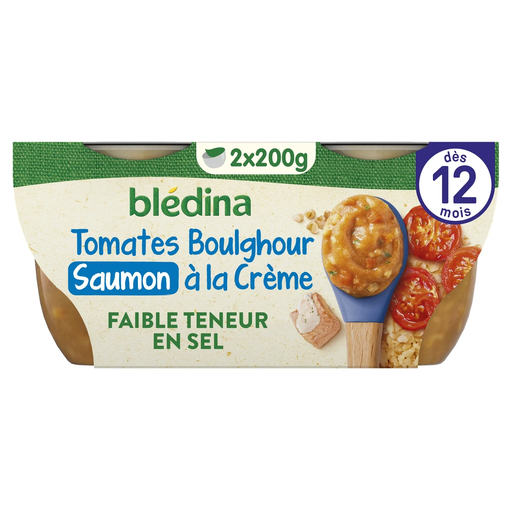
Why this suits this profile: Its texture with soft, melt-in-the-mouth pieces supports the transition in eating after 12 months. The pack contains two 200 g bowls.
The recommended age, vegetable content and proportions are clearly stated. However, the recipe contains bulgur wheat, fish, milk and salt – check the allergens before buying.
20.8 % tomato, 13.5 % bulgur wheat, 8 % salmon and prepared in France.
We’ve rounded up the products that genuinely meet these strict selection criteria and European safety regulations. This list is updated in real time.
To begin, choose a product clearly labelled from 6 months, with a smooth texture and a short ingredients list. Baby cereals are prepared with water or your baby’s usual milk, following the manufacturer’s instructions. Introduce new foods gradually and keep an eye out for any allergens.
No. The organic label describes how the ingredients are grown, not whether sugar is present. Compare the ingredients list with the nutritional table. Some vanilla or cocoa cereals do contain sugar, even when they’re intended for young children.
It depends on the product. A cereal-based preparation should generally be eaten straight away. An opened baby jar should be placed in the fridge and used within the time stated on the label, often 24 to 48 hours. For an individual dessert portion, the label may recommend eating it immediately after opening. In every case, the time printed on the packaging you receive is what counts.