
Livraison le jour même ou le lendemain

Qualité garantie

Débloquez vos offres de bienvenue: Livraison GRATUITE | Jusqu'à -80 % | 30 jours d'essai gratuits à JoyPlus
Téléchargez l'application
Introducing solid foods often brings a host of questions: what texture should you offer, should you choose organic baby food jars, how do you spot a baby meal with no added sugars, and what quantities should you plan for? Between claims like "natural", "no added sugars" and recipes advertised as suitable for several ages, the label is always the best place to start.
A few common pitfalls keep cropping up:
For a first taste, a smooth baby purée or a homogeneous fruit compote is generally easier to eat than a recipe with lumps. The age stated by the manufacturer is a useful guide, but every child progresses at their own pace. Baby food from 4 months refers to specific products, such as certain fruit compotes designed from 4 or 6 months: it should not be confused with foods intended for older children.
From 6 months onwards, recipes gradually become richer with vegetables, starchy foods and sources of protein. Vegetable and meat jars, for example, can provide a complete meal, as long as you follow the instructions on the packaging.
Ingredients are listed in descending order of quantity. A recipe made mainly of vegetables or fruit is therefore easy to spot. To choose an organic baby meal, look for the European organic farming logo and the certifying body shown on the packaging.
Also check the allergens highlighted: milk, gluten, fish, egg, soya or nuts, depending on the recipe. The Blédina cereal and carrot product, for instance, contains milk, gluten and fish oil. Conversely, some Babybio recipes featured here are labelled as milk-free and gluten-free. If there is a history of allergies or any doubt, it is best to seek advice from a healthcare professional.
To choose a baby meal with no added sugars, rely on the ingredients rather than the image or flavour promoted. The Blédina apple-strawberry-banana compote is 100% fruit, while the Nestlé plain fromage frais dessert is presented with no added sugars. This does not mean these products are free from the sugars naturally present in fruit or milk.
The same logic applies to added salt, which should be distinguished from the sodium naturally present in some ingredients. Several Babybio recipes labelled with no added salt help keep the composition easier to control. Finally, check the preparation and storage instructions: some jars are served at room temperature, while others can be warmed in a bain-marie. Never heat a jar directly if the packaging does not allow it, and always check the temperature before serving.
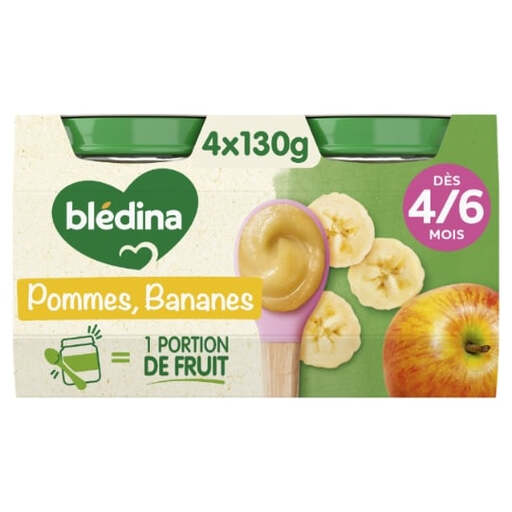
Why this choice suits this profile: This pack of four 130 g jars is ideal for first fruit compotes. It lets you try a fruity recipe without stockpiling lots of different products in the cupboard.
The stated ingredients are short: 80% apple, 20% banana and ascorbic acid. The recommended age and storage conditions after opening are clearly shown.
A smooth texture, a recipe labelled gluten-free and four individual 130 g portions.
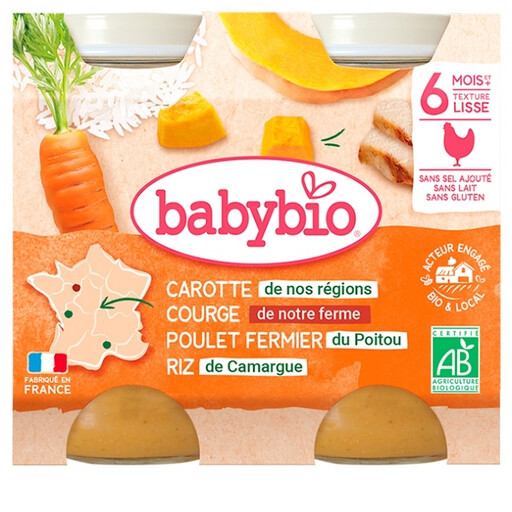
Why this choice suits this profile: This organic recipe made in France combines vegetables, chicken and rice in a 200 g format, suitable for main meals from 6 months according to the labelling provided.
The product details state no added salt, no milk and no gluten. The proportions of carrot, butternut squash and rice are also listed.
A stated organic certification, two 200 g jars and a combination of free-range chicken and Camargue rice.
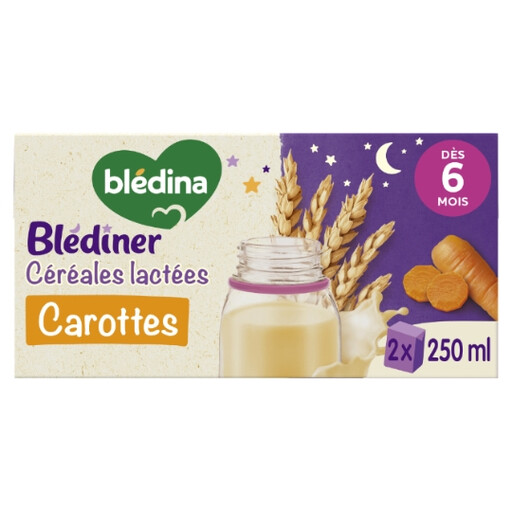
Why this choice suits this profile: This ready-to-drink format can be a lifesaver on a busy evening, when travelling or for a meal on the go.
It avoids the sometimes imprecise measuring of powdered cereals. However, do check for the presence of milk, wheat and fish before buying.
Two 250 ml bottles, instant preparation and stated levels of calcium, iron and omega-3.
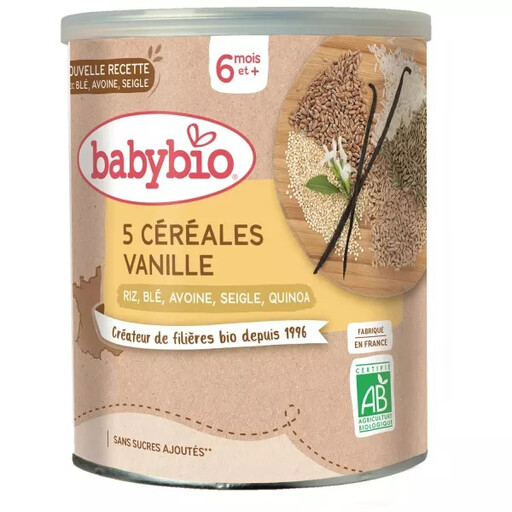
Why this choice suits this profile: This powder is prepared with hot water or your baby's usual milk. You can adjust the amount to suit their appetite and your family's routine.
The product details state a recipe with no added sugars and specify possible traces of gluten, milk, mustard, soya and lupin. The prepared cereal must be consumed immediately.
Rice and quinoa flours from organic farming, a Bourbon vanilla flavour and a stated vitamin B1 content.
We have put together a comprehensive list, updated in real time, of products that meet these strict selection criteria and comply with European safety regulations.
Yes, some products are labelled from 6 months. However, always check their ingredients, particularly for the presence of gluten, milk or soya, as well as the dosage instructions. Powdered cereals should generally be prepared just before the meal, and any leftovers thrown away.
A vegetable purée helps introduce a single ingredient or a simple combination. A complete jar, with a starchy food and meat or fish, can be suitable for a main meal. The choice depends on the stage of weaning, the texture your child can manage and any allergens to watch out for.
The storage time varies between products. Many jars and desserts can be kept in the fridge for 24 to 48 hours, while some desserts must be eaten immediately after opening. Always check the label on the product you have bought, and do not keep a portion that your child's spoon has already been in.