
Livraison le jour même ou le lendemain

Qualité garantie

Débloquez vos offres de bienvenue: Livraison GRATUITE | Jusqu'à -80 % | 30 jours d'essai gratuits à JoyPlus
Téléchargez l'application
The arrival of a baby turns daily life upside down, and not even the kitchen sink is immune. When facing the household products aisle, choosing a baby dish soap can quickly become a real headache. Between marketing promises and endless ingredient lists, it's hard to know what's what. Yet the goal is simple: to ensure baby bottles, teats, and soothers are impeccably clean, without the slightest risk to your child's health or your hands.
But beware of the common pitfalls that could make you regret your purchase. Here are the key points to keep in mind:
To make the right choice, forget the slogans and focus on a few objective criteria. A good baby bottle cleaner must tick three essential boxes.
A newborn's skin is particularly thin and permeable. It is therefore crucial to choose a formula that minimises the risk of reactions. Look for the following terms on the label:
Milk, whether breast milk or formula, leaves stubborn greasy deposits. A good dish soap must be able to dissolve these residues without forcing you to scrub furiously, which could damage bottles and teats. But the most crucial point is the rinse. The product must be completely removed with clean water, leaving absolutely no residue that could be ingested by the infant. A simple, effective formula is often preferable to a product overloaded with foaming agents that are difficult to rinse off.
Thinking about baby's dishes also means thinking about the person washing them. Opting for a hypoallergenic dish soap offers a dual benefit: it protects the child's health and cares for the parents' hands. Repeated washing can quickly dry out and irritate the skin if the product is too stripping.
To guide you, we've selected products that tick all the boxes, matching them with typical parent profiles.
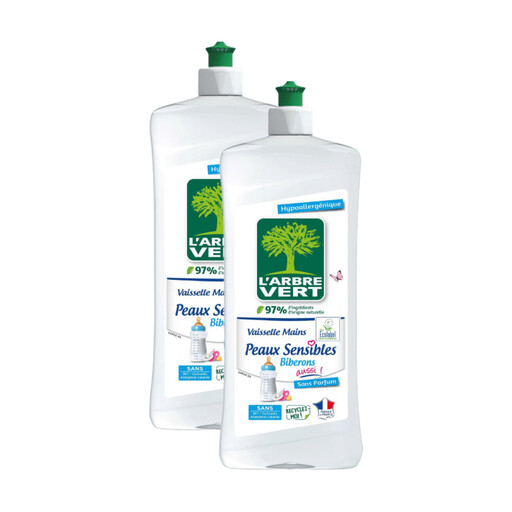
Why we chose it: This bundle is the perfect solution for families who want to stock up for several months. It combines safety, effectiveness, and excellent value for money. It provides peace of mind without constant trips to the supermarket.
More than just a "baby" label, its formula is certified with the EU Ecolabel and is hypoallergenic. Its composition is transparent, with 97% of ingredients from natural origin.
A formula approved for sensitive skin and baby bottles, all made in France and in an economical format.
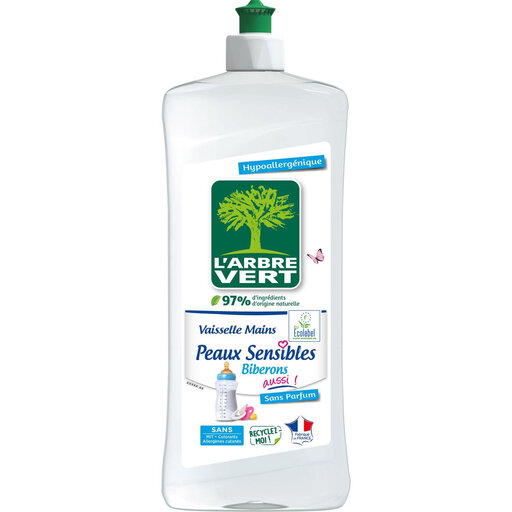
Why we chose it: Perfect for those who want to test the product before committing, or for families where sensitive skin is the top priority. This single format is ideal for confirming its high tolerance before moving on to more economical bundles.
This product tackles the problem of harsh formulas head-on. The hypoallergenic claim isn't just for show: it's at the core of its design, guaranteed to be free of fragrance and dyes.
A formula designed to minimise allergy risks, suitable for all the family's dishes, including the baby's.
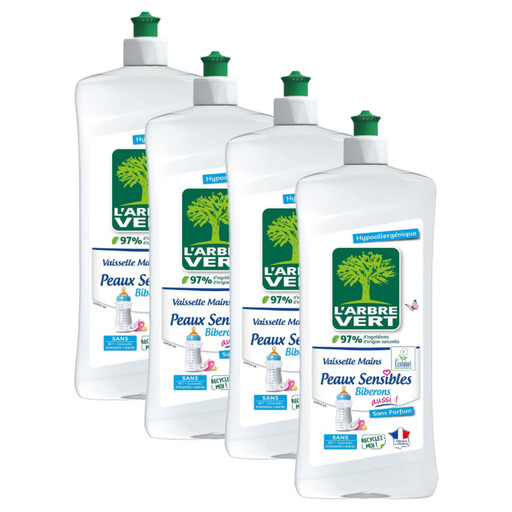
Why we chose it: This bulk pack is for consumers who want to combine savings with sustainability. Fewer packages, fewer deliveries, and a certified product that meets strict environmental standards.
It goes beyond simple "natural" claims by proudly displaying the EU Ecolabel certification. Its packaging is not only recyclable but also contains at least 87% recycled materials. A concrete and verifiable commitment.
A choice that is both economical and ecological, with French manufacturing and tangible commitments to sustainability.
Discover our complete selection of products that meet our rigorous selection criteria and French safety standards.
A standard dish soap isn't "dangerous" in itself, provided it is rinsed obsessively. The problem? They often contain fragrances, dyes, and powerful detergents that can leave residues or cause irritation. A specific baby dish soap or hypoallergenic formula is designed to rinse perfectly and minimise these substances. It's a significant safety margin.
For an impeccable clean of the teat and bottle, follow these steps:
On this point, recommendations have changed significantly. Today, for a healthy, full-term baby, meticulous cleaning (as described above) is considered sufficient for daily use. Sterilisation (by steam, boiling, or cold-water methods) is still recommended before the very first use and may be advised by your paediatrician in certain situations (premature baby, fragile immune system, illness). The foundation of good hygiene remains, above all, an impeccable wash.