
Livraison le jour même ou le lendemain

Qualité garantie

Débloquez vos offres de bienvenue: Livraison GRATUITE | Jusqu'à -80 % | 30 jours d'essai gratuits à JoyPlus
Téléchargez l'application
The arrival of a child is a unique moment, but preparing their cosy nest can quickly become a headache. Faced with a jungle of baby cot models, it's easy to feel overwhelmed. As a childcare expert, I'm here to break down the market for you and help you avoid the marketing traps. The goal? To focus on what's essential: your child's safety, practicality, and well-being.
Before you pull out your credit card, let's review the common mistakes that can cost you dearly, both in money and peace of mind.
To make the right choice, here are the technical points on which you should make no compromises. These are the true guarantors of quality and safety.
This is THE non-negotiable point. A baby cot sold in Europe must comply with strict standards that guarantee a flawless design. Always look for these two certifications:
The choice of dimensions depends on your child's age, the space you have available, and how long you plan to use it.
A good cot should adapt to your child's growth and your daily life as a parent.
Here are a few models that meet specific needs, while respecting the safety and practicality criteria we've just discussed.
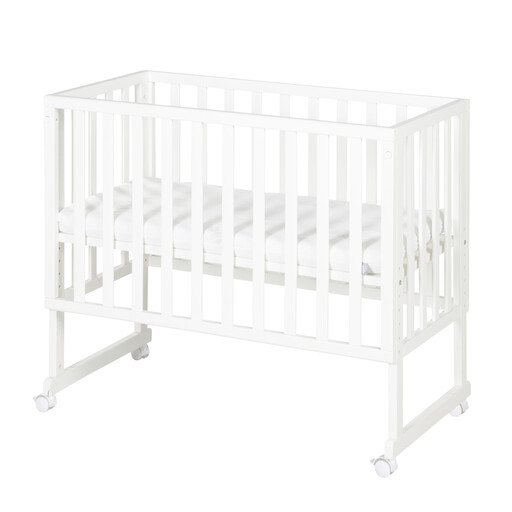
Why we recommend it: Perfect for parents who are fans of safe co-sleeping. This model specialises in the first 6 to 9 months, with a well-thought-out conversion into a small bench for the child's room.
This model doesn't make empty promises. The co-sleeper function is perfectly executed, with an EN 1130:2019 certification and a parent bed attachment system that inspires confidence.
Its 7 adjustable heights ensure a millimetre-perfect alignment with most parent beds, a detail that makes all the difference. The included breathable mattress is a real bonus.
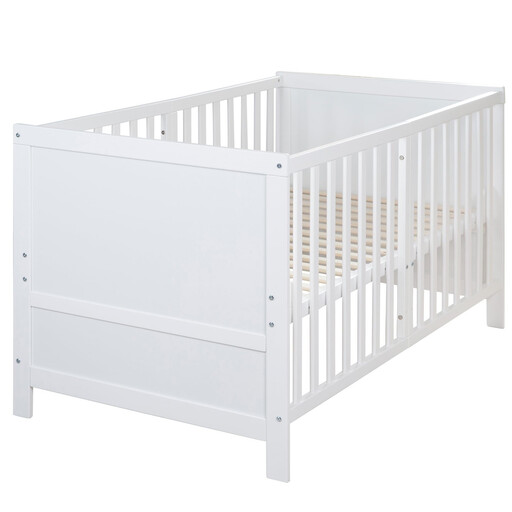
Why we recommend it: The smart purchase for forward-thinking parents. This convertible cot grows with your child from birth to age 7, transforming from a cot with bars to a junior bed, and then to a bench.
Its modularity is straightforward, with no unnecessary gadgets. The conversion parts are included and assembly is crystal clear, ensuring flawless stability at every stage.
Its 70x140 cm size and 50 kg maximum weight capacity make it a one-time investment for years to come. The 3 removable bars are perfect for encouraging your child's independence in complete safety.
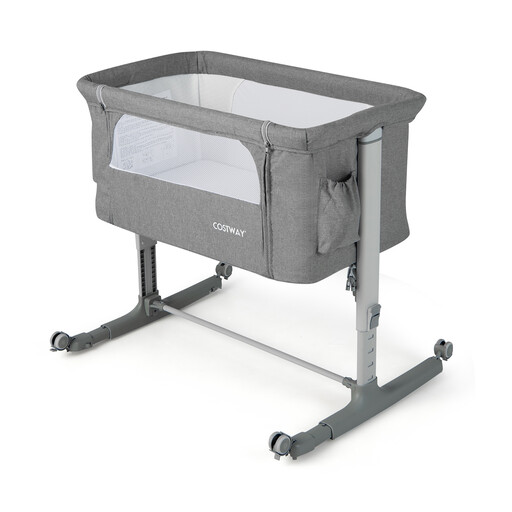
Why we recommend it: Designed for families on the go. It brilliantly juggles the functions of a bassinet, a co-sleeper, and a spare crib. Lightweight and on wheels, it fits anywhere and is easy to take with you when travelling.
It shatters the stereotype of the heavy and complicated travel cot. Weighing in at 8 kg and including a transport bag, it's a truly nomadic solution that can be assembled and disassembled without a meltdown.
Intelligent versatility for the first few months: 5 height levels, an anti-reflux incline function (10°), and breathable mesh sides to keep an eye on your baby.
Discover our full selection of products that strictly adhere to our selection criteria and European safety standards.
A co-sleeper is designed for the period from birth until your baby starts to sit up or get on their knees unaided (usually around 6 months). At that point, for their safety, it is imperative to move them to a cot with deeper bars.
It's primarily a question of longevity. A 60x120 cm cot is suitable from birth to around 3 years old. A 70x140 cm cot, on the other hand, is a convertible cot that, with conversion kits, can be used until the child is 6 or 7. It's a more durable investment that saves you from having to buy a junior bed a few years later.
Buying second-hand requires absolute vigilance. The spacing between the bars must never exceed 6.5 cm. Ensure the structure is perfectly stable, that no screws are missing, and that the paint is not peeling. Ideally, ask for the original manual to verify compliance with standards (e.g., NF EN 716). Most importantly, always buy a brand new mattress that fits the cot's exact dimensions. This is non-negotiable for safety and hygiene.