
Livraison le jour même ou le lendemain

Qualité garantie

Débloquez vos offres de bienvenue: Livraison GRATUITE | Jusqu'à -80 % | 30 jours d'essai gratuits à JoyPlus
Téléchargez l'application
Preparing for a baby's arrival means facing a mountain of choices, especially for their daily care routine. Faced with shelves overflowing with promises, it's easy to feel overwhelmed. As a product expert for our editorial team, my mission is to help you cut through the noise, decode the marketing jargon, and focus on what truly matters?: your child's well-being and safety.
Putting together your baby's toiletry kit shouldn't be a headache. However, a few common pitfalls can lead you to buy products that are unsuitable or even irritating for a little one's delicate skin.
To make the right choice, rely on objective criteria rather than pretty packaging.
Before adding a product to your cart, take the time to check a few key parameters. They make all the difference between a marketing gimmick and a genuinely suitable product.
A baby's skin is up to five times thinner than an adult's. It's extremely permeable, meaning it absorbs substances it comes into contact with much more easily.
The choice of medium is as crucial as the cleansing product itself, especially for diaper changes.
At birth, a baby's skin has a nearly neutral pH that gradually becomes more acidic.
Because every family is unique, here are our recommendations, chosen for their relevance to different needs, always with safety and composition as the top priority.
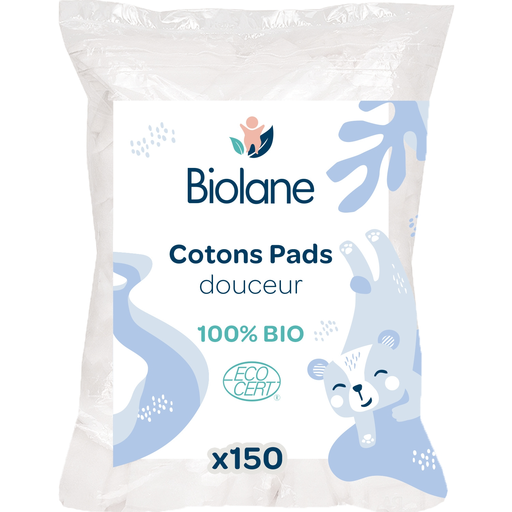
Why we chose it : For parents seeking a pure and simple solution, without any chemical additives. This cotton is ideal for use with water, liniment, or a gentle cleansing water, ensuring you have complete control over what touches your baby's skin.
It avoids the "natural" marketing trap by being a single-ingredient product. There's no INCI list to decode here : just 100% organic cotton, GOTS certified.
It doesn't shed lint or fall apart, making it perfect for cleaning the diaper area without leaving any residue. The fact that it's made in France is a real bonus.
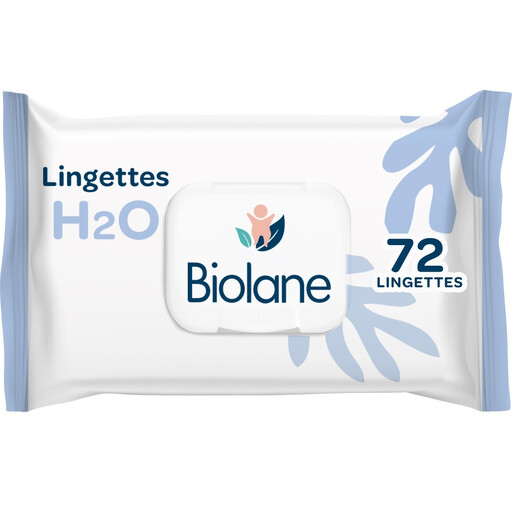
Why we chose them : For active parents who need a reliable, express cleansing solution when out and about. These wipes are formulated to clean effectively while respecting a baby's fragile skin.
They address the common concerns about wipes by offering a formula that is alcohol-free, has a physiological pH, and is hypoallergenic. Their composition is designed to minimise the risk of irritation.
They clean, moisturise, and protect in a single, no-rinse step. The rigid flip-top closure is a clever detail that perfectly preserves their moisture.
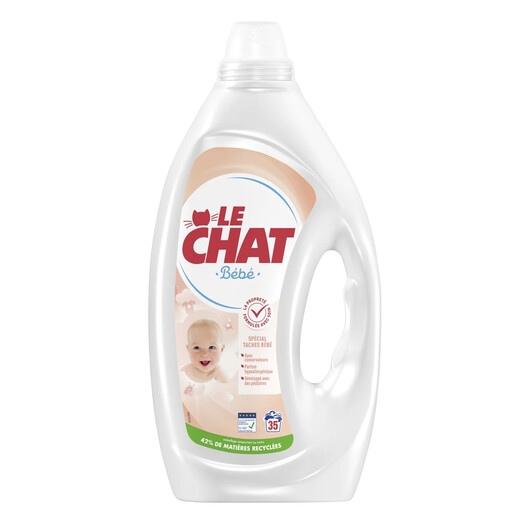
Why we chose it : Baby skin care doesn't stop at the changing table. Clothes, sheets, and towels are in constant contact with their epidermis. A suitable laundry detergent is therefore a cornerstone of their care routine.
It tackles an often-overlooked source of irritation : detergent residue on laundry. Its formula is ECARF certified, a label that guarantees its excellent tolerance for the most sensitive skin.
Developed with paediatricians, its formula tackles typical baby stains (carrots, milk, etc.) while being designed to minimise the risk of allergies.
Baby care isn't just about cleansing. Discover our complete selection of products designed for the comfort and well-being of little ones.
At home, for a newborn, the combination of lukewarm water and baby cotton (or a clean washcloth) remains the gentlest choice for cleaning the diaper area. Oleo-calcareous liniment is also a popular alternative for cleansing while protecting the skin. Save high-quality, water-based, hypoallergenic baby wipes for when you're on the go, where their convenience is unbeatable.
A daily bath isn't necessary and can even dry out a newborn's sensitive skin. A bath every two or three days is more than enough. On other days, a "top-and-tail" wash is perfectly fine?: gently clean their face, neck, hands, and diaper area with a cotton pad or a damp washcloth.
The term "hypoallergenic" means the product has been formulated to minimise the risk of allergies, but it's not an absolute guarantee. The best safety practice? Check the ingredient list (INCI) to ensure it's free from known allergens. Before applying a new product all over the body, common sense dictates doing a patch test on a small area of skin (like the crook of the elbow) and waiting 24 hours to check for any reaction.