
Livraison le jour même ou le lendemain

Qualité garantie

Débloquez vos offres de bienvenue: Livraison GRATUITE | Jusqu'à -80 % | 30 jours d'essai gratuits à JoyPlus
Téléchargez l'application
Preparing a bottle, warming it up, cleaning it, then leaving it to dry can quickly take up a good chunk of your day. For parents of newborns, breastfeeding mums, or friends and family looking for a practical gift, baby bottle accessories should be chosen based on your actual habits, rather than simply relying on the number of features advertised.
Some common pitfalls keep cropping up:
Before choosing a bottle warmer, check the diameter and height of the containers it accepts. Not all models are compatible with wide-neck bottles, glass containers or storage bags.
For a newborn, a 150 ml bottle may be enough to start with. 270 ml bottles become more practical as the quantities increase. Choosing a teat with the right flow rate and an anti-colic system also concerns the bottle itself, not just the warming device.
If you use a breast pump, also check the compatibility of the bottles, membranes, valves and connectors with the breast pump accessories you have in mind.
A bottle warmer must have an automatic shut-off function, an easy-to-understand control, and instructions that are clear and accessible. The temperature should always be checked before giving the milk to your baby, even when the device claims to have automatic temperature control.
Steam appliances must be placed on a flat, dry surface. Steam can cause burns when the lid is opened. Also, unplug the appliance before any cleaning or descaling.
In the UK, look for products that display the required regulatory information, the manufacturer’s or importer’s identity, usage warnings and electrical specifications suitable for the UK mains supply. This information does not replace the need to read the instruction manual carefully.
Cleaning and sterilising bottles are two separate steps. After each use, take all the parts apart, rinse them, then clean the hard-to-reach areas with a bottle brush or a small teat brush.
The accessories must then dry completely. A bottle dryer with a separate drip tray reduces contact between clean items and the worktop. For breast milk, a breast milk storage kit should clearly state the containers included, their capacity, the refrigeration or freezing conditions, and the limits on reusing bags.
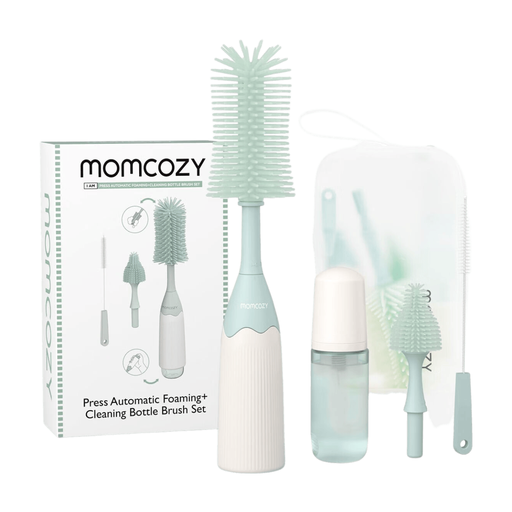
Why this choice suits this profile: This set is ideal for families who want to start with a versatile manual kit, without adding an electrical appliance to the kitchen.
The different heads clean the bottle body, the teat and narrow openings, so you don’t need to buy multiple brushes.
Food-grade silicone construction, non-slip handles, removable heads, travel case and angled tip brush.
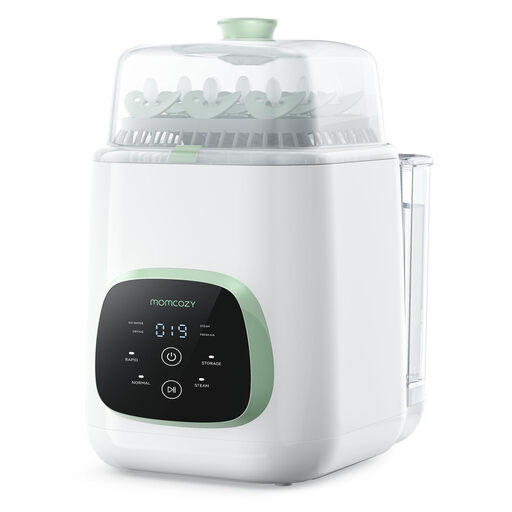
Why this choice suits this profile: Its all-in-one design is aimed at households that want to combine washing, steaming and drying in a single machine.
Its distinct cycles and different programme combinations prevent you from confusing a simple steam function with a proper wash.
26 spray jets, 9 adjustable settings, two-level basket and a stated capacity of up to 4 bottles with their accessories.
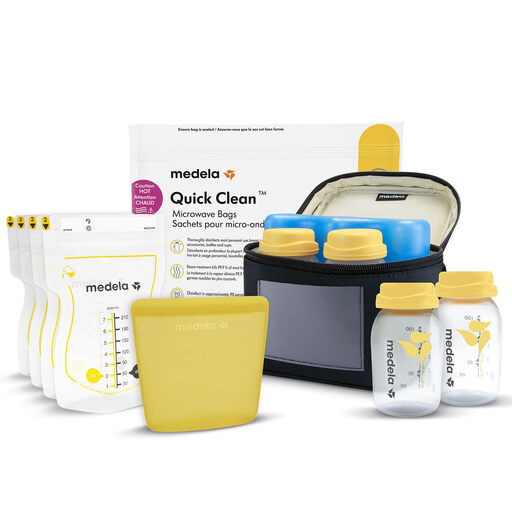
Why this choice suits this profile: This kit meets the needs of women who express milk and need to transport or store it, both at home and on the go.
The different storage formats make it easy to distinguish between storage, transport and microwave cleaning.
4 bottles of 150 ml, single-use bags, reusable pouch, insulated bag with ice pack and reusable cleaning bag as per the instructions.
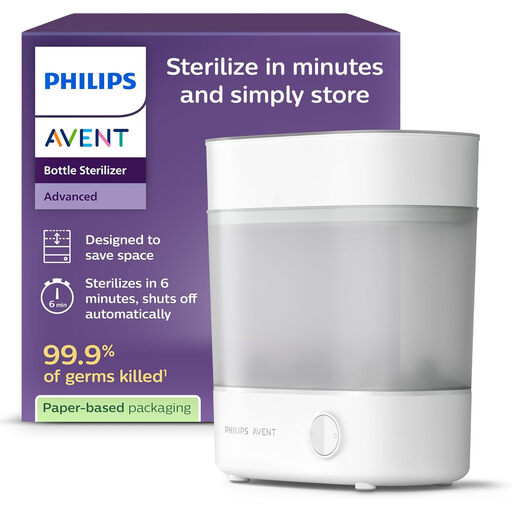
Why this choice suits this profile: This model is ideal for parents who already have a washing method and are only looking for a dedicated steam function.
Its modular design lets you adjust the space it takes up, without investing in a washing machine when only steam is needed.
3-in-1 format, stated capacity of up to 6 Philips Avent bottles, 10-minute steam cycle and automatic shut-off.
We’ve put together a comprehensive, real-time updated list of products that fully meet these strict selection criteria and European safety regulations.
Start with a few bottles suitable for your baby’s age, a bottle brush, a teat brush and a clean drying area. A bottle warmer or steriliser can come later, depending on your routine and the preparation method you choose.
How long it lasts depends on the condition of the cable, the reservoir, the heating plate and the seals. Follow the manufacturer’s recommendations, keep an eye on limescale build-up, and replace the appliance if any safety component is damaged. Soft accessories, such as teats, should be checked regularly and replaced at the first sign of wear.
It can reduce the time spent washing when you’re using several bottles and accessories every day. However, whether it’s worthwhile depends on the purchase price, the capacity per cycle, the water and electricity consumption, and the cost of cleaning products and descaling. For occasional use, a set of brushes and a bottle dryer may be a simpler solution.