
Livraison le jour même ou le lendemain

Qualité garantie

Débloquez vos offres de bienvenue: Livraison GRATUITE | Jusqu'à -80 % | 30 jours d'essai gratuits à JoyPlus
Téléchargez l'application
Choosing biscuits and snacks for babies and children is about more than picking the cutest packet on the shelf. Between “organic” claims, playful formats and flavours from Japan or Korea, some essential information can easily be overlooked.
Three mistakes are particularly common among French families:
For baby biscuits from 6 months, start by checking the age stated by the manufacturer, along with any preparation instructions. Your baby should be positioned sitting upright, and an adult should remain beside them throughout the whole snack. Teething biscuits and melt-in-the-mouth biscuits are not toys: never leave them within your child’s reach unsupervised.
At around 8 or 9 months, some formats are easier to hold between little fingers. Products labelled from 12 months may contain pieces, chocolate or nuts. They are therefore better suited to children who have already made progress with chewing and exploring different textures.
The label organic baby biscuits may match your family’s preferences, but the ingredients remain the best basis for comparison. In particular, check:
A baby’s snack should form part of a varied weaning diet. Biscuits do not replace a meal, fruit purée or the foods usually offered in line with your healthcare professional’s recommendations.
Individual sachets are particularly handy for outings, nursery or train journeys. They also reduce the length of time the product is exposed to moisture. Once opened, follow the consumption period shown on the packaging and reseal the packet carefully.
For older children, individual portions make preparing children’s snacks easier. However, bear in mind that filled biscuits, chocolate wafers and sweet snacks are often higher in sugar and fat. They can be a perfectly suitable occasional treat, but should not become an everyday snack.
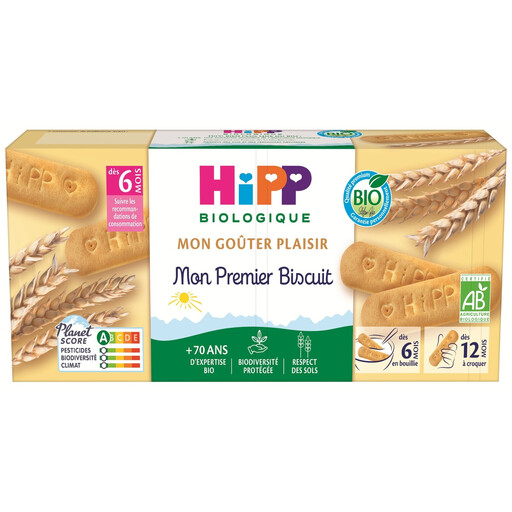
Why this choice suits this profile : The pack contains four 45 g sachets, making it possible to try the product without investing in several large packets.
The recommended age, the texture described as crisp before melting and the supervision instructions all highlight the conditions for safe use.
Organic cereals, added vitamin B1 and no palm oil according to the product information. Contains gluten and milk.
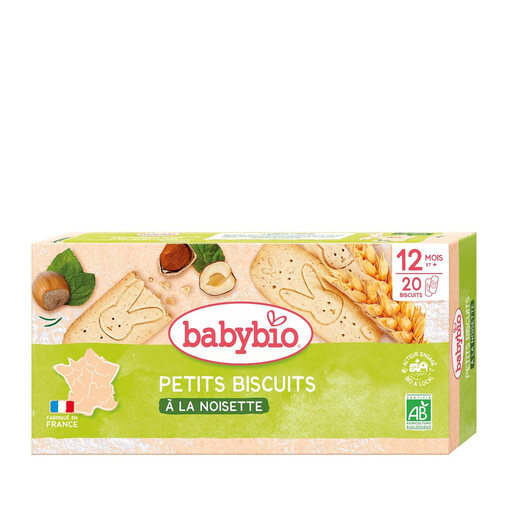
Why this choice suits this profile : It is aimed at families who prioritise an organic recipe, with a hint of hazelnut and a format that is easy for little hands to hold.
The product information states that the biscuit is intended for babies who can chew solid textures, and reminds users that adult supervision is essential.
Organic recipe with 5 % hazelnut powder and vitamin B1. Allergens: gluten, hazelnut and milk.
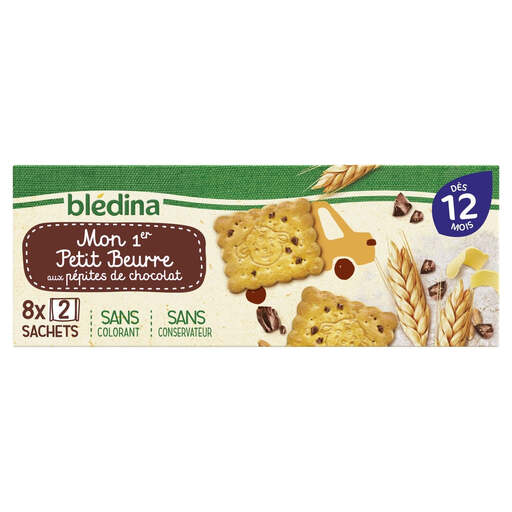
Why this choice suits this profile : This packet is suitable for families who regularly plan a snack after 12 months or need something to take on the go.
The label sets out the expected abilities: sitting unaided, eating small pieces, biting bread and having at least two teeth.
Made in France, with 53.5 % wheat flour, 12.8 % butter and 6 % chocolate pieces. Contains gluten, milk, egg and soya.
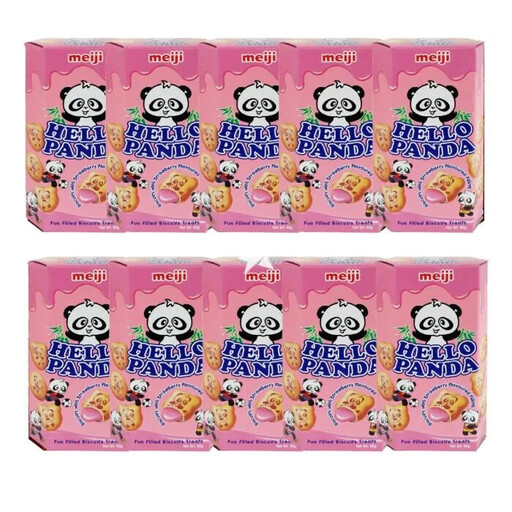
Why this choice suits this profile : Fans of Japanese biscuits will appreciate the small format, which is easy to slip into a bag or lunchbox.
It is not presented as a product for babies: its ingredients and nutritional values suggest reserving it for an older child.
Shortbread biscuit filled with strawberry, sold in a 50 g sachet. Contains wheat, milk and soya; the product information states 29 g of sugar per 100 g.
We have brought together a comprehensive, real-time selection of products that meet these demanding criteria, while complying with European safety regulations.
The selection can be expanded to include filled biscuits, chocolate wafers and snacks from further afield. Meiji Hello Panda caramel biscuits, Kinder Tronky bars, LU strawberry biscuits and Yopokki Korean snacks offer a variety of flavours. Before putting them in a lunchbox, however, check their sugar content, portion sizes and allergens.
For a less sugary snack, compote or fruit purée can complement the snack. Corn-based products such as BIGGA Corn Snack Vanilla also deserve a closer look at their fat content, sugar quantity and any possible soya.
Yes, some products are intended from 6 months, but the age stated on the packet is not the only consideration. Your baby should be able to sit unaided, remain supervised by an adult and manage the texture offered. Read the instructions carefully and ask a healthcare professional for advice if you are unsure, particularly when introducing allergens.
It depends on the product. Some baby biscuits should be eaten within a few days of opening, while Blédina biscuits from 12 months state that they should be consumed within a week. Store the packet in a dry place, reseal the sachet securely and follow the instructions on the packaging.
Not necessarily. The organic label provides information about how the ingredients were produced, while the amount of sugar depends on the recipe. Compare the ingredients list and nutrition table to choose organic biscuits from 12 months or products that genuinely match your family’s eating habits.