
Livraison le jour même ou le lendemain

Qualité garantie

Débloquez vos offres de bienvenue: Livraison GRATUITE | Jusqu'à -80 % | 30 jours d'essai gratuits à JoyPlus
Téléchargez l'application
Choosing baby biscuits isn’t about grabbing the first colourful packet you see on the snack aisle. The recommended age, texture, allergens and sugar content can completely change how the product should be used. With baby biscuits from 6 months, sponge fingers from 8 months and snacks for older children, the packaging isn’t always easy to compare.
Here are the main pitfalls to avoid and the criteria to check before you fill your basket.
Labels like “from 6 months”, “from 8 months” or “from 12 months” reflect the manufacturer’s recommendations. They don’t replace observing your child’s development. To eat solid food, a baby needs to be able to sit up, grasp food and gradually manage different textures.
Even when a biscuit is described as melt-in-the-mouth, always sit your child upright and stay nearby throughout the feed. Teething biscuits should never be left with a child unsupervised.
A recipe free from artificial colours and preservatives can still contain sugar, oils, milk, gluten or nuts. The ingredients list is therefore your best starting point.
A product might, for example, be organic yet still contain added sugar. Conversely, a recipe that doesn’t carry an organic label can have a relatively short ingredients list. The logo or marketing promise alone isn’t enough to tell you whether the biscuit suits your child’s age and eating habits.
Individual portions are handy in a changing bag, but they can push up the price per gram. For regular use at home, a larger pouch is often better value, provided you can reseal it properly.
Also check the actual number of biscuits in the pack. A 120 g box might contain 24 pieces, while a 16 g format could be split into four small sachets. These details help you compare prices more fairly and stop the biscuits going soft after opening.
For baby biscuits from 6 months, go for a texture that softens easily with saliva and a shape that’s easy to hold. Mini wafers or certain soft biscuits can support those first steps towards independence – always under adult supervision.
Baby biscuits from 8 months, particularly sponge fingers, are generally firmer and longer. They’re aimed at children who are already more confident with gripping and handling textures. From 10 or 12 months, some products offer more varied shapes and flavours.
Check these first:
Gluten-free or egg-free recipes can meet certain needs, but they aren’t suitable for every dietary situation. If you know of an allergy or have any doubts, ask a healthcare professional for advice.
For organic baby biscuits, look for the European organic logo and the name of the certifying body on the packaging. The organic label relates to how the ingredients are produced; it doesn’t guarantee a low sugar content or a balanced snack overall.
Biscuits and baby biscuit cereals can have a place in a varied diet, but they don’t replace meals or minimally processed foods. Compare the recommended portion, the sugar content per 100 g and how often you plan to offer the product.
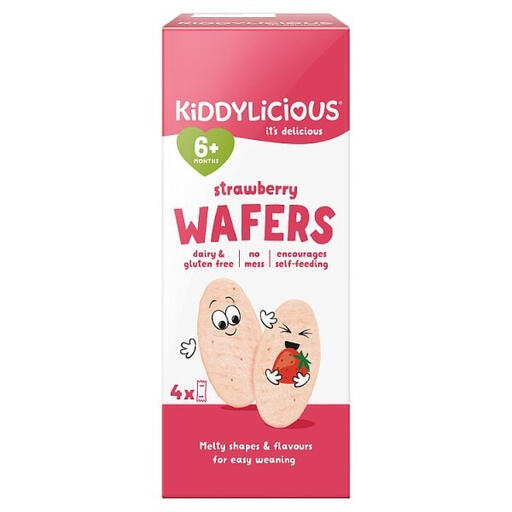
Why this choice suits this profile: Its small size and four separate sachets are ideal for occasional outings, without having to carry a large box.
The packaging limits the number of biscuits exposed to moisture after opening. The listing states a recipe free from gluten, egg, nuts, artificial colours and preservatives.
Suitable from 6 months, a melt-in-the-mouth texture and individual 4 g portions.
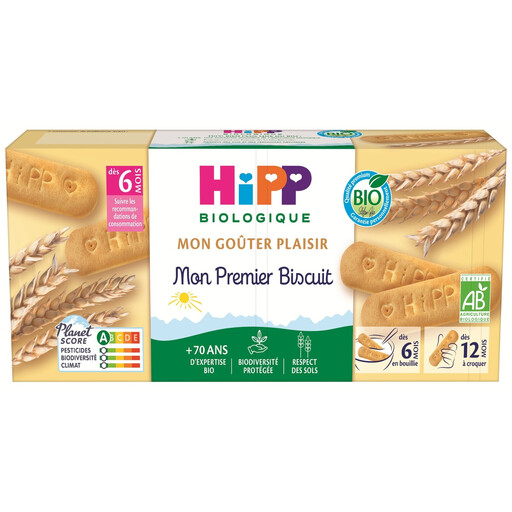
Why this choice suits this profile: This product combines an organic recipe with four freshness sachets, practical for regular use at home.
The recommended age, allergens and storage conditions are clearly detailed. According to the information provided, the recipe contains no palm oil.
Organic cereals, vitamin B1 and a shape designed for little hands, with 180 g split across four sachets.
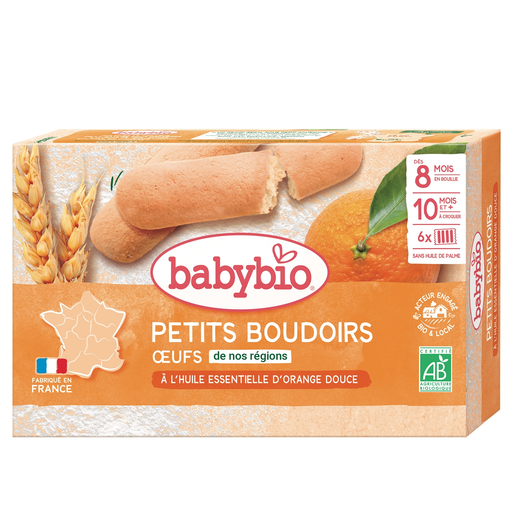
Why this choice suits this profile: With 24 biscuits, this format suits families looking for a product to offer regularly, both at home and on the go.
The recommendation from 8 months is clearly displayed. The ingredients list notes the presence of gluten and egg, making allergen checks easier before purchase.
Organic ingredients, natural orange flavouring, vitamin B1 and a biscuit designed to soften in the mouth.
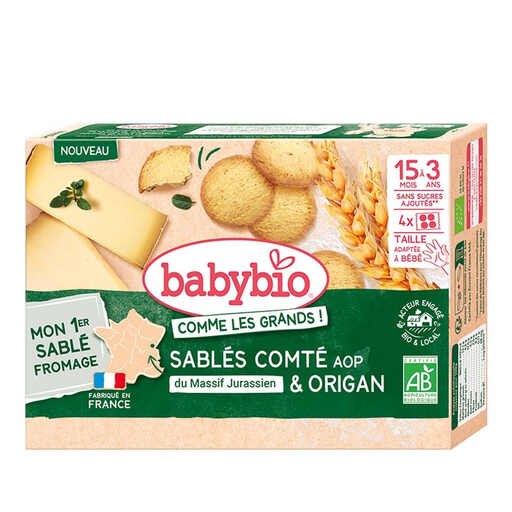
Why this choice suits this profile: From 12 months, this savoury biscuit offers a change from the usual sweet snack and lets the whole family discover new flavours.
The minimum age and allergens are clearly stated. The recipe is said to contain no added sugar, but does contain gluten and milk.
An organic product, 14% AOP Comté cheese, four sachets and individual portions that are easy to slip into a bag.
We’ve put together a complete, real-time selection of products that meet these exacting criteria, while complying with European safety regulations.
Choose a product clearly labelled “from 6 months”, with a texture that softens easily and a shape that’s easy to grasp. Check the allergens and follow the manufacturer’s instructions. An adult must stay present throughout the feed.
Some sponge fingers are recommended from 8 months, but the stated age alone isn’t enough. Your child needs to be able to hold the food and manage a firmer texture. Always check the label, particularly for the presence of gluten and egg.
Seal the sachet carefully and keep it in a dry place at room temperature, away from heat and moisture. Individual portions limit exposure to air. Follow the storage time stated on the packaging and check the best-before date before serving the product.