
Livraison le jour même ou le lendemain

Qualité garantie

Débloquez vos offres de bienvenue: Livraison GRATUITE | Jusqu'à -80 % | 30 jours d'essai gratuits à JoyPlus
Téléchargez l'application
A baby's first biscuit is a key milestone in their weaning journey. It's a moment of discovery for your little one, but often a real headache for parents. Faced with shelves overflowing with marketing promises, it's easy to fall into the trap. Choosing the right baby biscuit isn't just a matter of taste?— it's primarily about safety, nutrition, and development.
Before you buy, watch out for these two common pitfalls?:
To navigate the jungle of baby snacks, focus on a few key points. They are your guarantee of a safe and nutritionally sound choice.
A first baby biscuit at 6 months is nothing like one for a 12-month-old. This is a fundamental distinction for your child's safety.
6-month baby biscuit with a texture specifically designed to melt almost instantly with saliva. Think of rice cakes or light, flat wafers, which minimise the risk of choking.baby finger biscuit, whose long shape is easy for little hands to hold. The texture should still be both crumbly and melt-in-the-mouth.teething biscuit to soothe their gums.The golden rule?: Always supervise your child while they are eating, and make sure they are sitting upright.
A good organic baby biscuit (or a conventional one) is judged first by its ingredient list. Here's what to check?:
Babybio, Hipp, or Bledina strive to offer clean and simple recipes. Check the origin of the flours and look for the absence of palm oil, artificial flavourings, and preservatives.Rather than an exhaustive list, here are a few recommendations that meet specific needs, all selected based on our strict safety and ingredient criteria.
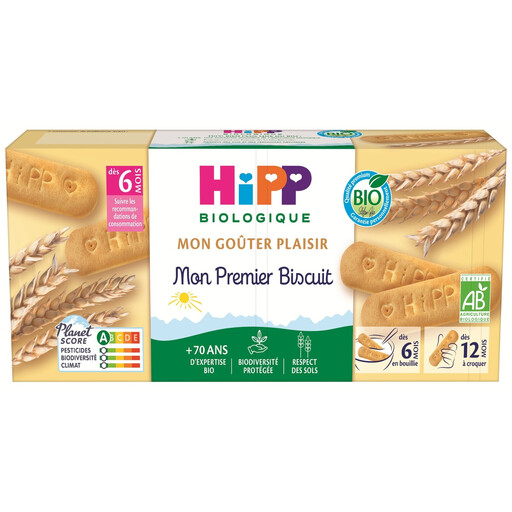
Why we recommend it : Specifically designed for the very beginning of weaning, this Hipp biscuit is the ultimate reassuring choice. Its organic recipe and shape designed for little hands make it a perfect first experience.
It perfectly solves the texture dilemma: it's crunchy at first, then melts away. The clear age guidance (from 6 months) allows for a worry-free introduction.
Enriched with vitamin B1, palm oil-free, and comes in ultra-convenient freshness packs for when you're on the go.
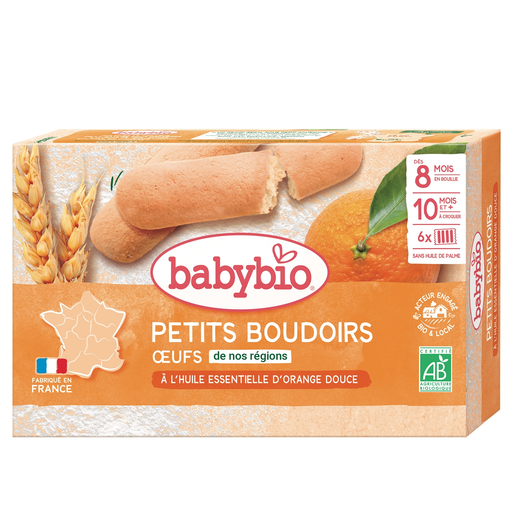
Why we recommend it : For slightly older babies, this baby finger biscuit from Babybio steps away from the ordinary with its unique sweet orange flavour. It is made in France with organic ingredients, including French wheat flour and eggs.
It avoids vague marketing with a transparent ingredient list. While it does contain cane sugar, its organic origin and the use of natural essential oil make it an informed choice for an enjoyable treat.
An organic recipe with ingredients sourced from France and a hint of orange that offers a change from the usual flavours.
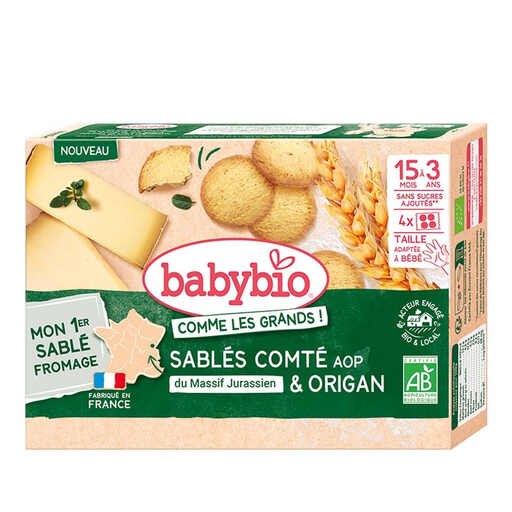
Why we recommend it : The ultimate savoury alternative for babies aged 12 months and over. These organic shortbreads with Comté PDO and oregano are perfect for adding variety and introducing your baby's palate to more complex tastes.
It sidesteps the sugar trap with a savoury recipe that has no added sugars. The age guidance (12 months) is crystal clear, leaving no doubt that the crunchy texture is reserved for older babies.
An original and delicious recipe with real Comté PDO, ideal for snack time or for letting them join in with the grown-ups.
Discover our complete, up-to-date selection of products that meet our strict selection criteria and current regulations.
You can generally start from 6 months, provided you choose a 6-month baby biscuit specifically formulated for this age. Their texture is designed to melt quickly in the mouth to limit the risk of choking. Always read the age recommendations on the packaging carefully and, as a golden rule, never leave your baby to eat unsupervised.
The key is to scrutinise the nutritional information and find the “of which sugars” line (per 100g). It's the only way to objectively compare different products. And beware of deceptive ingredients: concentrated fruit juice or agave syrup may replace white sugar, but it's still sugar, even if it's from a natural source.
An organic baby biscuit guarantees that its agricultural ingredients (flour, sugar, fruit, etc.) come from farming that avoids synthetic chemical pesticides and fertilisers. This is a real plus for limiting your child's exposure to these substances. However, "organic" does not automatically mean "nutritionally perfect." An organic biscuit can be just as sugary or salty as a conventional one. Analysing the ingredient list and nutritional information is therefore essential, regardless of the label.