
Livraison le jour même ou le lendemain

Qualité garantie

Débloquez vos offres de bienvenue: Livraison GRATUITE | Jusqu'à -80 % | 30 jours d'essai gratuits à JoyPlus
Téléchargez l'application
Getting your hands dirty maintaining your car is truly satisfying, but gearing up can quickly become a headache. The auto tool market is a jungle where, between marketing promises and obscure technical sheets, the risk of a bad investment is very real. Our mission, as product experts, is to clear the path for you. This guide will help you choose reliable tools that are genuinely suited to your needs, whether you're a weekend warrior or a seasoned mechanic.
Before you even start dissecting spec sheets, let's learn how to sidestep the classic traps that lead straight to disappointment and wasted money.
To assemble a good car maintenance kit, focus on objective criteria. These are what guarantee the longevity and effectiveness of your equipment.
The composition of the steel is the number one criterion. It determines the tool's robustness and lifespan.
The ratchet wrench is arguably the tool you'll use the most. Its internal mechanism is therefore absolutely crucial.
For certain tools, the numerical specifications are non-negotiable.
For more specialised tasks, dedicated tools quickly become indispensable. Changing spark plugs on a modern engine? You'll need a long, often magnetic, spark plug wrench. Working on the brakes? A flare nut wrench is mandatory to avoid damaging the fittings.
Let's get practical with a few products that tick all the boxes, selected according to the quality and relevance criteria we've just discussed.
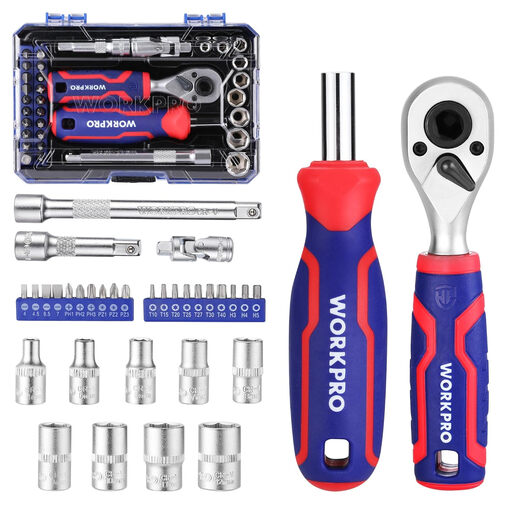
Why we recommend it: Perfect for beginners or for simple jobs. This compact kit gets straight to the point for basic mechanics (removing covers, small interior components) without cluttering you with useless parts.
It doesn't fall into the "falsely complete" set trap, instead focusing on a targeted, high-quality assortment. The Chrome-Vanadium steel construction and the 72-tooth ratchet are true guarantees of reliability for regular use.
Its compact case and quality materials make it an excellent first investment, ideal for the most common maintenance tasks.
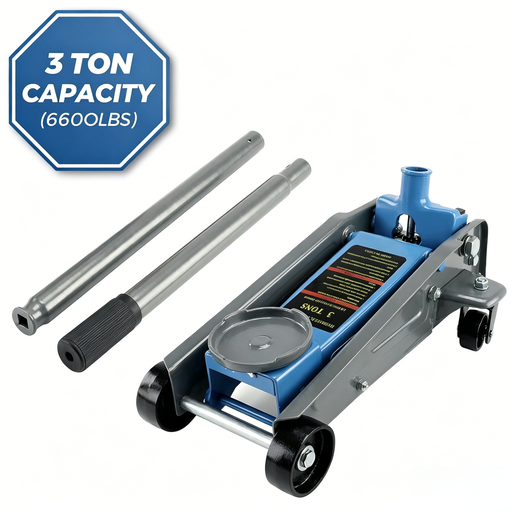
Why we recommend it: A must-have for anyone who changes their own wheels or performs work under the car (oil changes, brakes...). Its 3-ton capacity provides a comfortable safety margin for most vehicles, including the heaviest SUVs.
It avoids the classic trap of an undersized jack. While 2-ton models often struggle with modern vehicles, its 3-ton capacity and robust steel construction ensure optimal stability and safety.
Its wide lifting range (135-460 mm) makes it equally at home with low-slung sports cars and high-riding SUVs. The 360° swivel castors greatly simplify positioning it under the vehicle.
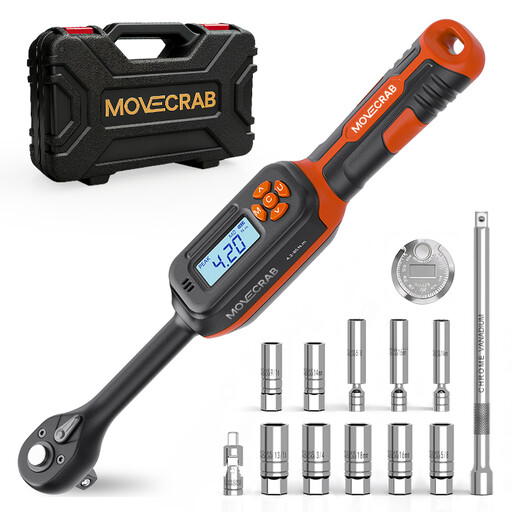
Why we recommend it: Essential for critical operations where the tightening torque must be followed to the letter (cylinder head, suspension, brakes...). This is the tool for those who make no compromises on precision and safety.
It directly addresses the trap of imprecision. With its high precision of ±2%, digital screen, and preset modes, the guesswork of entry-level mechanical click wrenches is a thing of the past.
Its smart features (memory, unit conversion...) are a real plus for increasing efficiency and reducing the risk of error. Delivered with sockets and extensions, it's ready to use right out of the box.
We've curated a complete selection of products that meet our selection criteria and the strictest safety standards.
What is the lifespan of good mechanic tools? It all depends on the material, frequency of use, and maintenance. A well-cared-for Cr-V steel tool (cleaned after each use, stored in a dry place) can last a lifetime for DIY projects. In intensive professional use, even the best tools eventually wear out and must be replaced after a few years.
Is a socket set enough to get started? It's the perfect foundation and the core of any good car maintenance kit. It will cover the majority of common needs. Very quickly, you'll need to supplement it with a hydraulic jack and jack stands (for safety!), a torque wrench for tightening wheels, and probably a few specific wrenches like an oil filter wrench or a spark plug wrench.
Should a torque wrench be recalibrated? Absolutely. The precision of a torque wrench drifts with time and wear. For an amateur mechanic, a check every 2 or 3 years (or systematically after it's been dropped) is a wise precaution. For a professional, an annual recalibration by a specialised service is essential to guarantee tightening that complies with manufacturer recommendations.