
Livraison le jour même ou le lendemain

Qualité garantie

Débloquez vos offres de bienvenue: Livraison GRATUITE | Jusqu'à -80 % | 30 jours d'essai gratuits à JoyPlus
Téléchargez l'application
Whether you're a weekend warrior or a seasoned pro, one thing is certain: the quality of your automotive tools is non-negotiable. The problem? The market is flooded with deals that seem great on the surface but often hide serious pitfalls. Knowing how to decipher a spec sheet and see through the marketing hype is crucial for investing in equipment that is both reliable and safe.
This guide is here to equip you with the right knowledge and highlight the technical criteria you should never, ever ignore before pulling out your credit card.
Equipping your garage with garage equipment can quickly become a headache. Here are the most common mistakes—the ones that are costly in terms of time, money, and, worst of all, safety.
To avoid buying blind, focus on these specifications. They are the true measure of a tool's quality and suitability.
Your vehicle's weight is the number one criterion. Plan for a safety margin: the jack's capacity should exceed the weight to be lifted by at least 25% (typically half the vehicle's total weight for a single axle).
Height is just as crucial. A low-profile floor jack with a minimum height of 85 mm is essential for sports cars or lowered vehicles. Conversely, for an SUV or a van, a generous maximum lifting height (over 450 mm) will be indispensable. Always check the operating range (min/max height) to ensure it's compatible with your vehicles.
Don't be fooled by a simple CE marking. For any mechanical lifting equipment, look for certifications that prove the tool has undergone rigorous testing:
For hand tools like wrenches and sockets, the material is the name of the game.
Different mechanics need different tools. Here is our selection, designed for various profiles and uncompromising on quality criteria.
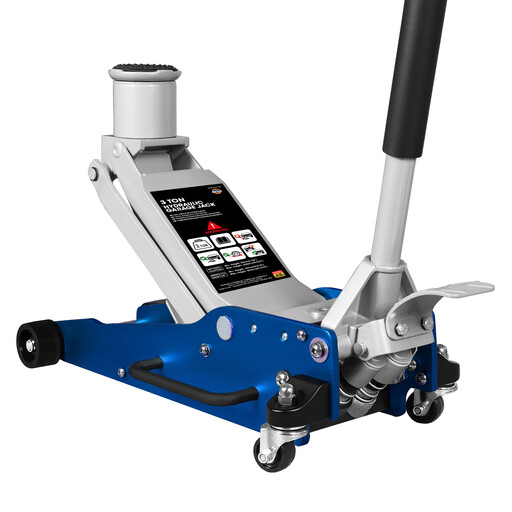
Why we recommend it: Perfect for low-chassis vehicles. Its 85 mm entry height allows it to slide under most sports cars, while its 3-ton capacity and saddle extension make it just as suitable for SUVs and minivans.
This jack proudly displays its EN 1494 + CE certifications, a guarantee of third-party tested compliance that goes far beyond simple self-declaration.
Its dual-pump system ensures a rapid lift, and its aluminium alloy frame makes it much lighter and more manoeuvrable in the garage.
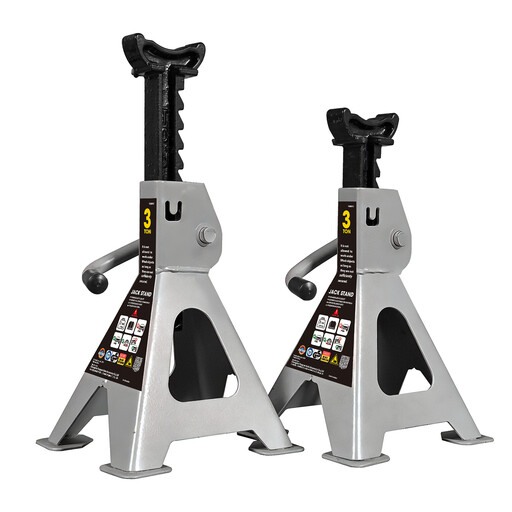
Why we recommend it: Safety first. A jack lifts, but jack stands secure. This pair is non-negotiable for anyone working under a car. Their adjustment range makes them compatible with everything from city cars to SUVs.
It doesn't just settle for a CE marking; it also shows compliance with the EN 1494 standard and, most importantly, the highly respected independent GS mark. The spec sheet confirms a true 3-ton load capacity, not an inflated marketing figure.
The thick steel construction, wide fully-welded base, and the audible locking click at each notch provide a priceless peace of mind.
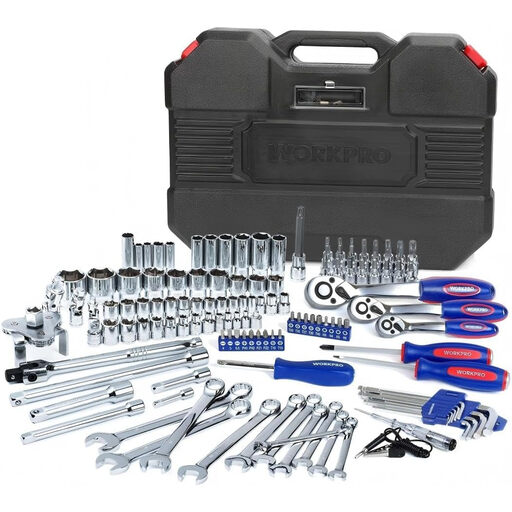
Why we recommend it: The perfect foundation to start or complete your auto repair kit. This set covers all the essentials for routine maintenance, with three drive sizes (1/4", 3/8", 1/2") for maximum versatility.
No shoddy materials here: the tools are made from heat-treated Cr-V steel with a triple chrome finish for long-lasting rust protection.
The sturdy moulded case keeps every tool organised and protected. No more lost sockets at the bottom of the toolbox!
We have curated a complete selection of products that meet our strict selection criteria and the most demanding safety standards.
Yes, and it's non-negotiable. This is the golden rule of mechanics. A hydraulic jack is a lifting device, designed to raise a vehicle, not to support it stably over time. A seal can fail, and hydraulic failure is always a possibility. Jack stands, on the other hand, are fixed mechanical supports designed specifically for this purpose. Rule #1: NEVER work under a car that is only supported by a jack.
In the UK and Europe, the metric system is king, so a socket set with sizes in millimetres is essential. A good starter kit should include the three most common drive sizes:
The longevity of a hydraulic jack depends on its build quality, frequency of use, and, most importantly, its maintenance. A good model, used and maintained correctly, will last for many years. Maintenance is simple: check the hydraulic oil level, bleed the system if necessary, clean and lubricate moving parts, and store it horizontally to protect the seals.