
Livraison le jour même ou le lendemain

Qualité garantie

Débloquez vos offres de bienvenue: Livraison GRATUITE | Jusqu'à -80 % | 30 jours d'essai gratuits à JoyPlus
Téléchargez l'application
Whether you're a weekend mechanic, a seasoned professional, or simply a prepared car owner, choosing the right automotive tools is a crucial step. The right equipment not only guarantees a successful auto repair but, above all, ensures your safety. The problem? The market is flooded with products that make tempting promises but often turn out to be disappointing, or even dangerous.
As a Product Specialist at Joybuy, my mission is to help you navigate this complex landscape. Let's break down the common pitfalls and the essential criteria for making the right choice.
The desire to get equipped can quickly lead to impulse buys. Here are three classic mistakes that can be costly—and more importantly, how to avoid them.
To avoid these disappointments, focus on objective features. Here are the essential checkpoints to review before you buy.
When it comes to lifting, safety is non-negotiable. Never rely solely on the advertised tonnage.
A good OBD2 scanner should be a long-term partner, not a short-lived gadget.
To illustrate these criteria, here are some well-designed products for different profiles.
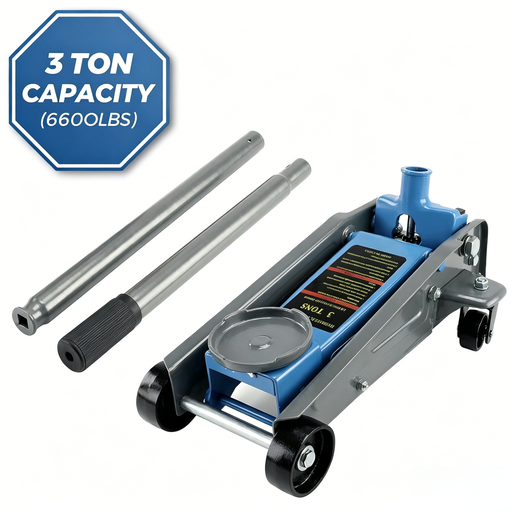
Why we chose it: Perfect for seasonal tyre changes or minor maintenance. Its versatility and ease of use make it an excellent first piece of equipment for occasional use in a home garage.
Its robust steel construction and 3-ton capacity are suitable for common passenger vehicles (sedans, SUVs), eliminating the risk of being undersized for standard tasks.
Versatile lifting range (135-460 mm) compatible with most cars and SUVs. 360° swivel castors for perfect manoeuvrability in the garage.
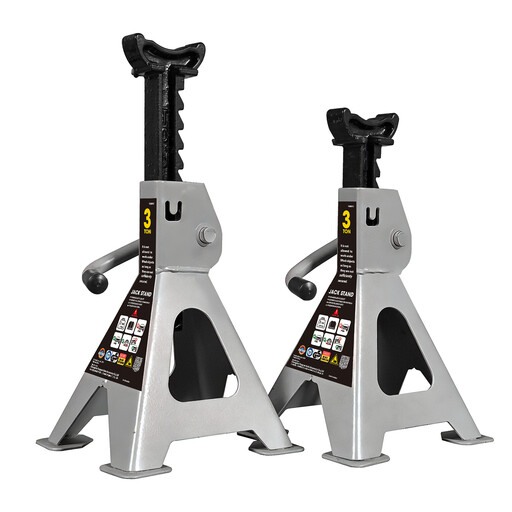
Why we chose it: For those who don't compromise on safety. This is the essential companion to any jack, providing rock-solid stability to work under a vehicle with peace of mind.
It avoids the overstated capacity trap thanks to its dual certification (EN 1494 and GS), which attests to a true 3-ton working load and rigorously controlled manufacturing.
Heavy-gauge steel structure with a fully welded base for maximum stability. The locking ratchet produces a distinct, audible "click" at each level, providing unambiguous safety confirmation.
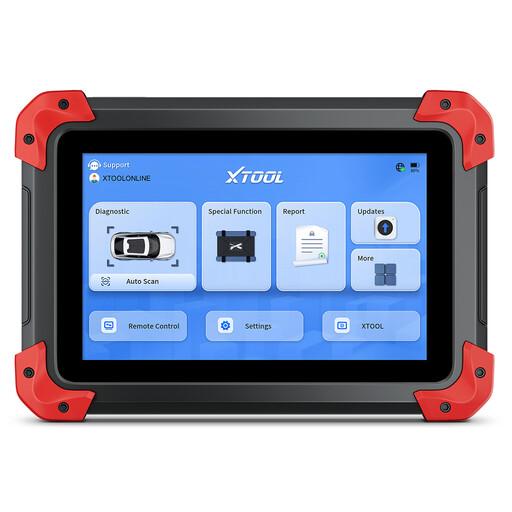
Why we chose it: For the advanced technician who wants to go beyond just reading codes. This tool turns complex diagnostics into concrete actions with its active test and ECU-coding functions.
It combats planned obsolescence with 3 years of free updates and native support for CAN FD and DoIP protocols. This ensures compatibility with the newest vehicles without needing adapters.
Full-system diagnostics (Engine, ABS, SRS, etc.). Bi-directional functions to actuate components and ECU coding for advanced adjustments.
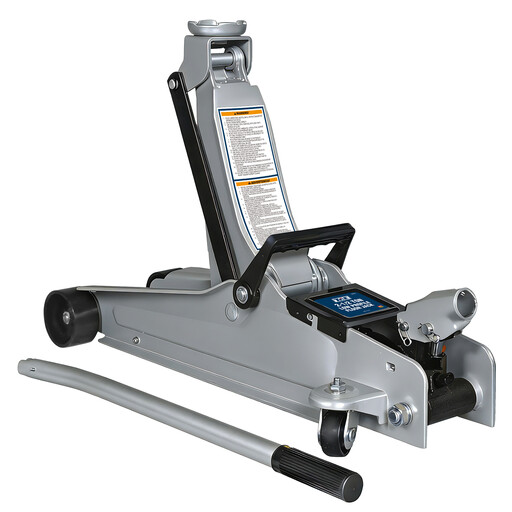
Why we chose it: Specifically designed for vehicles with low ground clearance. If you own a sports car or a lowered vehicle, a standard jack simply won't fit under the chassis.
It solves a physical compatibility issue that many users discover too late. Its minimum height of 85 mm is a key technical feature that guarantees access under the lowest side skirts.
Ultra-low entry height of 85 mm. Certified EN 1494 + CE, it ensures safe operation despite its highly specific design.
Also, consider the complementary tools that make all the difference, like a good battery tester to anticipate failures or a glass breaker hammer for emergency situations.
We have compiled a complete selection of products that meet these strict selection criteria and current safety standards.
Yes, it is an absolute requirement. A jack (hydraulic, trolley, etc.) is a lifting device, not a support device. Once the vehicle is lifted, it must be securely supported on jack stands appropriate for its weight before any work is done underneath. This is a fundamental safety rule to prevent any risk of serious injury.
It all depends on the quality of the device and the support provided by the manufacturer. An entry-level model without updates can become obsolete in 2 to 3 years. Conversely, a professional-grade tool with regular updates (free or paid) can remain relevant for 5 to 7 years, or even longer. The initial investment is therefore quickly paid off.
The trolley jack is horizontal, low-profile, and mounted on wheels. It is much more stable, easier to position under the vehicle, and generally offers a wider lifting range. It's the king of the garage. The bottle jack, on the other hand, is vertical and very compact. While less stable, it is much easier to transport. It's an emergency solution, often included as standard equipment in vans and trucks.