
Livraison le jour même ou le lendemain

Qualité garantie

Débloquez vos offres de bienvenue: Livraison GRATUITE | Jusqu'à -80 % | 30 jours d'essai gratuits à JoyPlus
Téléchargez l'application
Whether you're a professional mechanic or a passionate DIYer who loves getting their hands dirty, choosing the right automotive mechanic tools is a critical step. The market is flooded with seemingly attractive offers, but quality isn't always guaranteed. The wrong choice can cost you money, damage a vehicle, or even compromise your safety. As a product expert at Joybuy, my role is to guide you through this jungle. Follow this guide to avoid the pitfalls and invest in gear that goes the distance.
Before diving into the technical details, let's first learn to spot the deceptive marketing tactics that often lead to bad deals.
To ensure you make a smart investment, here are the technical points to examine closely.
For a cordless impact wrench, the winning combination is the motor and the battery. A brushless motor is synonymous with better efficiency, increased endurance, and superior power compared to a traditional brushed motor. When it comes to power, don't be blinded by the loosening torque; the real benchmark is the tightening torque. For a tyre change on a car, 200 to 400?Nm is more than enough. For heavy-duty garage use, aim for models exceeding 600?Nm.
When it comes to tightening critical components (cylinder head, wheels, suspension), precision is not optional. A digital torque wrench offers undeniable advantages. Demand certified accuracy, ideally ±2% clockwise. Good models offer multiple units of measurement (Nm, ft.lb, in.lb) and a multiple-alert system (audible, visual, and vibration) to signal when the target torque is reached. This eliminates any risk of over- or under-tightening.
For a ratchet wrench set or combination wrenches, quality is first judged by the material. Chrome-Vanadium (Cr-V) steel remains the gold standard for its durability and corrosion resistance. Also, be sure to inspect the ratchet mechanism: a 72-tooth model allows for a swing arc of just 5 degrees, an essential feature for navigating the nooks and crannies of an engine bay.
Instead of searching for a "universal" tool, it's better to choose one that's tailored to your specific needs. Here is our 2026 selection, featuring tools suited for every job.
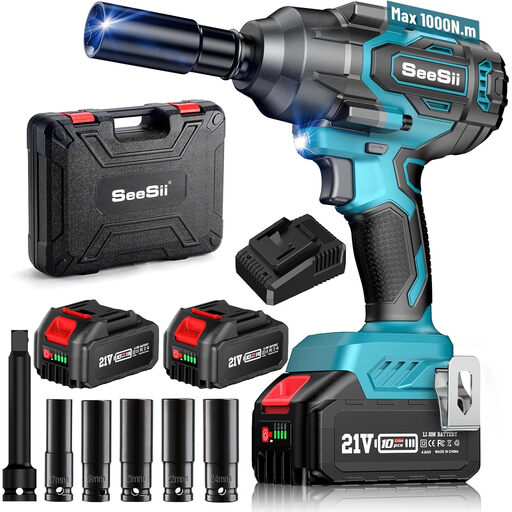
Why we picked it: Designed for performance and endurance, this is the tool for big jobs. Its powerful torque and two high-capacity batteries make it a heavy-duty ally for professional mechanics or for work on large vehicles (trucks, agricultural machinery).
It bypasses the battery life trap by including two 4.0Ah batteries and a fast charger right out of the box. The result: no downtime on the job.
Its 1000 Nm of breakaway torque, delivered by a brushless motor, tackles the most stubborn bolts. It all comes in a case with 5 sockets.
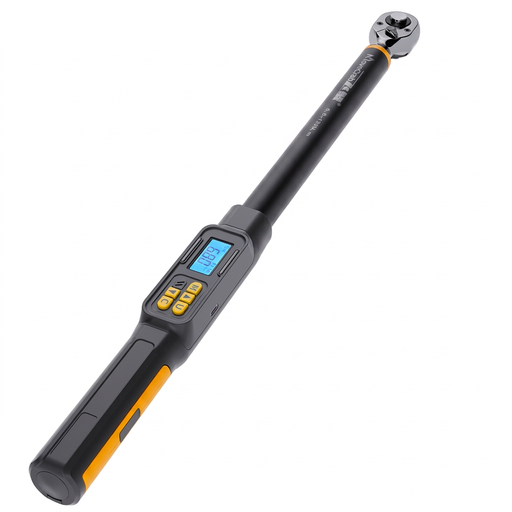
Why we picked it: Essential for any job where tightening torque is specified by the manufacturer. It's the go-to tool for working on the engine, drivetrain, or simply for safely re-installing wheels.
No more guesswork like with entry-level mechanical wrenches. With its digital display and ±2% accuracy, the risk of error is virtually zero.
Its triple alert system (sound, vibration, LED) ensures you hit the target torque, even in a noisy, dimly lit workshop. "Peak" and "Track" modes provide absolute control.
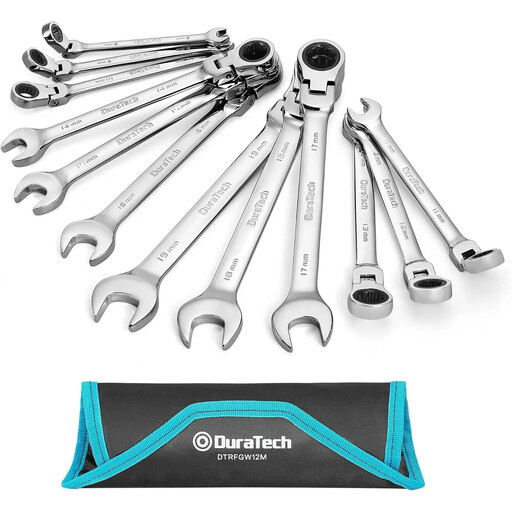
Why we picked it: The miracle solution for removing nuts and bolts hidden in the most awkward places (behind a manifold, near an engine mount...). A must-have for modern mechanics.
Unlike low-end, "catch-all" kits, this set focuses entirely on quality and a specific function. Its Cr-V steel is a guarantee of durability and resistance to high stress.
Its 180° flex-head, combined with the 72-tooth ratchet (5° swing arc), offers formidable agility and efficiency in the most confined spaces.
From impact wrenches to more specific tools like crank pullers, discover our full selection of products vetted by our experts and compliant with safety standards.
Loosening torque (or breakaway torque) is the maximum, instantaneous impact force the wrench can deliver to break loose a seized or rusted nut. It is often higher than the tightening torque. Conversely, tightening torque (or working torque) represents the force the tool applies continuously to fasten a nut or bolt. The latter is what measures the tool's true day-to-day endurance.
A good, properly calibrated mechanical model is just as reliable as a digital one. The advantage of digital is that it eliminates the risk of reading errors thanks to its screen. Its alerts (audible, visual, vibrating) and memory functions offer unparalleled control and traceability, which is a real bonus for professionals or high-precision jobs.
A few good habits are all it takes to extend the life of your equipment. A quick wipe-down after each use to remove dust and grease is a good start. For Lithium-ion batteries, never let them fully discharge or store them while empty. Ideally, store them in a cool, dry place with a charge of around 50%. And of course, handle them with care: drops and impacts are the worst enemies of internal components and batteries.