
Livraison le jour même ou le lendemain

Qualité garantie

Débloquez vos offres de bienvenue: Livraison GRATUITE | Jusqu'à -80 % | 30 jours d'essai gratuits à JoyPlus
Téléchargez l'application
An automatic self-cleaning cat litter tray can make daily cleaning easier, but not all models are created equal. Whether you have several cats, a large cat, a poorly ventilated flat or simply want to monitor usage remotely, the right choice depends above all on capacity, the type of litter accepted and the built-in safety features.
However, marketing claims should be carefully scrutinised. Here are the main pitfalls to avoid before getting your bank card out.
A large internal volume does not guarantee that the tray will stay clean for longer. You need to distinguish between the litter compartment capacity and the waste drawer capacity. A drawer that is too small may require frequent emptying, particularly in a multi-cat household.
Also check the conditions behind the figures advertised: a stated period « without scooping » varies according to the number of cats, their weight and how often they use the tray. It does not remove the need to clean the appliance regularly.
Most rotating models work with clumping litter, made from bentonite, tofu or certain blends. Others require a specific mineral litter or disposable trays.
The PETKIT PUROBOT CRYSTAL DUO, for example, works only with PETKIT crystal litter and its disposable trays. Using a different material could disrupt the mechanism and increase ongoing costs. Before ordering, check compatibility and the price of consumables.
App control generally lets you start a cycle, schedule cleaning and receive an alert when the drawer is full. However, many appliances are limited to 2.4 GHz Wi-Fi, without support for 5 GHz.
This may be an issue in homes with separate networks or a modern router. The app may also track your cat’s weight and how often it uses the tray. This data is useful day to day, but it does not replace observing your cat or seeking veterinary advice if its behaviour changes.
For one cat, a waste drawer of around 10 to 13 litres can provide several days of autonomy, depending on usage. For a multi-cat litter tray, choose a generous internal space and a drawer of at least 12 litres, if space allows.
Also measure the intended location before buying. A tall or deep appliance may be difficult to fit in a bathroom or cabinet. For an older, short-legged or less mobile cat, a low entrance and a non-slip ramp can make access easier.
Choose models equipped with several complementary safety features: weight sensors, infrared sensors, proximity detection, anti-pinch protection and automatic shut-off if the motor is overloaded. The cycle should stop as soon as a cat is detected.
These safeguards do not replace an adjustment period. Place the tray on a hard, level and non-slip surface, then temporarily disable automatic cleaning during the first few days. Kittens weighing less than the threshold stated by the manufacturer may not be detected correctly.
When buying in France, check the instructions, warnings, the contact details of the responsible party established in the European Union, and the compliance information, including the CE marking where it applies to the electrical equipment.
An automatic self-cleaning cat litter tray should contain waste in a closed drawer or a properly fitted bag. Seals, carbon filters, absorbent gels and deodorisers can help limit odours, but no system eliminates the need to empty the drawer regularly.
Examine the tray’s design carefully: a watertight mat, easy-to-remove walls and washable components are all useful features. The electronic base must never be immersed. Sensors and rotating areas must be kept clean to ensure reliable detection.
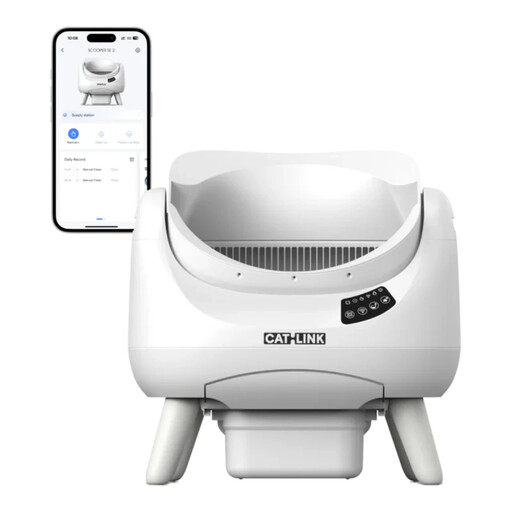
Why it suits this profile: Its open design makes the transition easier and is ideal for people who want a connected appliance without having to deal with complicated set-up.
The enclosed 12 litre waste drawer reduces handling, while the instructions specify the use of clumping litter.
Individual identification, usage tracking and a spacious inner tray for larger cats.
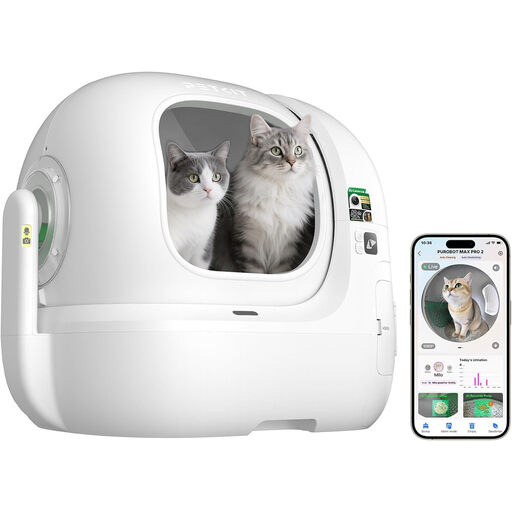
Why it suits this profile: It is designed for users who want to combine automatic cleaning, a camera and usage data in one app.
The product details mention a wider low entrance, safety sensors and compatibility with 2.4 GHz and 5 GHz Wi-Fi networks. Even so, remember to check which consumables are compatible.
76 litre internal volume, wide-angle camera and an advertised 8 litre waste drawer.
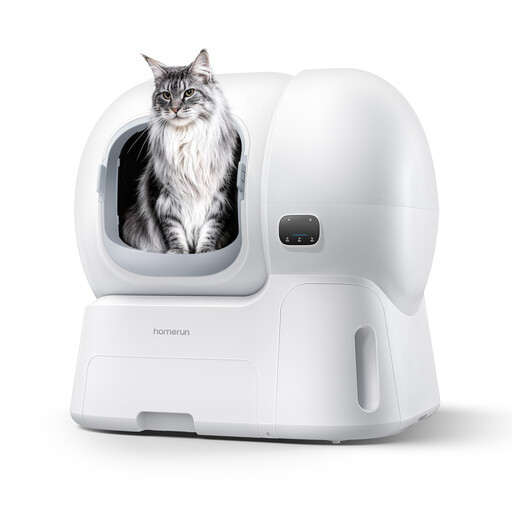
Why it suits this profile: Its large format and automatic refill system are suited to multi-cat households or those living with a cat weighing up to around 11,3 kg.
The litter reservoir and waste compartment are separate, making refilling more straightforward and reducing the chance of forgetting between checks.
Advertised 106 litre capacity, automatic refilling and a recharge interval of up to 14 days.
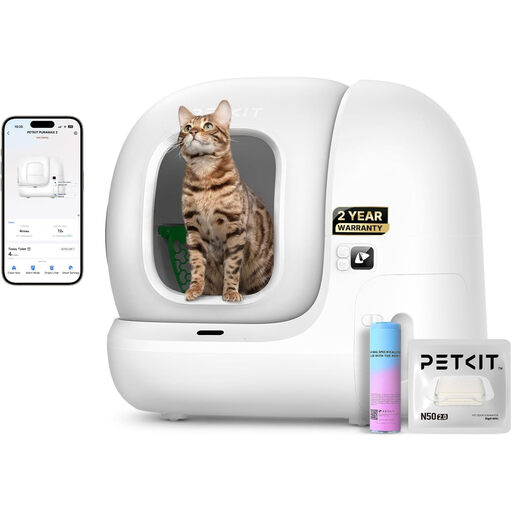
Why it suits this profile: It is suitable for owners of several cats weighing between 2 and 8 kg who want to schedule cycles and check notifications remotely.
The product details specify the weight limits, 2.4 GHz Wi-Fi compatibility and that crystal litter must not be used. This makes it quick to check whether the model meets your needs.
76 litre internal capacity, 7 litre waste drawer, plus weight, infrared and anti-pinch sensors.
We have selected a complete, real-time updated list of products that meet these demanding selection criteria and European safety requirements.
No. Sieve or drum models generally require clumping litter. Some appliances work exclusively with crystals or disposable trays. Always check the instructions before filling the reservoir.
The overall cost includes electricity, bags, filters or deodorisers and, in some cases, proprietary litter. An appliance that accepts widely available clumping litter can reduce ongoing expenses. Compare the cost of consumables over several months rather than looking only at the purchase price.
Yes. Automation reduces scooping, but you still need to empty the drawer, replenish the litter, clean the drum and wipe the sensors. Unplug the appliance before carrying out any maintenance and never wet its electronic base.