
Livraison le jour même ou le lendemain

Qualité garantie

Débloquez vos offres de bienvenue: Livraison GRATUITE | Jusqu'à -80 % | 30 jours d'essai gratuits à JoyPlus
Téléchargez l'application
An automatic self-cleaning cat litter box can save you from daily scooping, but it does not eliminate the need for maintenance and routine checks. App-based remote control, odour neutralisation, health monitoring… some features genuinely make a difference, while others mainly increase the price without necessarily meeting your needs.
Before buying an automatic litter tray, there are three potential pitfalls that deserve your full attention.
A large interior volume does not guarantee several weeks without intervention. How long the litter box can run between emptying depends on the number of cats, their weight, the amount of litter used and the capacity of the waste drawer. A self-cleaning cat litter tray with a small container may therefore need emptying frequently in a multi-pet household.
Check each of the following separately:
Automatic mechanisms generally work with clumping litter, particularly bentonite-based litter, certain plant-based litters or blends. Other devices require a specific mineral litter, such as crystal models that use disposable trays.
Incompatible litter can lead to inefficient sieving, clumps sticking to the walls or a mechanism becoming blocked. Check the instructions before placing your order, especially if you want to continue using your usual litter.
A connected litter tray can record your cat’s weight, how often they use it and how long each visit lasts. Some models also include a camera or alerts relating to urine and faeces. This information can help identify unusual changes, but it never replaces a veterinary diagnosis.
Multi-cat recognition may also be unreliable depending on their build and behaviour. For reliable monitoring, always check the identity associated with the data in the app and consult a vet if you notice any worrying change.
If you are looking for a litter tray for large cats, measure the available space in your home and compare it with the appliance’s external dimensions. A low entrance can make access easier for older cats or short-legged breeds. Conversely, a narrow globe may restrict the movement of a Maine Coon, Ragdoll or particularly large cat.
The interior should give your cat enough room to turn around without adopting an uncomfortable position. Models with a capacity of between 70 and 95 litres generally offer more space, but may exceed 60 cm in height or depth. Remember to leave enough room to remove the drawer and dismantle the washable parts.
A safe litter tray should stop its cycle as soon as a cat is detected nearby or inside it. Manufacturers combine weight sensors, infrared sensors, radar, proximity detection and anti-pinch systems to achieve this.
These safeguards do not replace an acclimatisation period. With a very lightweight kitten, the sensors may not respond correctly. Several models specify a minimum weight of around 1.5 kg, or state that they are only suitable for cats over six months old. When installing it for the first time, let your cat explore the appliance with automatic cleaning disabled, then observe their reactions.
Always place the machine on a hard, stable and perfectly level floor. A thick mat or carpet may interfere with the weight sensors.
An odour-control litter tray generally uses a closed drawer, seals, a carbon filter or a deodorising module. These components help contain odours, but they must be emptied, cleaned or replaced in accordance with the manufacturer’s instructions. Thorough cleaning remains essential to prevent residue from building up.
Before making your decision, calculate the running costs:
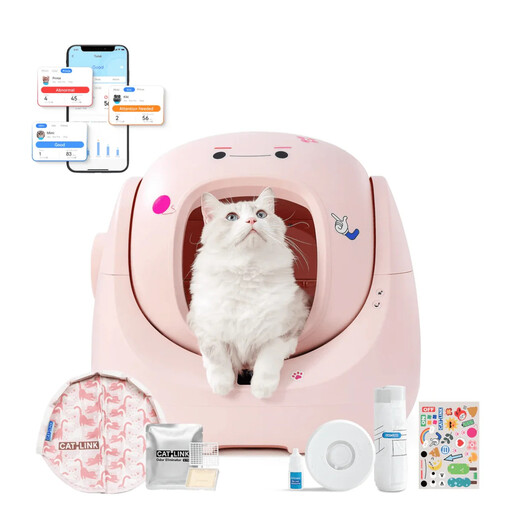
Why this model suits this profile: Its app, automatic, scheduled and manual modes, and removable ramp make the transition to an automatic litter tray easier for first-time users.
The product information mentions eight-level protection and recognition of multiple cats. However, check the weight limits and litter compatibility before buying.
Weight and visit tracking in the CATLINK app, a non-slip ramp and a sealed 12-litre waste container.
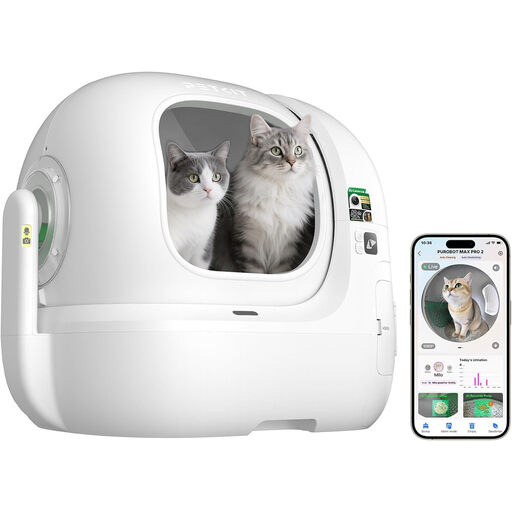
Why this model suits this profile: It is designed for households looking to combine a spacious entrance, app-based control and detailed monitoring of litter tray use.
With a stated 267 mm entrance and 76-litre interior, it is better suited to larger cats. The camera can be disabled using privacy mode.
Wide-angle camera, recognition of multiple cats, an 8-litre waste drawer and a stated noise level of 35 dB.
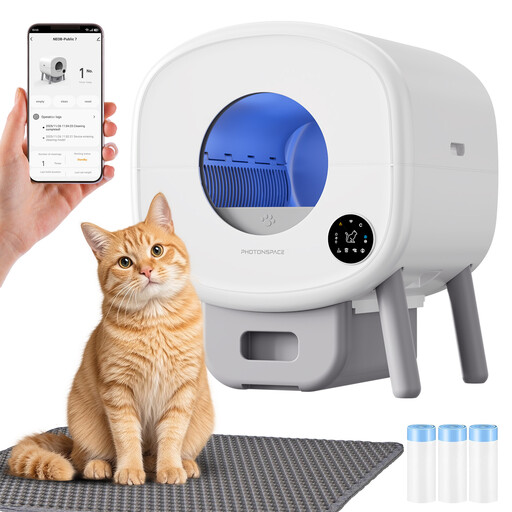
Why this model suits this profile: With its 95-litre interior and 15-litre waste drawer, it is suitable for multi-cat households, provided you have enough space available.
The drawer capacity is clearly separated from the interior volume. Weight and proximity sensors stop the cycle when a cat is detected. However, kittens weighing less than 1.5 kg must use it manually and under supervision.
App compatible with 2.4 GHz Wi-Fi, sealed waste storage and stated compatibility with bentonite-based, tofu or blended clumping litter.
We have brought together a complete, real-time updated selection of products that meet these demanding criteria and European safety standards.
To set up your automatic litter tray for multiple cats:
Never immerse the electronic base in water. Removable parts should only be washed if permitted by the instructions, and must then be thoroughly dried before being reassembled. Also inspect the sensors, power cord, seals and any litter clumps regularly.
Yes, some models offer a spacious interior, a generous waste container and individual identification via the app. However, bear in mind that the stated autonomy is often calculated for a single cat. In a larger household, expect to empty it more frequently and, if possible, keep a traditional tray as a back-up.
Most of the models presented here use clumping litter compatible with their sieving system. Crystal models may require proprietary litter and disposable trays. Always consult the instructions for your chosen model before filling the container.
The cost mainly depends on the litter, bags, filters, deodorisers and, for some appliances, disposable drawers. Compare the cost of consumables over several months rather than looking only at the purchase price. A large container may reduce how often you need to intervene, without necessarily reducing total consumption.