
Livraison le jour même ou le lendemain

Qualité garantie

Débloquez vos offres de bienvenue: Livraison GRATUITE | Jusqu'à -80 % | 30 jours d'essai gratuits à JoyPlus
Téléchargez l'application
Cleaning a patio door, an exterior window or a shower screen takes time, often involves awkward positions and may even require a step ladder. An automatic window-cleaning robot can reduce these hassles, but not every model is suited to the same situations.
Before you place an order, make sure you check the power supply method, the safety system and compatibility with your glazed surfaces. Some product listings highlight strong suction or automatic spraying without clarifying the real-world conditions of use. Here are the criteria to examine so you can avoid a purchase that doesn't quite fit.
The term "cordless" can mean two different things. Some window-cleaning robots genuinely run on battery power during cleaning. Others have a small battery that is only there to keep the device safe in the event of a power cut.
This difference matters especially for a window far from a socket, a bathroom or a balcony. A mains-powered model needs a long enough cable and must stay close to an accessible plug. The backup battery does not necessarily replace a continuous power supply.
A figure given in pascals, such as 2,500 Pa or 5,500 Pa, provides a technical reference point, but it is not enough to judge real-world performance. Grip also depends on how clean the glass is, the condition of the pads, how flat the surface is and the level of humidity.
On a patio door, the robot also needs to detect edges correctly. For a frameless window, a glass door or a narrow surface, the quality of navigation and sensors matters just as much as suction power.
A window-cleaning robot with a spray system does not mean you can skip preparing the surface. A very dusty window can quickly clog the pads and leave streaks. Microfibre cloths need regular washing, while the water tank and nozzles must be rinsed properly.
Also remember to check what comes in the box: a safety tether, remote control, spare pads, charging station and maintenance accessories can make a real difference day to day.
For typical household use, look at the following points:
An intelligent window-cleaning robot with a built-in battery is easier to move around, but its battery life needs to match the area you want to clean. For several large patio doors, continuous mains operation or a multi-function station may be more practical.
Automatic edge detection helps the window-cleaning robot follow a steady path. The "edge", "automatic" and "manual" modes let you adapt it to different setups.
Safety relies on several factors: suction hold, power-cut detection, backup battery, a tether attached to a stable point and, depending on the model, additional software or hardware protections. Even an anti-fall window-cleaning robot should be supervised and properly secured, especially when working on a window at height.
Do not use the device on a cracked, poorly fitted, heavily sloped window or one that is incompatible with the manufacturer's instructions. A window-cleaning robot is designed for smooth, glazed surfaces; it is not a replacement for a device suited to porous walls or uneven tiles.
Automatic spraying distributes moisture more evenly, but it is not essential on a window that is only lightly soiled. Some models have a tank of around 50 ml and offer either manual or automatic spraying.
To minimise streaks, only use the recommended cleaning solution stated in the manual. Very hard water can clog the nozzles on some devices. The "quick", "deep", "spot" or "edge" programmes are useful for prioritising speed, treating a specific area or focusing on the edges.
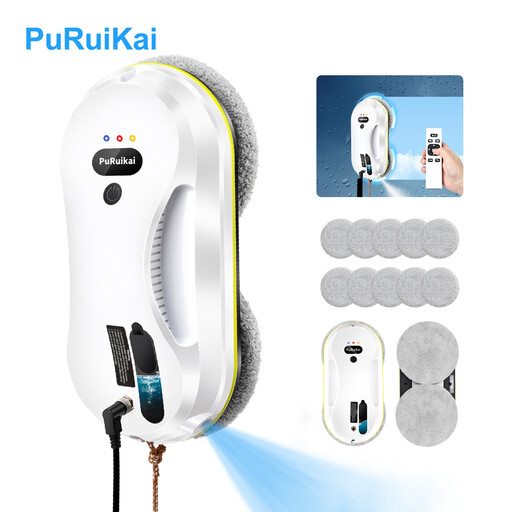
Why this choice suits this profile: this model includes a remote control, automatic edge detection and a 50 ml tank. A simple solution for discovering automated cleaning without lots of settings to adjust.
The listing states a suction of 2,800 Pa, a safety tether and power-cut protection. However, the device must remain plugged in during operation.
Manual or automatic spraying, remote control and intelligent path planning.
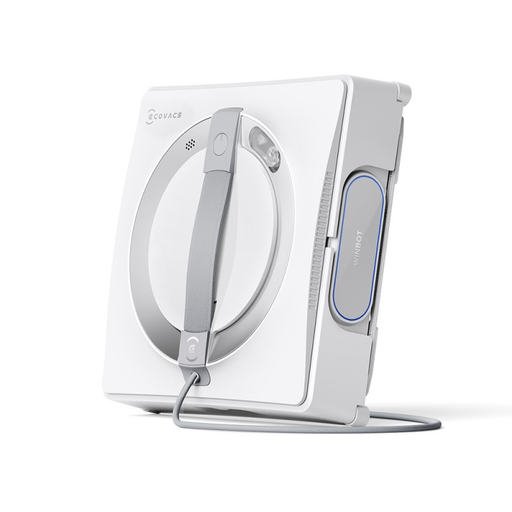
Why this choice suits this profile: its multi-function station, two power supply modes and app make it a good fit for homes with large glazed areas.
The listing specifies that the device can run on battery or mains power. A safety tether and a 12-level protection system are also included.
Stated suction of 5,500 Pa, three-nozzle spraying, ECOVACS HOME app and stated battery life of up to 110 minutes.
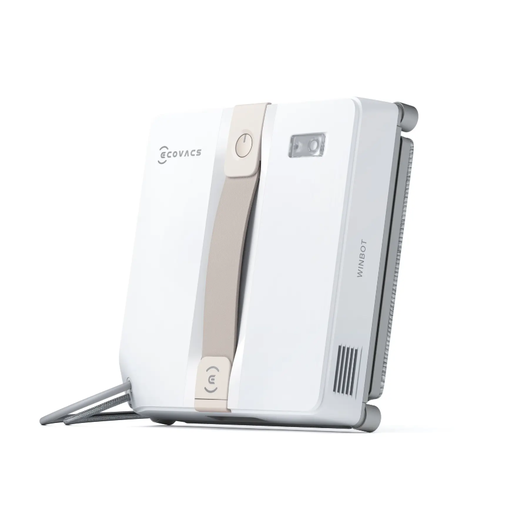
Why this choice suits this profile: its compact size is ideal for narrow windows, glass doors and shower screens, especially where storage space is limited.
The automatic, manual and edge modes allow you to adapt the cleaning. A safety tether is supplied; supervision is still essential when working at height.
Sensor-based navigation, dual ultrasonic nozzle according to the listing and stated battery life of around 60 minutes per charge.
Before each cycle, dust off the edges and secure the tether to a stable anchor point. Fit clean pads and check they are attached correctly. With an automatic window cleaner that has a spray system, moisten the pads as recommended without soaking the surface.
Stay nearby while it is running, especially during outdoor cleaning. After each use, wash the microfibre cloths, empty the tank and check the nozzles. This routine helps maintain grip and cleaning quality. For a shower screen, also dry the device before storing it: these robots are generally not designed to be submerged.
We have put together a full list, updated in real time, of products that meet these strict selection criteria as well as European safety regulations.
Yes, some models have edge detection suited to frameless surfaces. However, do check the minimum dimensions, the compatibility stated in the manual and the safety instructions before you start.
Ongoing costs include electricity, replacing the microfibre pads and, for models with a spray system, the cleaning solution. The nozzles may also need extra care if the water you use is very hard.
It depends on how often you use it, storage conditions, pad maintenance and following the manufacturer's instructions. Avoid cracked surfaces, products that are not recommended and knocks that could damage the cables or sensors. Before buying, also check the warranty period and the after-sales service terms.