
Livraison le jour même ou le lendemain

Qualité garantie

Débloquez vos offres de bienvenue: Livraison GRATUITE | Jusqu'à -80 % | 30 jours d'essai gratuits à JoyPlus
Téléchargez l'application
Cleaning a patio door, mirror or exterior window can quickly become a chore, especially when the glass is high up. An automatic window-cleaning robot can reduce the need to climb a step ladder and take care of part of the cleaning on smooth surfaces. However, not all models are equal, and they do not all meet the same needs.
Before choosing a window-cleaning robot, check its power supply, holding system and compatibility with your glazing as a priority. The features highlighted in product listings do not replace safe-use precautions or regular maintenance.
A suction-powered window-cleaning robot generally remains plugged in while in use. Its built-in battery is usually intended as a backup in the event of a power cut, rather than as a power source for cordless operation.
This distinction is particularly important when windows are far from a power socket. Check the cable length, whether a suitable extension lead can be used and whether a backup battery is included. The term ‘electric’ does not necessarily mean that the appliance is cordless.
Suction helps keep the robot in place, but it is not sufficient protection in the event of a fault. When cleaning a high window, the safety rope must be attached before starting to a secure anchor point.
Edge detection and power-cut protection are useful, but they do not replace following the manufacturer’s instructions. Never use the robot on cracked or poorly secured glass, or on an uneven surface.
A window-cleaning robot with a spray system can moisten the cleaning pad or apply a small amount of liquid. However, it cannot necessarily remove heavy dirt, greasy residue or built-up deposits.
Before starting the robot, remove abrasive dust and grains of sand with a soft cloth. Otherwise, the pad may move particles across the glass and leave marks. To maintain consistent results, also clean or replace the pads according to the manufacturer’s recommendations.
Suction power is generally expressed in Pa, but this figure alone is not enough to distinguish between two robots. The chassis shape, appliance weight, condition of the glazing and quality of the cleaning pad also affect stability.
At a minimum, check for:
For a robot intended for high windows, measure the area to be cleaned and identify the rope’s attachment point. The dimensions of the glazing must also meet the minimum surface area recommended by the manufacturer.
Check the input voltage, power rating and stated protection time. Some appliances use a 72 W power supply and have an internal battery intended solely to keep the robot in place during a temporary power cut.
Do not recharge this battery assuming that you can then use the window cleaner without plugging it in. The product listing should clearly state whether it is a corded appliance or a genuinely autonomous model.
An automatic window cleaner is primarily designed for glass and smooth surfaces. Some models can also be used on mirrors, smooth tiles or shower screens, provided you follow the manufacturer’s instructions.
Avoid porous walls, heavily textured surfaces and materials with deep grout lines. After each use, remove the cleaning pads, empty the reservoir if necessary and wipe the parts that come into contact with the glass.
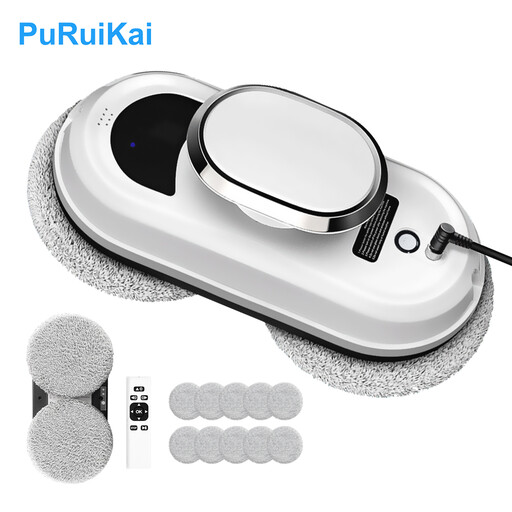
Why this choice suits this user profile : This model is suitable for first-time use on windows and smooth tiles, with remote control and automatic route planning.
The listing mentions a 4.5 m safety rope, automatic edge detection and power-cut protection lasting up to 20 minutes.
Stated suction power of 2 800 Pa × 2, 72 W power rating and intelligent route planning.
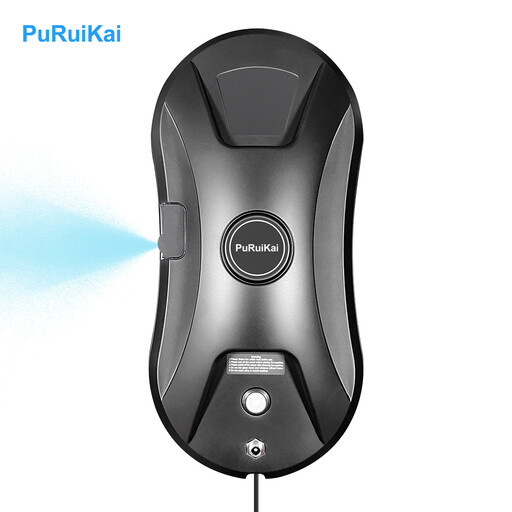
Why this choice suits this user profile : This model is aimed at users looking for high stated suction power and an automatic spray system.
The spray system is built into the appliance, so there is no need to keep moistening the pad by hand. Nevertheless, check compatibility with your smooth surfaces before use.
Stated suction power of 5 600 Pa and intelligent water spraying for smooth glazing.

Why this choice suits this user profile : With remote control and manual and automatic modes, this window-cleaning robot is intended for large glazed surfaces that require regular cleaning.
The listing mentions a safety rope, UPS protection and automatic edge detection. The appliance must remain plugged in while cleaning.
50 ml reservoir, dual spraying, stated laser sensor and stated suction power of 2 500 Pa.
For small mirrors, wing mirrors or car windows, a manual accessory may be quicker. The telescopic squeegee for wing mirrors and glass surfaces measures 22 × 6.5 cm and reaches 98 cm when extended. It can be used on windows, shower screens, tiles and smooth mirrors.
We have put together a comprehensive, real-time updated selection of products that meet these strict selection criteria and European safety regulations.
Most of the models featured here must remain plugged in while cleaning. Their internal battery provides backup power in the event of a power cut and does not replace mains power. Always check the technical specifications before buying.
This depends on how often it is used, the condition of the pads, storage conditions and whether the instructions are followed. Cleaning pads and flexible components are wear parts. Clean them after every use and store the robot in a dry place away from heat and moisture.
No. These appliances are designed for smooth, stable surfaces. Cracked glazing, porous supports, pronounced relief and poorly secured surfaces can pose risks. Also check that the glazing’s minimum dimensions match the model you have chosen.