
Livraison le jour même ou le lendemain

Qualité garantie

Débloquez vos offres de bienvenue: Livraison GRATUITE | Jusqu'à -80 % | 30 jours d'essai gratuits à JoyPlus
Téléchargez l'application
A lush garden or a bountiful vegetable patch doesn't happen by itself. Watering, in particular, requires time and unwavering consistency. Automatic watering then emerges as the miracle solution: a time-saver, worry-free holidays, and, the icing on the cake, substantial water savings. But be warned: the market is a jungle of products with tempting promises that can quickly turn into a nightmare for your wallet.
As our editorial team's product experts, our mission is to help you see things more clearly. This guide gets straight to the point: decoding the common traps and giving you the technical keys to make a truly informed choice that meets your real needs, not the sirens of marketing.
Before falling for the first deal you see, keep an eye out for these deal-breakers that can turn a great find into a major hassle.
To ensure you're not throwing your money down the drain, focus on these few technical points—the only ones that truly matter.
It all depends on your need for autonomy and the level of fine-tuning you're looking for.
A device that lives outdoors needs to be built to last.
For a leak-proof installation on the first try, check for compatibility. In Europe, most garden taps have a standard G3/4" (20/27 mm) thread. A good product will always include an adapter for smaller G1/2" (15/21 mm) taps.
Rather than an exhaustive list, here are a few options that cater to distinct user profiles, taking into account durability and functional relevance.
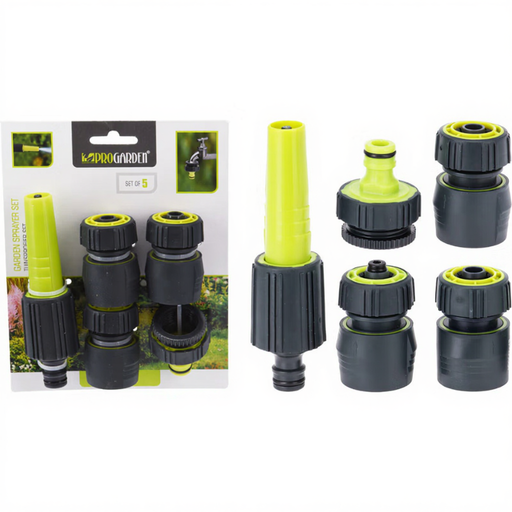
Editor's Pick: For those who want a simple, complete, and manual solution to get started. This kit provides all the connectors and the spray gun. You connect it, and it works. No automation, no fuss.
It bypasses technology to avoid any complexity. It's 100% mechanical. The materials (ABS, PP, TPR) are well-chosen for their durability at this price point, and the standard connectors ensure flawless compatibility.
An all-in-one, ready-to-use kit. Special mention for the "stop-flow" connector that automatically cuts off the water, which is super handy for changing accessories without running back to the tap.
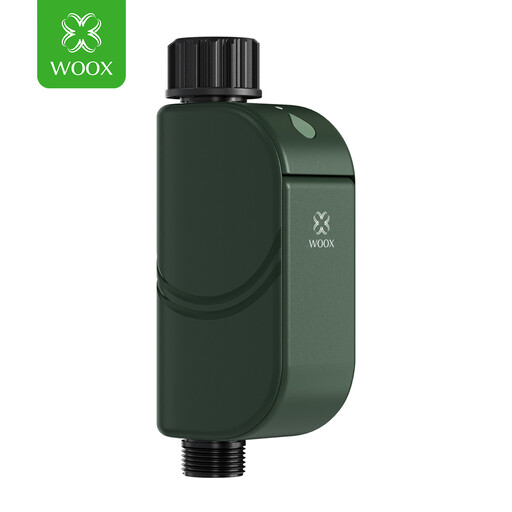
Editor's Pick: For those who want to control their watering at their fingertips from their smartphone, without the hassle. This timer combines modern connectivity with smart features that are genuinely useful.
It connects directly to 2.4 GHz Wi-Fi, no hub required—goodbye, complexity! Its IP65-rated, UV-resistant plastic housing is built to last. Its features (rain delay, anti-frost mode) are real assets, not useless gadgets.
Record-breaking battery life (up to 2 years on batteries). Compatible with Alexa and Google voice assistants. The app allows you to manage up to 20 distinct watering schedules.
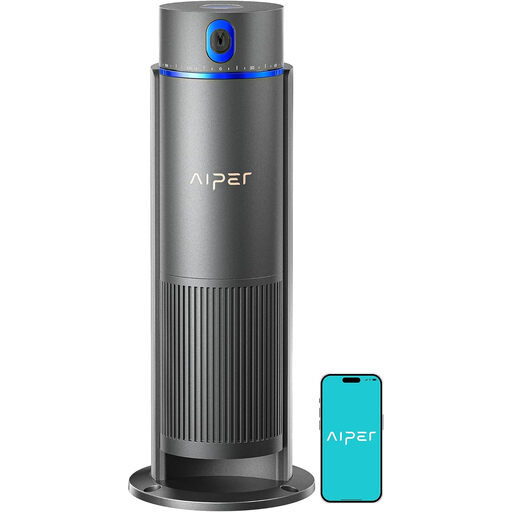
Editor's Pick: The all-in-one solution for large areas (up to 445 m?) and gardens with multiple needs (lawn, flowerbeds, vegetable patch). It merges the timer, sprinkler, and valve into a single unit.
Its 3-in-1 concept sweeps away all compatibility issues. Its smart features are entirely focused on water savings, with real-time weather adjustments and uniform spray technology (EvenRain).
Allows you to create up to 10 custom watering zones. Installation is done in 15 minutes flat. The manufacturer claims up to 40% in water savings.
We have curated a full range of products that meet our strict requirements and current standards.
It all depends on the build quality. A model with a UV-treated plastic housing and an IP65 certification is equipped to last several years outdoors. Battery life is also a good indicator: a device that lasts 1 to 2 years on the same set of batteries is often a sign of careful design and quality components.
Yes, and the savings are far from negligible. A well-designed Wi-Fi water timer can drastically reduce waste. By cancelling a watering cycle when it rains (the well-known "rain delay" feature) or by adapting the duration to the weather, it prevents you from needlessly drowning your plants. Savings can easily reach 40% or more.
Absolutely. Most current timers are designed to be installed by anyone. They screw directly onto a standard garden tap (G3/4"). The process rarely takes more than 15 minutes and requires no special tools. Sometimes, a bit of Teflon tape (often included) is all you need to ensure a perfect seal.